Planet Fitness New Treadmill Motors vs Home: A Beginner's HP Guide
Tried the Planet Fitness new treadmill and want one at home? Learn the step-by-step differences between commercial and home motors, CHP ratings, and sizing.

The 'Planet Fitness' Baseline: What You Are Actually Running On
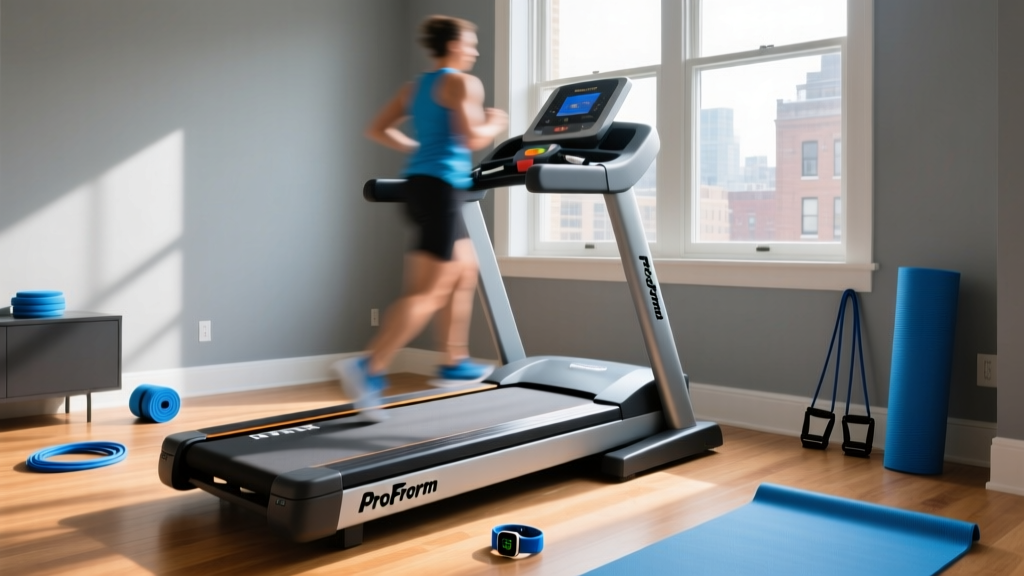
If you have recently stepped onto the Planet Fitness new treadmill fleet, you likely noticed a distinct difference in how the machine glides compared to standard home models. Planet Fitness primarily equips its clubs with commercial-grade Matrix Fitness treadmills (such as the Matrix T7x series). These machines are engineering marvels designed to withstand 18 to 24 hours of continuous daily abuse from hundreds of different users.
When beginners decide to replicate that gym experience at home, they often hit a wall of confusing jargon: Peak Horsepower, Continuous Duty, AC vs. DC motors, and flywheel weight. According to the Garage Gym Reviews treadmill buying guide, misunderstanding motor specs is the number one reason home buyers end up with a machine that stutters, overheats, or dies within a year. This step-by-step guide will demystify treadmill motors, using the commercial gym baseline to help you choose the right horsepower (HP) for your home setup.
The Golden Rule of Treadmill Motors
Never buy a treadmill based on 'Peak Horsepower.' Peak HP only measures the maximum power the motor can hit for a fraction of a second before burning out. Always look for CHP (Continuous Horsepower), which measures the power the motor can sustain indefinitely during your actual workout.
Step 1: Decode the Horsepower Marketing Trap
Manufacturers of budget treadmills (typically priced under $600) love to advertise '3.0 Peak HP.' In reality, these machines often house a 1.25 CHP motor that will struggle to maintain speed if a user weighing over 180 lbs steps on the belt.
When you use the Planet Fitness new treadmill, you are experiencing a true, unadulterated power output. Commercial machines do not rely on marketing tricks; they use heavy-duty components. To bridge the gap between commercial and home, you must focus strictly on the CHP rating. For a beginner walking or lightly jogging, 2.5 CHP is the absolute minimum. For running, you need 3.0 CHP or higher.
Step 2: AC vs. DC Motors – The Commercial vs. Home Divide
Why does the Planet Fitness new treadmill feel so much smoother than a $1,000 home treadmill? The answer lies in the electrical current type: Alternating Current (AC) versus Direct Current (DC).
Commercial AC Motors (The Gym Standard)
According to the Matrix Fitness commercial lineup, high-end club treadmills utilize AC induction motors. These motors do not use internal carbon brushes, meaning there is less physical friction, less heat generation, and a significantly longer lifespan. An AC motor can run for 12 hours straight without needing a cool-down period. However, they are heavy, require more electrical current, and are incredibly expensive to manufacture, which is why they are rarely found in home units under $4,000.
Home DC Motors (The Residential Standard)
Almost all home treadmills use DC motors. DC motors rely on carbon brushes that physically rub against a commutator to generate magnetic fields. This creates friction and heat. While modern DC motors are highly efficient, they require 'rest periods.' If you run on a DC motor treadmill for 90 minutes straight, the internal heat will trigger a thermal shutdown to prevent a fire. For 95% of home users who exercise for 45 to 60 minutes, a high-quality DC motor is perfectly adequate and much more cost-effective.
Step 3: Calculate Your Exact CHP Requirement
Sizing your motor correctly is not just about your fitness goals; it is heavily dependent on your body weight and the biomechanics of your stride. As noted by Consumer Reports, a heavier user exerts more downward force on the deck, creating friction that the motor must overcome. Every 50 lbs of user weight over 200 lbs effectively reduces the motor's efficiency, requiring a higher CHP baseline to prevent belt stuttering.
| Primary Activity | User Weight (Under 200 lbs) | User Weight (200 - 250 lbs) | User Weight (250+ lbs) |
|---|---|---|---|
| Walking (Under 4 mph) | 2.0 CHP | 2.5 CHP | 3.0 CHP |
| Jogging (4 - 6 mph) | 2.5 CHP | 3.0 CHP | 3.5 CHP |
| Running (6+ mph) | 3.0 CHP | 3.5 CHP | 4.0 CHP |
| Incline Training (10%+) | 3.25 CHP | 3.75 CHP | 4.0+ CHP |
Step 4: Spotting Motor Failure Modes Before You Buy
Understanding how treadmill motors fail will help you identify which home models are built to last and which are destined for the landfill. Here are the three most common failure modes in residential DC motors:
- Thermal Overload from Belt Friction: If a treadmill deck is not properly lubricated with 100% silicone oil, the friction between the belt and the deck increases exponentially. The motor must draw higher amperage to keep the belt moving. This excess amperage generates heat, eventually melting the internal insulation of the motor windings. Pro Tip: Always check if the home treadmill you are buying features a maintenance-free wax-infused belt or requires manual silicone application.
- PWM Board Burnout: The Pulse Width Modulation (PWM) board controls the voltage sent from your wall outlet to the DC motor. Cheap treadmills use undersized PWM boards that fry when subjected to the sudden power spikes caused by a user's foot striking the belt. High-end home models use oversized, heat-sinked PWM boards to manage these micro-spikes.
- Carbon Brush Depletion: Over 3 to 5 years, the physical carbon brushes inside a DC motor will wear down to nubs. When this happens, the motor will spark, lose torque, and eventually stop. While commercial AC motors do not have this issue, replacing the brushes on a home DC motor is a standard $150 repair, provided the manufacturer still stocks the parts.
Step 5: Home Treadmills That Bridge the Commercial Gap
You do not need to spend $10,000 on a commercial Matrix unit to get a premium motor experience. Based on current 2026 market pricing and motor reliability data, here are three home treadmills that offer commercial-adjacent CHP ratings and robust DC engineering:
1. Sole F80 (Best Overall Motor Value)
- Motor: 3.5 CHP DC Motor
- Price Range: ~$999 - $1,199
- Why it works: Sole uses heavy-duty flywheels paired with their 3.5 CHP motor. The heavy flywheel maintains rotational momentum, reducing the actual workload on the DC motor during foot strikes. It easily handles runners up to 350 lbs without thermal throttling.
2. Horizon 7.4 (Best for Heavy Incline Users)
- Motor: 3.5 CHP DC Motor with Rapid Charge tech
- Price Range: ~$1,299
- Why it works: Horizon designs their motors specifically to handle the amperage spikes associated with steep 15% incline training. The motor runs exceptionally cool, and the deck features a three-zone cushioning system that reduces downward impact force, indirectly saving the motor from excess strain.
3. NordicTrack Commercial 1750 (Best Smart Motor Integration)
- Motor: 3.75 CHP Smart Motor
- Price Range: ~$1,799
- Why it works: NordicTrack's 'Smart Motor' includes an active cooling fan built directly into the motor housing, a feature rarely seen in residential units. This active airflow drastically reduces the risk of thermal shutdown during long marathon training blocks, mimicking the endurance of a commercial AC motor.
'The secret to a long-lasting home treadmill motor isn't just the horsepower printed on the box; it's the ratio of the motor's weight to the flywheel's weight. A heavy flywheel acts as a mechanical battery, storing kinetic energy and saving your DC motor from burning out during heavy foot strikes.'
Frequently Asked Questions
Can I put a commercial AC motor in a home treadmill?
No. AC motors require significantly more electrical current and different voltage regulation than standard 120V residential wall outlets can safely provide without dedicated circuits. Furthermore, the physical footprint and weight of an AC motor will not fit in residential treadmill chassis.
Does a higher horsepower motor use more electricity?
Not necessarily. A 3.5 CHP motor carrying a 250 lb runner will actually draw less electricity and operate more efficiently than a 2.0 CHP motor struggling to pull the exact same weight. Undersized motors draw excess amperage, spiking your energy usage and generating destructive heat.
How often should I lubricate my belt to protect the motor?
If your treadmill does not have a maintenance-free wax deck, you should apply 100% pure silicone treadmill lubricant every 130 miles or every 3 months, whichever comes first. This single maintenance step can double the lifespan of your DC motor by reducing amperage draw.
More gear to consider
All reviews
Assault Bike vs Air Bike: Maintenance & Inclined Treadmill Tips

How Many Laps is a Mile on a Treadmill? 2026 Folding Reviews
Treadmill vs Bike Machine or Rower? Beginner Rowing Guide

Sunny Health and Fitness Treadmill Manual vs Motorized Noise Comparison

What Is the 15 3 25 Treadmill Challenge? 2026 Belt Maintenance Trends