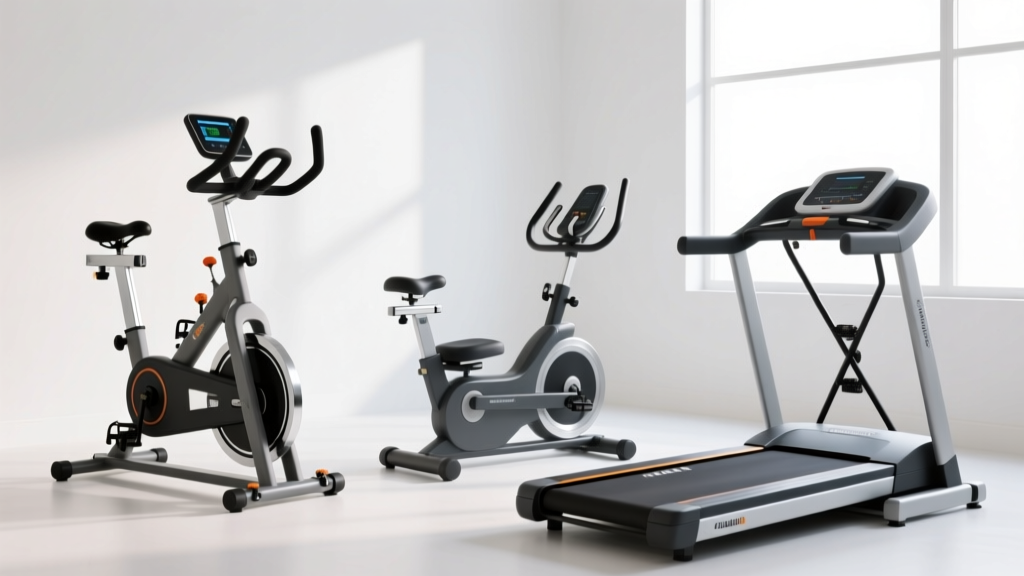
Treadmill Stops While Running? Budget Bike Alternatives
Is your treadmill stopping mid-run? We break down repair costs and compare the budget value of upright, recumbent, and spin bike alternatives.

The Treadmill Stops While Running Dilemma: Repair vs. Replace
There are few things more jarring than hitting your target heart rate at mile three, only for the belt to abruptly halt beneath your feet. If your treadmill stops while running, you are experiencing one of the most common—and costly—failure modes in budget home cardio equipment. Before you drop hundreds of dollars on a replacement motor or a new walking deck, it is time to run a cold, hard value analysis on your fitness investment.
According to repair technicians, a treadmill shutting down mid-stride usually stems from three specific mechanical or electrical culprits:
- Thermal Motor Overload: Budget DC motors (typically rated at 2.0 to 2.5 Continuous Horsepower) overheat after 25 to 40 minutes of continuous use. When the internal temperature exceeds safe thresholds, a thermal breaker trips to prevent a fire, instantly killing power to the belt.
- Excessive Deck Friction: A dry, unlubricated, or worn walking belt forces the motor to work significantly harder. This causes the amp draw to spike above 15 amps under load, prompting the motor controller board to shut off the machine to protect the circuitry.
- Safety Key Sensor Faults: Micro-vibrations from heavy footstrikes can cause a weak magnetic safety key to slip slightly out of alignment, instantly cutting the primary circuit.
Quick DIY Troubleshooting Checklist
Before declaring your machine dead, verify these three metrics:
- Check the Amp Draw: Use a clamp multimeter on the motor wire. No-load should be under 6 amps; walking load should be under 10 amps. If it pulls 15+ amps, your deck is dry or warped.
- Perform the Lift Test: Unplug the machine. Lift the belt and apply 100% silicone treadmill lubricant. Wait 24 hours and test again.
- Inspect the Safety Key: Place a small piece of folded tape behind the magnetic key to push it closer to the internal reed switch.
Why Stationary Bikes Offer Superior Long-Term Value
When analyzing the 5-year cost of ownership, stationary bikes dramatically outperform treadmills. Treadmills require high-amperage electrical draw (600 to 700 watts) and recurring physical maintenance (silicone lubrication, belt tensioning, deck flipping). Bikes, particularly those utilizing magnetic resistance and polygroove belt drives, operate at near-zero maintenance and draw minimal electricity (10 to 50 watts, or zero if self-powered).
Furthermore, the Cleveland Clinic notes that stationary cycling provides a high-yield cardiovascular workout while eliminating the repetitive ground-reaction forces that degrade both human joints and treadmill shock-absorption systems over time. Less physical impact on the machine translates directly to a longer hardware lifespan.
Budget Breakdown: Upright vs. Recumbent vs. Spin Bikes
If you are abandoning a failing treadmill, which bike type offers the best return on investment? Let us break down the three primary categories, complete with 2026 pricing benchmarks and specific model recommendations.
1. Spin Bikes (Indoor Cycles): The High-Intensity Workhorse
Spin bikes mimic the aggressive geometry of a road bike. They rely on heavy perimeter-weighted flywheels (30 to 40 lbs) and direct-contact or magnetic resistance. They are the undisputed kings of high-intensity interval training (HIIT) and out-of-the-saddle climbing.
- Top Budget Pick: Schwinn IC4 (Approx. $799)
- Drive System: Polygroove belt (virtually silent, no lubrication needed)
- Footprint: 45 inches long by 21 inches wide
- Value Proposition: Dual-sided SPD pedals and Bluetooth FTMS connectivity mean you can connect to Zwift or Peloton without paying for proprietary ecosystem lock-in. The magnetic resistance ensures the pads never wear out.
Expert Insight: The primary failure point on cheap spin bikes (under $300) is the felt-pad friction resistance, which wears out, causes squeaking, and requires constant replacement. Always invest in a model with magnetic resistance to ensure a decade of silent, maintenance-free operation.
2. Upright Stationary Bikes: The Traditional Cardio Staple
Upright bikes feature a smaller footprint and a traditional step-through frame. The seat is wider than a spin bike saddle, and the console is positioned higher for easy reading. They are ideal for steady-state LISS (Low-Intensity Steady State) cardio and multitasking while watching television or working at a standing desk.
- Top Budget Pick: Nautilus U616 (Approx. $699)
- Resistance: 25 levels of eddy-current magnetic resistance
- Value Proposition: Includes a motorized fan, telemetric heart rate chest strap compatibility, and a robust 10-year frame warranty. The enclosed electronics protect against sweat corrosion—a common killer of budget treadmill consoles.
3. Recumbent Bikes: The Ergonomic and Rehab Champion
Recumbent bikes place the user in a reclined position with the pedals out front. This design completely unloads the lumbar spine and reduces hip flexion angles. According to the American Heart Association, maintaining consistent, moderate-intensity aerobic activity is crucial for cardiovascular health; recumbent bikes ensure that joint pain or lower back fatigue never becomes the bottleneck to your consistency.
- Top Budget Pick: Schwinn 270 Recumbent (Approx. $599)
- Seat Design: Vented lumbar-support mesh backrest with a 2-inch thick cushion
- Value Proposition: Unmatched accessibility. The step-through base rail means zero leg-lifting to mount, making it the highest-value option for seniors, post-rehab users, or those managing sciatica.
5-Year Cost of Ownership Matrix
To truly understand value, we must look beyond the sticker price. The following matrix compares a budget treadmill against the three bike types over a 5-year period, factoring in maintenance, electricity, and expected repair probabilities.
| Equipment Type | Avg. Initial Cost | 5-Yr Maintenance | 5-Yr Electricity* | Est. Repair Risk | Total 5-Yr Cost |
|---|---|---|---|---|---|
| Budget Treadmill | $650 | $120 (Lube/Belts) | $180 | High (65%) | $950 - $1,400 |
| Spin Bike (Magnetic) | $799 | $0 | $15 | Low (10%) | $814 |
| Upright Bike | $699 | $0 | $25 | Low (12%) | $724 |
| Recumbent Bike | $599 | $0 | $30 | Low (8%) | $629 |
*Electricity costs based on 4 hours per week usage at $0.16 per kWh. Treadmills draw significantly more power due to the continuous load of moving a human body against gravity and belt friction.
Calorie Burn vs. Equipment Longevity
A common hesitation when switching from a treadmill to a bike is the perceived loss in calorie expenditure. Data from Harvard Health Publishing indicates that a 155-pound person burns approximately 252 calories in 30 minutes of moderate stationary cycling, compared to 288 calories running at a 12-minute mile pace.
While the treadmill holds a slight 12 percent edge in raw caloric burn per minute, the value per calorie heavily favors the bike. If your treadmill stops while running due to a tripped thermal breaker at the 25-minute mark, your workout is prematurely over. A magnetic resistance bike will sustain a 90-minute endurance ride without breaking a sweat—mechanically speaking. The ability to complete longer, uninterrupted sessions on a bike easily eclipses the marginal calorie-per-minute advantage of a budget treadmill.
Final Verdict: Where Should You Put Your Money?
If your current treadmill is repeatedly shutting down and demanding expensive repairs, do not throw good money after bad. The mechanical complexity of budget treadmills makes them a depreciating liability rather than a long-term fitness asset.
Quick Decision Guide:
- Choose a Spin Bike (e.g., Schwinn IC4) if you want high-intensity, sweat-dripping workouts and use third-party apps like Zwift.
- Choose an Upright Bike (e.g., Nautilus U616) if you prefer traditional cardio, read while exercising, and want a compact footprint.
- Choose a Recumbent Bike (e.g., Schwinn 270) if you prioritize lower-back support, joint preservation, and ergonomic comfort above all else.
By reallocating your treadmill repair budget toward a high-quality magnetic stationary bike, you are investing in a machine that will quietly, reliably, and cheaply support your cardiovascular health for the next decade. Stop fighting with a broken belt and start pedaling toward a smarter fitness investment.
More gear to consider
All reviews
15 mph Treadmill Belt Maintenance: Top Lubricants & Expert Review

Under Desk Treadmill Office Review & Benefits of the Treadmill Exercise
Stair Climber Setup: Better Than a Treadmill After Leg Day?
Best Sprint 8 Treadmill Models 2026: Feature Comparison Guide

Paragon Sports Gait Analysis Treadmill Video & Stationary Bike Types
