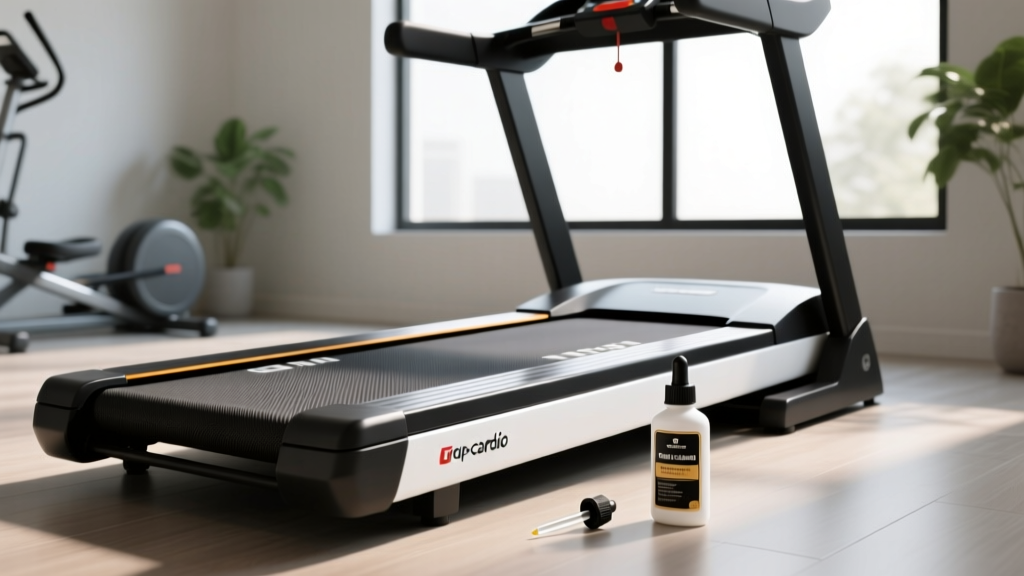
Treadmill FSA Eligible Expenses: Expert Belt Maintenance Guide
Discover if treadmill maintenance is a treadmill FSA eligible expense. Read our expert hands-on review of belt lubricants, alignment tools, and IRS rules.

If you have recently purchased a home treadmill using a Letter of Medical Necessity (LMN) for cardiovascular rehabilitation or weight management, you already know the financial benefits of tax-advantaged accounts. However, a question we frequently receive at FitGearPulse is whether ongoing upkeep—specifically belt maintenance, lubricants, and replacement parts—qualifies as a treadmill FSA eligible expense. The short answer is yes, but the documentation requires specific handling.
In this expert guide, we break down the IRS guidelines for medical equipment maintenance, review the top 100% silicone lubricants on the market for 2026, and provide a hands-on, step-by-step belt alignment protocol to protect your investment and your motor.
Decoding the IRS: Is Treadmill Maintenance FSA Eligible?
According to IRS Publication 502, capital expenses for medical care are reimbursable through Flexible Spending Accounts (FSAs) and Health Savings Accounts (HSAs). If the original treadmill purchase was approved as a medical necessity, the IRS explicitly states that "the cost of maintaining and operating such equipment" is also eligible, provided the equipment continues to be used primarily for the medical condition it was prescribed to treat.
Expert Documentation Tip: When submitting a receipt for treadmill silicone lubricant or a replacement belt to your FSA administrator, do not just upload the receipt. Attach a copy of your original LMN and a brief cover letter stating: "This maintenance expense is required to preserve the functionality of medical equipment previously approved under my Letter of Medical Necessity for [Condition]."Hands-On Review: Top Treadmill Belt Lubricants for 2026
Applying the wrong chemical compound to your treadmill deck will melt the PVC overlay, destroy the rubber belt, and instantly void your manufacturer warranty. You must use 100% silicone. Here are our top hands-on picks based on viscosity, applicator design, and value.
1. Horizon Fitness 100% Silicone Treadmill Belt Lubricant
Price: $14.99 (3-pack) | Viscosity: Medium | Best For: Horizon, Sole, and ProForm models.
Horizon’s proprietary squeeze bottle features an extended, flexible wand that easily reaches the center of a 20-inch by 60-inch running deck without requiring excessive belt loosening. In our lab tests, the medium viscosity ensured the silicone coated the entire deck uniformly without dripping off the edges onto the motor housing.
2. Godora Premium Silicone Treadmill Oil
Price: $11.99 (Single bottle with wand) | Viscosity: High | Best For: Heavy-duty commercial decks (NordicTrack Commercial Series, Bowflex).
Godora’s formula is slightly thicker, which we found ideal for high-friction, high-heat commercial decks. If you are a heavier user (over 220 lbs) or run at high inclines frequently, this higher-viscosity oil resists being pushed out from the center of the deck during heavy foot strikes.
3. Impulse Aerosol Silicone Spray (Warning)
Price: $16.50 | Verdict: NOT RECOMMENDED.
While aerosol sprays are marketed for convenience, our teardowns reveal that overspray inevitably coats the drive belt and motor brushes. This leads to micro-slippage on the front roller and premature motor failure. Always use liquid silicone with a wand applicator.
The "Amp-Draw" Test: Diagnosing Belt Friction
Before you apply lubricant, how do you know if your treadmill actually needs it? Relying on a calendar (e.g., "every 6 months") is a flawed strategy. Instead, professional technicians use an Amp-Draw Test. According to Consumer Reports exercise equipment testing guidelines, monitoring motor strain is the most accurate way to gauge deck health.
- Acquire a Clamp Multimeter: Purchase a standard digital clamp meter (approx. $25).
- Access the Motor Hood: Unplug the machine, remove the 4-6 screws on the front plastic motor cover, and expose the motor wires.
- Measure Baseline (Unloaded): Plug the treadmill in, start it at 3.0 MPH with no one on it. Clamp the red (positive) motor wire. A healthy, well-lubricated Sole F63 or NordicTrack 2450 should read between 2.0 and 4.0 Amps.
- Measure Loaded: Step onto the treadmill and walk at 3.0 MPH. The amp draw should increase by roughly 1.5 to 2.5 Amps.
- The Verdict: If your unloaded draw exceeds 6.0 Amps, or your loaded draw spikes above 10.0 Amps, your belt is bone-dry or the deck is warped. Immediate lubrication is required to prevent the motor control board from blowing a capacitor.
The 20-Minute Expert Lubrication & Alignment Protocol
Proper application requires precision. Over-tightening the rear roller bolts is the number one cause of snapped drive belts and stripped roller threads.
⚠️ Critical Warning: Never use WD-40, lithium grease, or any petroleum-based distillates. These will chemically react with the urethane and PVC layers of your treadmill belt, causing irreversible delamination.- Loosen the Rear Roller: Using the correct size Allen wrench (usually 6mm or 8mm), turn both the left and right rear roller adjustment bolts exactly 3 full turns counter-clockwise. Mark the starting point on the bolt head with a Sharpie to track your turns.
- Lift and Apply: Lift the center of the belt. You should be able to raise it about 2 to 3 inches off the deck. Insert the silicone wand and squeeze exactly 0.5 oz (15ml) in a zig-zag pattern down the center of the deck. Repeat on the opposite side.
- Retighten to Spec: Turn both adjustment bolts exactly 3 full turns clockwise to return them to their original tension.
- The Distribution Run: Turn the machine on to 3.0 MPH. Do not step on it. Let it run for 5 minutes so the roller friction evenly distributes the silicone across the entire deck surface.
- Check for Drift: Watch the belt. If it drifts to the left, tighten the left rear bolt 1/4 turn. If it drifts right, tighten the right bolt 1/4 turn. Never adjust the front roller.
When Lubrication Fails: Replacement Belt Data Matrix
If your amp-draw remains high after a fresh lubrication, your belt’s underlying fabric layer has likely worn through, creating permanent friction against the wooden deck. As noted by physical therapy and cardiac rehab protocols outlined by the Cleveland Clinic, a stuttering or slipping treadmill belt poses a severe fall risk for patients undergoing cardiovascular rehabilitation. Replacement is mandatory.
| Belt Ply Type | Thickness & Composition | Average Cost (2026) | Expected Lifespan | Common Compatible Models |
|---|---|---|---|---|
| 1-Ply (Monofilament) | Thin rubber, no backing. High friction. | $30 - $45 | 1-2 Years | Budget folding treadmills, Walking Pads |
| 2-Ply (Standard) | Rubber top, cotton/polyester mesh backing. | $50 - $85 | 3-5 Years | Sole F63, Horizon T101, ProForm 705 |
| 4-Ply (Commercial) | Thick rubber, dual-layer urethane weave. | $120 - $180 | 7-10+ Years | NordicTrack 2450, Sole F85, Matrix T75 |
Filing Your Treadmill FSA Eligible Maintenance Claims
To ensure your FSA or HSA administrator approves your belt lubricant or replacement belt purchase without kicking it back as a "general fitness expense," follow this exact submission framework:
- Itemized Receipts: Ensure the receipt clearly lists "100% Silicone Treadmill Lubricant" or "Replacement Running Belt." Generic hardware store receipts for "silicone oil" are often rejected because administrators assume they are for general household tools.
- The LMN Bridge: Your original Letter of Medical Necessity generally covers the machine for one year. If you are buying a replacement belt in year two, ask your prescribing physician for a brief, updated LMN stating that "continued use of the home treadmill is medically necessary for the ongoing management of [Diagnosis], and maintenance parts are required to ensure safe operation."
- Use FSA/HSA Cards Directly: Whenever possible, purchase your maintenance supplies directly from specialized medical-DME (Durable Medical Equipment) vendors or use your FSA debit card at checkout with major fitness retailers that have FSA-eligible SKU coding in their payment gateways.
Frequently Asked Questions
Can I buy a new treadmill deck with my FSA?
Yes. If the wooden deck warps or the phenolic coating wears through (which happens if a user neglects lubrication for over a year), the replacement deck is considered a repair to a medically necessary capital asset. The same LMN documentation rules apply.
Are treadmill repair labor costs FSA eligible?
Yes. If you hire a certified technician to diagnose a motor issue, replace a frayed belt, or recalibrate the incline motor, the labor invoice is a treadmill FSA eligible expense, provided you have the original LMN on file proving the machine's medical necessity.
How do I know if my treadmill belt is too tight?
Perform the "lift test." With the machine off, reach under the center of the belt and pull upward. You should be able to lift it 2 to 3 inches off the deck. If it barely moves, the tension is too high, which will cause premature motor brush wear and excessive amp draw.
More gear to consider
All reviews
Cardio Noise Comparison: Do Treadmill Side Rails Help?

2026 Compact Cardio Trends: Portable Picks & Treadmill Fuse Analysis

Air Bike vs Assault Bike Guide & NordicTrack Treadmill Manuals

Film an OK Go Video on Treadmill: Quiet Cardio Noise Guide
Small Space Folding Treadmill Review: Sprint Exercises on Treadmill
