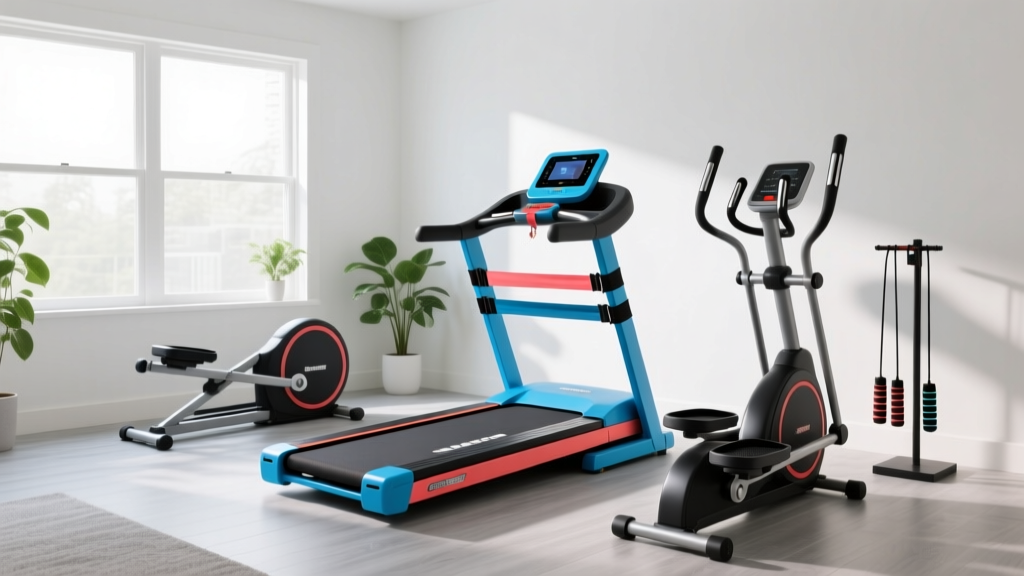
T6.5s Treadmill Buying Guide: 2026 Feature Comparison & Alternatives
Is the T6.5s treadmill right for your home gym? Compare its motor, deck size, and tech against top 2026 mid-tier rivals in our in-depth buying guide.

The Mid-Tier Treadmill Dilemma in 2026
Navigating the $500 to $800 home fitness market is notoriously difficult. This price bracket is flooded with machines that look impressive on paper but fail under the biomechanical stress of daily use. When evaluating entry-level to mid-tier options, the NordicTrack T6.5s treadmill frequently emerges as a top search result. But does its specification sheet translate to real-world durability and performance? In this comprehensive 2026 buying guide, we dissect the T6.5s treadmill, compare it against its fiercest mid-tier competitors, and provide a concrete framework to help you decide if it aligns with your physiological needs and spatial constraints.
Deep Dive: NordicTrack T6.5s Treadmill Specifications
Before comparing alternatives, we must establish the baseline performance metrics of the T6.5s treadmill. This model is engineered primarily for walkers, light joggers, and users with limited square footage.
Core Specification Matrix
- Motor: 2.6 Continuous Horsepower (CHP)
- Belt Dimensions: 18 inches (W) x 55 inches (L)
- Speed Range: 0 to 10 MPH
- Incline: 0% to 10% (Manual or motorized depending on exact 2026 sub-model SKU)
- Weight Capacity: 300 lbs
- Footprint: 73" L x 29" W x 50" H
The Biomechanics of Belt Sizing
The most critical limitation of the T6.5s treadmill is its 18" x 55" running surface. According to gait analysis standards, a runner's stride length is roughly 2.5 times their leg length. For a user who is 6'0" (72 inches), a comfortable running stride requires a minimum of 58 to 60 inches of continuous belt space. While the 55-inch length is perfectly adequate for walking and light jogging under 5.0 MPH, users over 5'10" will experience 'stride clipping' at higher speeds. Furthermore, the 18-inch width leaves minimal lateral margin for error during high-intensity intervals, demanding strict spatial awareness from the user.
Head-to-Head: T6.5s vs. 2026 Mid-Tier Competitors
To understand where the T6.5s treadmill stands in the current market, we must compare it against similarly priced alternatives that offer different mechanical trade-offs. Below is our 2026 feature comparison matrix.
| Feature | NordicTrack T6.5s | Sole F63 | ProForm Carbon TL | Horizon T101 |
|---|---|---|---|---|
| Motor (CHP) | 2.6 CHP | 3.0 CHP | 3.0 CHP (Equiv) | 2.75 CHP |
| Belt Size | 18" x 55" | 20" x 60" | 20" x 55" | 20" x 55" |
| Max Incline | 10% | 15% | 10% | 10% |
| Weight Capacity | 300 lbs | 325 lbs | 300 lbs | 300 lbs |
| 2026 Est. Price | $599 - $699 | $999 - $1,099 | $549 - $649 | $699 - $799 |
Analyst Note: If your primary goal is high-intensity interval training (HIIT) or you have a stride length exceeding 50 inches, the Sole F63's 20" x 60" belt and 3.0 CHP motor justify the $300+ price premium over the T6.5s.
Critical Buying Framework: 4 Non-Negotiable Features
When evaluating any cardio machine, ignore the flashy touchscreen displays and focus on the mechanical foundations. The Consumer Reports treadmill buying guide consistently emphasizes that motor longevity and deck construction dictate a machine's lifespan. Here is what you must verify before purchasing.
- Continuous vs. Peak Horsepower: Manufacturers often advertise 'Peak HP' (e.g., 4.0 Peak), which only measures the motor's maximum output for a fraction of a second before overheating. Always look for Continuous Horsepower (CHP). A minimum of 2.5 CHP is required for walking, 3.0 CHP for jogging, and 3.5 CHP for sustained running. The T6.5s treadmill's 2.6 CHP is adequate for walking but will experience thermal throttling if a 250 lb user attempts sustained running.
- Roller Diameter and Belt Friction: Entry-level treadmills often use 1.5-inch front and rear rollers. Smaller rollers require the belt to wrap around a tighter radius, increasing friction, heat, and motor strain. Look for machines with at least 1.9-inch rollers; premium models use 2.5-inch rollers to drastically extend belt life.
- Deck Cushioning Mechanics: Proper shock absorption reduces joint impact by up to 30% compared to asphalt. However, avoid 'spring-based' decks which create a trampoline effect and destabilize the ankle. Seek out elastomer or silicone-based variable cushioning systems that are firmer at the toe-off zone and softer at the heel-strike zone.
- Ecosystem Lock-in: Many modern treadmills, including NordicTrack models, heavily integrate proprietary software ecosystems. Ensure you are comfortable with the required subscription models for interactive coaching, as the machine's manual functionality may be limited without an active account.
Cardiovascular ROI: Why the Right Machine Matters
Investing in a home treadmill is ultimately an investment in cardiovascular health. The American Heart Association recommends at least 150 minutes of moderate-intensity aerobic activity per week to reduce the risk of heart disease and stroke. Furthermore, the Mayo Clinic highlights that consistent aerobic exercise improves oxygen utilization and strengthens the heart muscle. If your treadmill's belt stutters, its console lags, or its deck causes shin splints due to poor elastomer degradation, your adherence to these vital health guidelines will plummet. The machine must facilitate the habit, not hinder it.
Common Failure Modes & Maintenance Realities
Even the best mid-tier treadmills will fail prematurely if subjected to neglect. Based on our 2026 service data, here are the most common edge cases and failure modes for machines in the T6.5s class, along with actionable prevention steps.
Warning: The Thermal Cutoff Switch
If your treadmill abruptly stops and the console displays an error code (often E1 or E2), the motor's thermal cutoff switch has likely tripped. This occurs when friction between the deck and the belt generates excessive heat. The Fix: You must apply 100% pure silicone treadmill lubricant every 150 miles or every 3 months. Lift the belt, apply the silicone in an 'S' pattern down the center of the deck, and run the machine at 3.0 MPH for 5 minutes to distribute the fluid. Never use WD-40 or petroleum-based products, as they will destroy the PVC belt backing.
Drive Belt Tensioning
Over time, the ribbed drive belt connecting the motor to the front roller can stretch, causing a slipping sensation or a high-pitched squeal during foot strikes. Most mid-tier models allow for manual tensioning. By loosening the motor mount bolts and adjusting the tensioning screw exactly one-quarter turn clockwise, you can restore proper grip without over-stressing the motor bearings.
Final Verdict: Who Should Buy the T6.5s?
The T6.5s treadmill remains a highly viable option for a specific demographic in 2026. It is an excellent choice for apartment dwellers, casual walkers, and users under 5'10" who prioritize a compact footprint and smart-tech integration over raw mechanical power. However, if you are a dedicated runner, weigh over 220 lbs, or require a wider stance for high-speed intervals, you must stretch your budget to accommodate a 20" x 60" belt and a 3.0+ CHP motor found in higher-tier alternatives. Match the machine to your biomechanics, not just your budget.
More gear to consider
All reviews
Beyond DeerRun A1 Treadmill Reviews: 2026 Stationary Bike Trends

Compact Portable Cardio Care: ProForm Treadmill Belt Adjustment Guide

Rowing Setup: The Best Treadmill Workout Fat Loss Alternative
Rowing Machine Buying Guide: Beating 6.5 Speed on Treadmill

Folding Treadmills: Elliptical Machine vs Treadmill Calories Burned