Treadmill Belt Care & Ladder Treadmill Machine Space Layouts
Discover how compact gym layouts affect treadmill belt maintenance and lubrication, and compare spatial needs with a ladder treadmill machine.

The 'Service Envelope': Why Compact Layouts Destroy Treadmill Belts
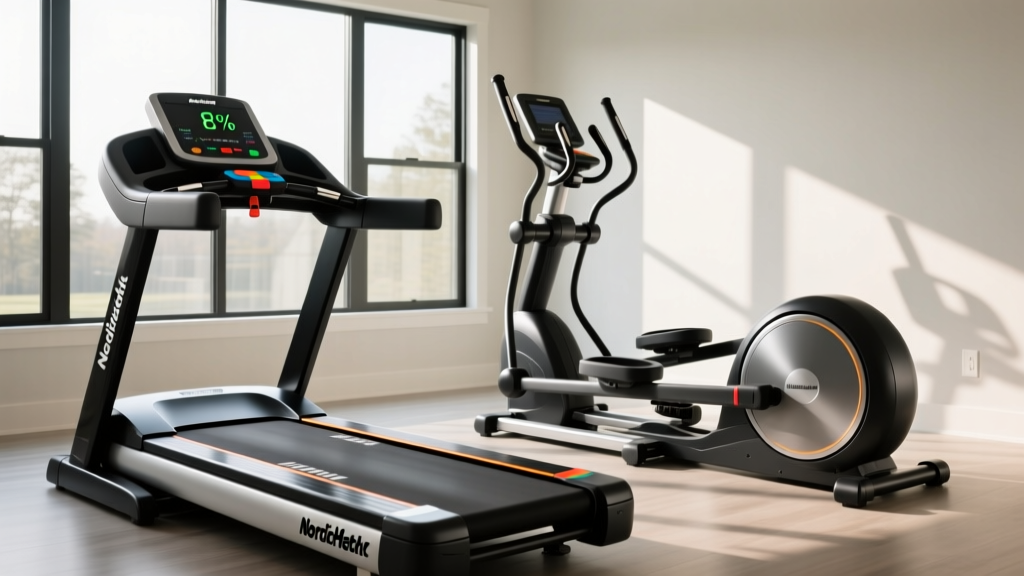
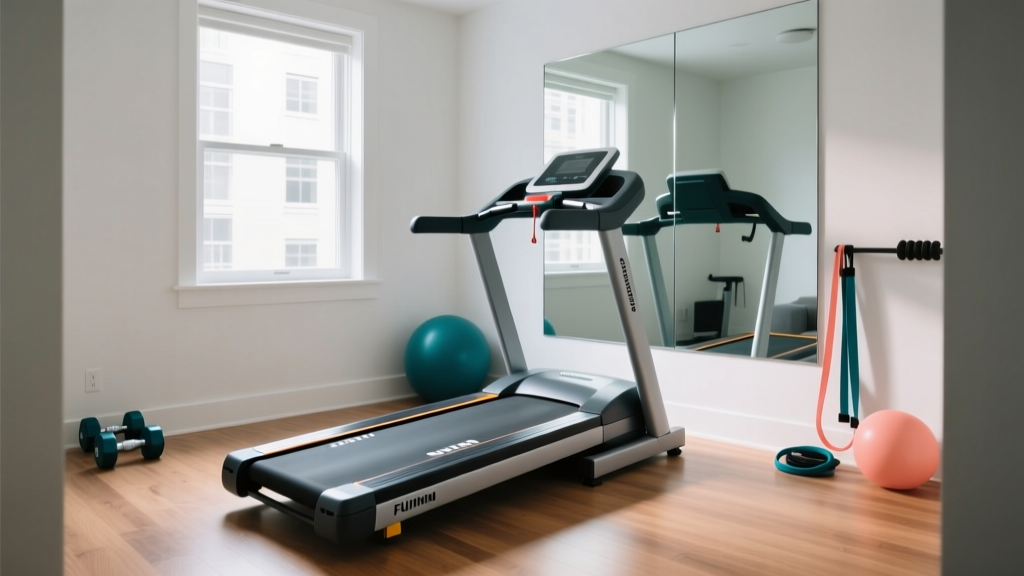
As home gym layouts in 2026 increasingly favor high-density, multi-use spaces, fitness enthusiasts are pushing heavy cardio equipment into tight alcoves, corners, and fold-away closets. While this maximizes your usable floor plan, it completely ignores a critical spatial concept known in industrial design as the 'service envelope.' The service envelope is the physical clearance required around a machine to perform routine maintenance. When you shove a standard folding treadmill flush against a wall or wedge it between a rack and a desk, you are actively accelerating the degradation of its most vital component: the belt and deck interface.
Treadmill belt maintenance and lubrication are not just about reducing friction; they are about heat dissipation and debris management. In a space-optimized layout with zero lateral clearance, ambient dust, pet dander, and fabric fibers from nearby laundry areas are pulled directly into the motor compartment and trapped under the belt. This creates an abrasive paste that eats through the phenolic coating of the MDF deck, leading to catastrophic motor draw spikes and eventual control board failure.
The Physics of Friction: How Spatial Constraints Accelerate Wear
To understand why spatial layout dictates maintenance frequency, you must understand the thermodynamics of a running treadmill belt. A standard 20-inch by 55-inch running belt generates significant kinetic heat. In an open room, convective airflow cools the deck. In a tight, space-optimized corner, that heat is trapped.
Expert Insight: According to equipment repair specialists at Treadmill Doctor, heat buildup from poor ventilation and lack of lateral airflow is a leading cause of premature belt delamination and deck warping in residential settings. Trapped heat softens the factory-applied silicone, causing it to migrate to the edges and leave the center of the deck dry and vulnerable to friction burns.
If your layout forces your treadmill into a corner, your lubrication schedule must shift from the standard 'every 130 miles' to a strict 90-day interval, regardless of mileage, to compensate for the accelerated drying and debris accumulation.
Step-by-Step Treadmill Belt Lubrication for Tight Alcoves
Performing treadmill belt maintenance in a confined space requires a strategic approach. You cannot easily walk around the machine to check alignment, so precision is paramount.
⚠️ CRITICAL WARNING: Never use WD-40, petroleum-based oils, or generic household lubricants. These will dissolve the UHMWPE (Ultra-High-Molecular-Weight Polyethylene) backing of the belt and destroy the deck. Use only 100% pure liquid silicone formulated specifically for fitness equipment.- Access the Rear Roller: In a tight space, you may need to slide the treadmill out just enough to access the rear end caps. Use a 15mm socket wrench or the specific Allen key provided by your manufacturer to loosen the rear roller adjustment bolts exactly two full turns counter-clockwise on both sides.
- Measure the Lift: Reach under the center of the belt. You should be able to lift it exactly 2 to 3 inches off the deck. If it is tighter, the tension is too high for proper lubricant distribution.
- Apply the Silicone: Insert the applicator tube under the belt. Squeeze exactly 1 ounce (half a standard 2oz bottle) in a zig-zag pattern across the width of the deck. Do not over-apply. Excess silicone will squeeze out the sides, coat the drive rollers, and cause severe belt slipping.
- Distribute the Lubricant: Turn the machine on to 3.0 MPH. Because you are in a confined space and cannot safely walk on it from multiple angles, use a long, smooth wooden dowel or a specialized deck spreader tool under the belt to manually push the silicone toward the edges while the belt cycles for 5 minutes.
- Re-Tension and Align: Tighten the rear bolts back to their original position. Use a piece of painter's tape on the side rails to mark the belt's tracking position before you started, ensuring you return it to the exact same alignment.
Spatial Clearance Matrix: Standard Belt vs. Ladder Treadmill Machine
When optimizing a micro-gym, many designers pivot away from horizontal treadmills entirely, opting instead for a ladder treadmill machine (such as vertical climbing treadmills or angled stepping climbers). This drastically alters the maintenance profile and the spatial requirements of the room. Below is a comparison of how these two machines interact with compact layouts and maintenance routines.
| Feature | Standard Horizontal Treadmill | Ladder Treadmill Machine |
|---|---|---|
| Average Footprint | 70" L x 30" W (Foldable) | 49" L x 31" W (Fixed) |
| Lateral Service Clearance | 20" required on both sides for belt care | 0" (Flush to wall is acceptable) |
| Vertical Service Clearance | Standard 8' ceiling is fine | 84"+ required for user & top access |
| Primary Lubrication Need | 100% Silicone (Belt to Deck) | White Lithium Grease (Chains & Sprockets) |
| Debris Vulnerability | High (Dust trapped under belt) | Low (Open-air track design) |
As the matrix illustrates, if your space optimization strategy involves pushing equipment flush against a wall, a ladder treadmill machine offers a distinct advantage. Because it relies on an exposed chain-and-slat track system rather than a friction-based belt and deck, it does not require lateral clearance for silicone application. However, you must trade that lateral space for vertical clearance, ensuring you have the overhead room to access the top sprockets for annual bearing greasing.
Tensioning and Alignment: The Uneven Floor Dilemma
Space optimization often means utilizing transitional spaces like garages, sunrooms, or converted attics. These areas rarely feature perfectly level subfloors. When a 200-pound treadmill frame rests on an uneven surface in a tight corner, the frame experiences torsional twist. This twist misaligns the front and rear rollers, causing the belt to track aggressively to the left or right, eventually fraying the edges against the side rails.
The American Council on Exercise emphasizes that proper equipment spacing and foundational support are critical for both user biomechanics and equipment longevity. To combat this in a compact layout:
- Use a High-Density Equipment Mat: Do not use thick, squishy yoga mats. Use a 3/8-inch thick vulcanized rubber mat. This provides a unified, semi-rigid plane that bridges minor floor divots and prevents the treadmill feet from sinking unevenly.
- Shim the Frame, Not the Feet: If the floor is severely sloped, place composite shims under the rubber mat (never directly under the plastic treadmill feet, which will crack under dynamic loads).
- The 'Walk Test': After lubricating and tensioning in a tight space, stand on the side rails, start the belt at 2.0 MPH, and gently drag your sneakers on the belt. If it pulls to one side, adjust the rear roller bolt on the side it is pulling toward by exactly one-quarter turn clockwise. Wait 30 seconds for the belt to track before making further adjustments.
Advanced Troubleshooting: Edge Cases in High-Density Gyms
When maintaining your equipment in a space-optimized environment, be on the lookout for these specific, layout-induced failure modes:
- The 'Static Shock' Symptom: If you experience static shocks when touching the console in a dry, carpeted alcove, your belt is bone dry, or the grounding wire on the motor hood has vibrated loose. Re-lubricate immediately and check the chassis ground.
- Motor Hood Overheating: If your treadmill's motor hood is inches from a wall or a heavy curtain, the internal cooling fan will recirculate its own exhaust heat. This triggers the thermal breaker, shutting the machine down mid-run. Always maintain a minimum 12-inch exhaust gap behind the motor hood, even in the tightest layouts.
- Folding Mechanism Binding: In tight spaces, users often fold the treadmill deck while it is still dusty. Grit falls into the hydraulic shock cylinder, scoring the piston and causing the deck to slam down dangerously. Wipe the cylinder shaft with a microfiber cloth monthly.
Ultimately, designing a space-efficient home gym in 2026 requires looking beyond the machine's static footprint. By respecting the service envelope, adhering to strict silicone lubrication metrics, and understanding the spatial trade-offs between horizontal belts and vertical climbing alternatives, you can ensure your cardio equipment survives the rigors of both your workouts and your floor plan.
More gear to consider
All reviews
Stair Climber Guide: NordicTrack vs ProForm 400 C Treadmill

Elite Runner Treadmill Setup: Motor & Horsepower Guide
Stair Treadmill & Cardio Machine Noise: 2026 Buyer Guide

Small Space Folding Treadmills: Calorie Counter on Treadmill Truth

Is Running on a Treadmill Good for You? Walking Pad Mistakes & Fixes