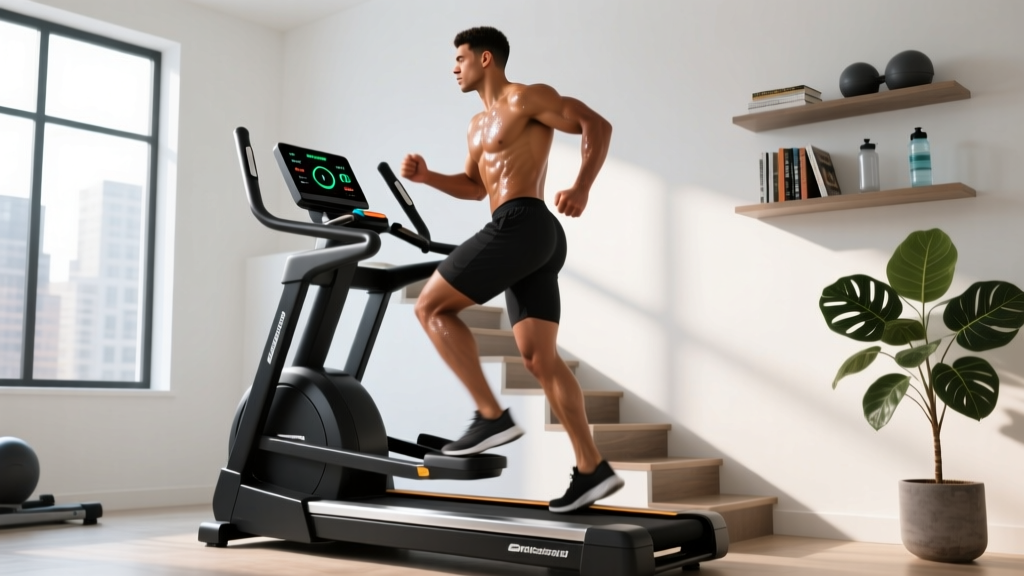
Stair Climber Guide: 12-3-30 Treadmill Before and After Results
Learn how to replicate the viral 12-3-30 treadmill before and after results using a home stair climber with this beginner-friendly step-by-step guide.

The fitness internet remains obsessed with the viral 12-3-30 workout, and for good reason. Searching for 12-3-30 treadmill before and after transformations yields thousands of results showcasing impressive lower-body toning, cardiovascular improvements, and fat loss. The protocol—walking at a 12% incline, at 3 miles per hour, for 30 minutes—is a masterclass in low-impact, high-yield Zone 2 cardio. However, there is a massive logistical hurdle for home gym enthusiasts: motorized treadmills capable of a true 12% incline are enormous, heavy, and expensive.
This is where the home stair climber enters the conversation. As a senior equipment reviewer, I frequently guide beginners on how to achieve the exact same metabolic demand and body recomposition results using a fraction of the floor space. This beginner-friendly, step-by-step guide will show you how to select the right stair climber machine for home use and adapt the 12-3-30 methodology to replicate those coveted before and after results.
The Baseline: What is the 12-3-30 Protocol?
Originally popularized by influencer Lauren Giraldo, the 12-3-30 treadmill workout requires setting your machine to a 12% incline, a speed of 3 mph, and walking for 30 minutes. This specific combination elevates the heart rate into the fat-burning and aerobic base-building zones (typically 120–145 BPM for most adults) without the joint-pounding impact of running.
Why Pivot to a Home Stair Climber?
While the treadmill is fantastic, a standard motorized treadmill requires a minimum footprint of 70 by 30 inches, plus an additional 20 inches behind it for safety clearance. In contrast, a vertical stair climber or compact stepper requires as little as 25 by 18 inches. Furthermore, stair climbing forces pure vertical displacement against gravity. According to data from Harvard Health Publishing, vigorous stair climbing can burn upwards of 250 to 350 calories in just 30 minutes, rivaling or exceeding the caloric expenditure of an inclined treadmill walk.
Biomechanically, the stair climber shifts the load heavily onto the gluteus maximus, quadriceps, and calves, while demanding greater core stabilization since you are lifting your entire body weight with every step, rather than relying on the horizontal momentum of a treadmill belt.
Choosing Your Home Stair Climber (2026 Market Data)
To replicate the sustained 30-minute effort of the 12-3-30 routine, you need a machine with a smooth stepping motion and reliable resistance. Here is a breakdown of the top home stair climbers for beginners, categorized by budget and space constraints.
| Model | Type | Footprint | Est. Price | Best For |
|---|---|---|---|---|
| Sunny Health & Fitness SF-E3912 | Mini Stepper | 25" x 18" | $129 | Apartments / Tight Spaces |
| Bowflex Max Trainer M9 | Elliptical/Climber Hybrid | 49" x 30" | $1,999 | Tech-Driven Beginners |
| NordicTrack FS14i Freestrider | Freestride Climber | 59" x 30" | $2,499 | Full Range of Motion |
Step-by-Step: Adapting 12-3-30 to Your Stair Climber
You cannot simply type '12' and '3' into a stair climber console. To match the metabolic equivalent (MET) of walking at 3 mph on a 12% grade (roughly 8.5 METs), we must translate this into Steps Per Minute (SPM). A 3 mph walk covers 264 feet per minute. On a standard 8-inch stair riser, matching that vertical and horizontal energy output requires a sustained pace of roughly 90 to 110 SPM, depending on your body weight and the machine's hydraulic or magnetic resistance.
Step 1: Machine Calibration and Posture Setup
Before starting the timer, establish your baseline posture. The most critical error beginners make on stair climbers is 'hanging' on the handrails. Leaning your body weight onto the console or side rails reduces caloric expenditure by up to 20% and entirely disengages your core and lower back stabilizers. Stand tall, keep your chest up, and use the rails only for light balance, not weight support.
Step 2: The 5-Minute Warm-Up (60-70 SPM)
Start the machine at a low resistance. Aim for 60 to 70 steps per minute. Focus on pressing through your entire foot, particularly your heel, rather than just staying on your toes. This ensures the glutes and hamstrings are activated early, mimicking the posterior chain engagement of an inclined treadmill walk.
Step 3: The 20-Minute '12-3-30 Equivalent' Climb (90-110 SPM)
Increase the resistance so that maintaining 90 to 110 SPM feels challenging but sustainable. Your heart rate should elevate to 65%–75% of your maximum heart rate. If you are 30 years old, your max HR is roughly 190 BPM, meaning your target zone is 123 to 142 BPM. This perfectly mirrors the cardiovascular demand of the 12-3-30 treadmill protocol. Maintain this pace for 20 uninterrupted minutes.
Step 4: The 5-Minute Active Cool Down
Drop the resistance back to level 1 or 2 and slow your pace to 50 SPM. Allow your heart rate to gradually descend below 100 BPM before stepping off the machine. This prevents blood pooling in the lower extremities, a common issue after intense vertical cardio.
Expected Before and After: Treadmill vs. Stair Climber
When analyzing 12-3-30 treadmill before and after results, users typically report leaner calves, improved hamstring definition, and overall fat loss. How does the stair climber compare over an 8-to-12-week timeline?
- Weeks 1-4 (Neurological Adaptation): On a treadmill, beginners often experience shin splints or anterior tibialis fatigue from the 12% incline. On a stair climber, the initial fatigue is localized to the quadriceps and calves. You will notice improved balance and a rapid increase in your baseline SPM.
- Weeks 5-8 (Muscular Endurance & Hypertrophy): The stair climber forces a deeper range of motion in the knee and hip joints compared to walking. Expect more pronounced glute activation and visible toning in the quadriceps. The caloric burn remains highly consistent, aiding in steady fat loss when paired with a caloric deficit.
- Weeks 9-12 (Cardiovascular Base): Following the American Heart Association guidelines for sustained aerobic activity, your resting heart rate will likely drop by 3 to 5 BPM. Your 'before and after' photos will reflect reduced water retention, lower body fat percentage, and significantly improved posture due to the core demands of the unassisted stair climb.
Common Beginner Mistakes and Edge Cases
Warning: If your stair climber is a hydraulic mini-stepper (like the Sunny SF-E3912), the hydraulic cylinders can overheat and lose resistance if used continuously for more than 15-20 minutes at high speeds. For a full 30-minute session, you must pace yourself or take a 2-minute active rest at the 15-minute mark to let the cylinders cool.
Another edge case involves step depth. On treadmills, your foot strikes a flat belt. On stair climbers, beginners tend to 'short-step' by only pressing the ball of their foot onto the pedal. This shifts the burden entirely to the calves and Achilles tendon, increasing the risk of plantar fasciitis. The Fix: Consciously drive your heel down into the pedal at the bottom of every single step. Imagine you are trying to push the pedal through the floor.
Ultimately, while the 12-3-30 treadmill routine is an excellent protocol, a home stair climber offers a highly efficient, space-saving alternative that matches—and in some muscle groups, exceeds—the physiological benefits. By tracking your SPM, maintaining an upright posture, and committing to the 30-minute window, you will unlock the exact same transformative before and after results from the comfort of your living room.
More gear to consider
All reviews
What Does Inclining the Treadmill Do? 2026 Head-to-Head Comparison
Is 15 Incline on Treadmill Good? Home Stair Climber Guide

Petsite Treadmill Review: Best Folding Cardio for Small Spaces

SendNudesX Treadmill Noise Troubleshooting: How It Compares to Top Brands
Treadmill Plug Adapter Noise: Troubleshooting Cardio Machine Hum
