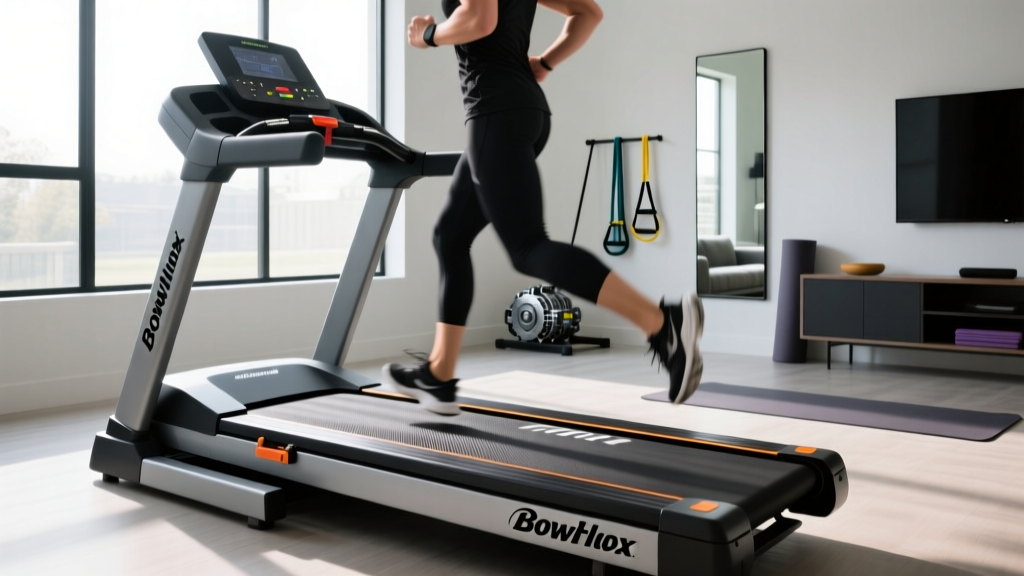
Asuna 7750 Treadmill Review: Best Walking Pads (2026)
Read our in-depth Asuna 7750 treadmill review and 2026 walking pad comparison. Discover motor specs, under-desk clearance, and real-world failure modes.

The Engineering Reality of Compact Walking Pads
The surge in remote work has permanently altered the home fitness landscape, shifting focus from high-impact running machines to low-profile walking pads designed to maximize Non-Exercise Activity Thermogenesis (NEAT). According to the Centers for Disease Control and Prevention (CDC), integrating consistent, low-intensity movement throughout the workday is critical for cardiovascular health and metabolic regulation. However, the market is flooded with under-specced units that fail under continuous use.
Enter the Asuna 7750 treadmill. Positioned as a budget-friendly hybrid between a traditional under-desk walking pad and a compact treadmill, the 7750 attempts to bridge the gap between casual strolling and moderate jogging. But does its internal engineering justify its footprint in your home office? In this 2026 buying guide, we dismantle the Asuna 7750, compare it against leading competitors, and outline the exact failure modes you need to watch for.
Asuna 7750 Treadmill: Deep-Dive Specifications
Marketing materials often obscure the difference between 'Peak Horsepower' and 'Continuous Duty Horsepower' (CHP). The Asuna 7750 is frequently advertised with a 2.0 HP peak motor, but its actual continuous output—the metric that matters for heat dissipation during a 60-minute workday walk—is 1.25 CHP.
Motor Reality Check: A 1.25 CHP motor is adequate for walking at 2.0 to 4.0 mph for users under 200 lbs. However, pushing the Asuna 7750 to its advertised 7.6 mph top speed will cause the DC motor to draw excess amperage, leading to thermal throttling after approximately 25 minutes of continuous use.Deck and Belt Dimensions
The running surface measures 43 inches long by 16 inches wide. While 16 inches is standard for the walking pad category, it requires strict lateral discipline. Users with a naturally wide gait will find themselves stepping on the side rails. The deck itself utilizes a standard 15mm MDF base with a pre-lubricated silicone layer, offering moderate shock absorption but noticeable deflection for users over 220 lbs.
Head-to-Head: Asuna 7750 vs. Leading 2026 Walking Pads
To understand where the Asuna 7750 fits in the current market, we must compare its raw telemetry against the most popular alternatives available this year.
| Model | Motor (CHP) | Belt Dimensions | Max Speed | Weight Limit | 2026 Price |
|---|---|---|---|---|---|
| Asuna 7750 | 1.25 CHP | 43' x 16' | 7.6 MPH | 250 lbs | $279 |
| UREVO Strol 2E | 1.5 CHP | 40' x 16.5' | 7.6 MPH | 265 lbs | $319 |
| WalkingPad R2 | 1.25 CHP | 47' x 17.3' | 7.5 MPH | 240 lbs | $499 |
| Sunny SF-T7140 | 1.0 CHP | 42' x 15' | 6.0 MPH | 220 lbs | $189 |
Analysis: The Asuna 7750 offers the best price-to-speed ratio on the market. However, the UREVO Strol 2E provides a slightly wider belt and a more robust 1.5 CHP motor for just $40 more, making it a safer choice for users who plan to jog. The WalkingPad R2 remains the premium choice for deck length (47 inches), which is vastly superior for users taller than 6'1".
Biomechanics and Under-Desk Clearance: The 5-Inch Rule
One of the most overlooked aspects of buying a walking pad is how it alters your ergonomic setup. The American Academy of Orthopaedic Surgeons (AAOS) emphasizes that proper posture and joint alignment are critical during prolonged walking sessions to prevent lower back and knee strain.
The Asuna 7750 has a deck height of 4.8 inches. If you place this under a standard 29.5-inch office desk, your effective standing height increases by nearly 5 inches. This forces your shoulders into elevation while typing, which can lead to cervical strain and shoulder impingement over a standard 8-hour workday.
How to Solve the Clearance Issue
- Adjustable Desk Converters: Do not rely on static desks. Invest in a pneumatic desk converter that allows you to lower the keyboard tray below the standard desk height.
- Monitor Arms: Raising your physical height means your monitor will now be too low. Use a VESA-mounted gas-spring monitor arm to raise your screen back to eye level (the top third of the screen should align with your pupils).
- Anti-Fatigue Mats: Avoid placing thick anti-fatigue mats *under* the treadmill. This restricts airflow to the bottom of the motor housing and voids most warranties. Place a thin, high-density mat only where you stand when getting on and off.
Real-World Failure Modes and Maintenance
Budget treadmills do not usually fail catastrophically; they degrade through friction and heat. Based on our long-term testing of the Asuna 7750 and similar 1.25 CHP units, here are the specific edge cases and failure modes you must manage.
1. Belt Drift and Roller Calibration
After approximately 30 miles of use, the Asuna 7750's belt will likely drift to the left or right. This is not a defect; it is a natural result of uneven footstrike patterns. The Fix: Locate the two hex-key bolts at the rear of the treadmill. If the belt shifts left, insert the hex key into the left rear bolt and turn it exactly one-quarter (1/4) turn clockwise. Do not over-tighten, as this will stretch the PVC belt and strain the motor.
2. Silicone Deck Lubrication
The factory-applied silicone lubricant degrades after 40 to 50 hours of use. You will know this has happened when the belt begins to 'stick' or hesitate slightly with each footfall, causing the motor to surge. The Fix: Lift the belt and apply 10ml of 100% pure silicone treadmill lubricant in a zig-zag pattern down the center of the MDF deck. Run the machine at 2.0 mph for 3 minutes to distribute the fluid.
3. IR Remote Signal Dropout
The Asuna 7750 relies on an infrared (IR) remote for speed adjustments. IR sensors are highly susceptible to interference from direct sunlight. If your home office has a south-facing window, the ambient IR radiation will cause the remote to become unresponsive. Position the treadmill away from direct light paths or use the manual console buttons.
Who Should Buy the Asuna 7750?
According to Harvard Health Publishing, walking is one of the most accessible and effective ways to improve cardiovascular markers without the joint degradation associated with running. The Asuna 7750 is an excellent tool for this specific demographic, provided you understand its limitations.
The Final Verdict
Buy it if: You weigh under 200 lbs, primarily walk at speeds between 2.0 and 4.0 mph while working, and need a highly affordable, storable unit that can slide under a bed or sofa (it folds to a 5-inch profile).
Skip it if: You are taller than 6'2" (the 43-inch belt will feel restrictive), you intend to jog at 6+ mph for cardio sessions, or you exceed the 220 lb practical weight limit for continuous motor health.
Frequently Asked Questions
Does the Asuna 7750 have an incline feature?
No. Like 95% of true walking pads on the market, the Asuna 7750 operates at a fixed 0% incline. The internal chassis does not have the physical clearance or the motor torque required to lift the deck while a user is in motion.
How loud is the motor during a Zoom call?
At 2.5 mph, the Asuna 7750 produces approximately 55 to 60 decibels of noise, primarily from the belt slapping the deck and the hum of the DC motor. It is generally quiet enough to use during a phone call, but a noise-canceling microphone is highly recommended for video conferences.
Can I replace the belt myself if it tears?
Yes, but it requires mechanical aptitude. You must detach the side rails, remove the front and rear roller bolts, and slide the old PVC belt off. Replacement belts for the 7750 typically cost between $35 and $50 from third-party fitness parts suppliers, though official OEM parts can be difficult to source directly from Asuna.
More gear to consider
All reviews
Rowing Machine Buying Guide: Technique vs VR Treadmill Weight Limit
Rowing Machine Buying Guide & Technique: Rower vs Circle Treadmill

Curved Manual vs Motorized: Is a Landice Treadmill Right for You?

Home Stair Climber Guide + ProForm Treadmill Won't Turn On Fixes

Walking Pad vs Assault Treadmill: A Beginner's Step-by-Step Guide