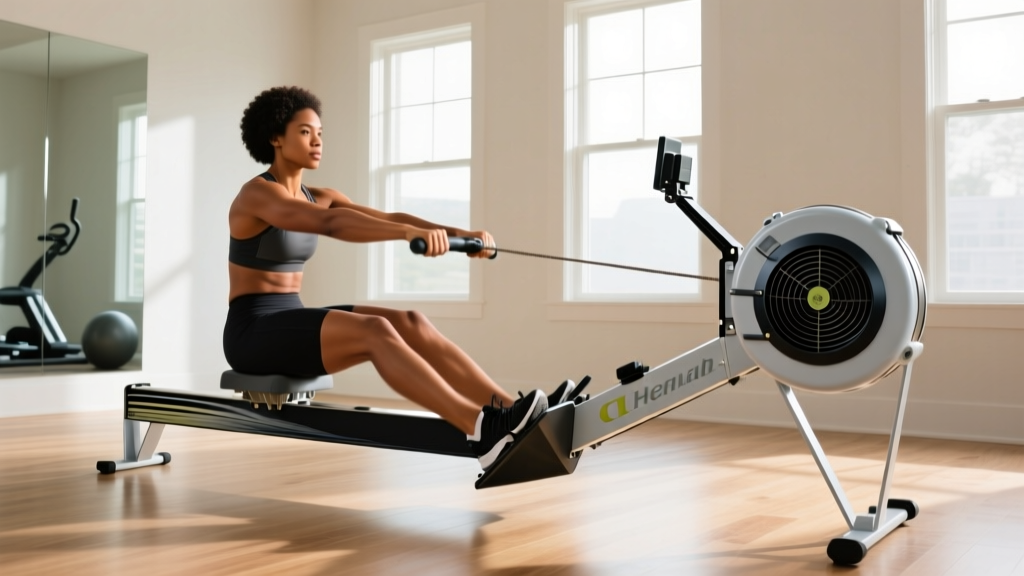
Rowing Machine Guide: Better Than a Stationary Bike or Treadmill?
Discover our 2026 rowing machine buying guide and technique breakdown. Learn why a rower might beat a stationary bike or treadmill for your home gym.

When outfitting a home gym, most buyers immediately face a binary dilemma: should I invest in a stationary bike or treadmill? While both are excellent for cardiovascular conditioning, they primarily target the lower body and often involve repetitive joint impact or static posture. The indoor rowing machine (ergometer) remains the most underutilized, high-yield conditioning tool on the market. This 2026 rowing machine buying guide and technique breakdown will help you determine if a rower is the superior choice for your fitness goals, and how to select and master the right model.
The Cardio Matrix: Rower vs. Stationary Bike or Treadmill
Before diving into specific models, it is crucial to understand how the biomechanics of rowing compare to the traditional stationary bike or treadmill setup. According to the CDC's physical activity guidelines, adults need at least 150 minutes of moderate-intensity aerobic activity weekly. Rowing fulfills this requirement while offering unique structural advantages.
| Feature | Indoor Rower | Stationary Bike | Treadmill |
|---|---|---|---|
| Muscle Recruitment | ~86% (Full Body) | ~40% (Lower Body) | ~50% (Lower/Core) |
| Joint Impact | Zero (Seated, fluid) | Zero (Seated) | High (Repetitive striking) |
| Caloric Burn (Vigorous) | 600-800 kcal/hr | 400-600 kcal/hr | 600-900 kcal/hr |
| Footprint (In Use) | ~8 ft x 2 ft | ~4 ft x 2 ft | ~6 ft x 3 ft |
| Storage | Stands upright or splits | Bulky, hard to move | Folds, but very heavy |
2026 Rowing Machine Buying Guide: The Top Contenders
The rowing machine market has segmented into three distinct resistance profiles: air, magnetic, and water. Here is how the top-tier models stack up this year.
1. Concept2 RowErg (The Gold Standard)
Price: ~$1,000 | Resistance: Air | Max User Weight: 500 lbs
The Concept2 RowErg remains the undisputed king of competitive rowing and CrossFit gyms. Its air resistance provides an infinite, variable drag that scales perfectly with your effort. The standard model features a 14-inch seat height, while the 'Tall' version (20-inch) is ideal for users with limited knee mobility. The PM5 monitor is bulletproof and connects seamlessly to third-party apps like ErgZone.
2. Hydrow Aurora (The Premium Immersive Experience)
Price: ~$2,495 | Resistance: Electromagnetic | Max User Weight: 375 lbs
Released as a more compact, affordable alternative to the original Hydrow, the Aurora uses a sophisticated electromagnetic drag system that perfectly mimics the feel of water without the maintenance. Its 16-inch HD touchscreen offers live, instructor-led workouts filmed on actual waterways. It is the best choice for users who need external motivation and studio-style programming.
3. Ergatta Rower (The Aesthetic Water Rower)
Price: ~$2,199 | Resistance: Water | Max User Weight: 350 lbs
Crafted from Baltic birch wood, the Ergatta looks like a piece of high-end furniture. Water resistance provides a soothing 'swoosh' sound and a highly organic catch feel. Unlike Concept2's interval-focused ecosystem, Ergatta's software gamifies fitness with racing intervals and pulse-based programs, making it ideal for users who dislike traditional HIIT metrics.
Demystifying the Damper and Drag Factor
The most common mistake beginners make on air rowers is cranking the side damper to level 10, assuming higher equals better. This is a fundamental misunderstanding of rowing physics.
Expert Insight: The damper (1-10) controls how much air enters the flywheel cage. What you actually want to monitor is the Drag Factor. A sleek racing shell on water has a drag factor of roughly 110-130. A heavy wooden rowboat has a drag factor of 200+. On a new Concept2, a damper setting of 3 to 5 usually yields the optimal 110-130 drag factor. Setting it to 10 will only exhaust your lower back before your cardiovascular system reaches its target zone.Biomechanical Technique: The Four Phases
Unlike a treadmill where you can passively walk while watching TV, rowing requires strict neurological sequencing. Proper form prevents lumbar strain and maximizes power output. According to the official Concept2 technique guidelines, the stroke is broken into four distinct phases:
- The Catch: Shins are perfectly vertical (no compression past 90 degrees). Arms are straight, shoulders relaxed, and the torso is leaned forward to roughly 11 o'clock. The lats are engaged to 'hang' off the handle.
- The Drive: The power sequence is legs, hips, arms. Push explosively with the legs while keeping the arms straight and the core braced. Once the legs are nearly extended, swing the hips open to 1 o'clock, and finally draw the handle to the lower sternum.
- The Finish: Legs are fully extended, torso slightly leaned back (1 o'clock), and the handle rests at the solar plexus. Elbows are drawn back and slightly elevated.
- The Recovery: The exact reverse of the drive. Arms extend first, torso hinges forward past the hips, and finally, the knees bend to slide back to the catch. The recovery should take twice as long as the drive (a 1:2 ratio).
Failure Mode Alert: 'Shooting the Slide'
What it is: 'Shooting the slide' occurs when you push with your legs during the Drive, but your hips don't follow. The seat moves backward, but the handle barely moves, placing immense, dangerous shear force on the lumbar spine.
The Fix: Ensure your core is braced and your lats are engaged before initiating the leg push. Imagine your legs and torso are a single, rigid block of concrete during the first half of the drive.
Long-Term Maintenance and Edge Cases
Cardio machines require upkeep, and rowers are no exception. If you are transitioning from a stationary bike or treadmill, be prepared for these specific maintenance requirements:
- Chain Maintenance (Air Rowers): The nickel-plated steel chain requires lubrication every 50 hours of use. Use only 10W-30 motor oil or 20W-50. Apply to a paper towel, wipe the chain while rotating the flywheel, and wipe off the excess. Never use WD-40 or silicone spray.
- Bungee Cord Wear: The elastomer bungee cord inside the handle retraction mechanism loses elasticity over time. If the handle fails to return to the cage quickly after a stroke, the bungee needs replacing. This is a $15 part and a 10-minute DIY fix on a Concept2, but requires more effort on enclosed water rowers.
- Dust Accumulation: Air rowers act as vacuums. Every 3 months, you must unscrew the flywheel cage and vacuum the dust buildup. Excessive dust restricts airflow, artificially lowering your maximum drag factor and altering your workout metrics.
- Water Tank Care (Water Rowers): If you choose an Ergatta or WaterRower, you must drop a chlorine tablet into the tank every 6 months to prevent algae growth. Never use bleach, as it will degrade the polycarbonate tank seals.
Final Verdict: Is a Rower Right for Your Home Gym?
If your primary goal is isolated leg endurance or casual, low-effort movement while reading, a stationary bike remains a viable option. If you want to simulate outdoor running mechanics, a treadmill is necessary. However, if you are looking for the most time-efficient, joint-friendly, full-body conditioning tool available in 2026, the indoor rower is unmatched. By understanding drag factor, mastering the 1:2 stroke ratio, and committing to basic chain and track maintenance, a high-quality ergometer will serve as the cornerstone of your home fitness regimen for decades.
More gear to consider
All reviews
Aesthetic Treadmill vs Stair Climber: Home Use Guide 2026

Walking Pad vs AFG Treadmill 7.1 AT: Common Mistakes & Fixes

What Do Treadmills Do For Your Body? 2026 Under-Desk Trends

Treadmill Versus Elliptical Machine: Space Layouts & Belt Care
Curved Manual vs Motorized: Is the A2350 Treadmill Worth It?
