
Rowing Machine Guide: An Alternative to Fun Treadmill Workouts
Discover why a rowing machine is the best low-impact alternative to fun treadmill workouts. Compare 2026 models, master technique, and optimize your home gym.

The Biomechanical Pivot: Beyond the Treadmill
Over the last few years, the fitness industry has heavily marketed fun treadmill workouts—gamified virtual trails, interactive incline routines, and app-driven walking pads. While these upright cardio sessions are excellent for weight-bearing bone density and quad endurance, they leave a massive gap in most home gym routines: the posterior chain. If you are looking to build a truly balanced 2026 home gym, the rowing machine (ergometer) is the ultimate, low-impact antidote to the treadmill.
According to the CDC Physical Activity Guidelines, adults need a mix of aerobic and muscle-strengthening activities. While fun treadmill workouts cover the aerobic baseline, they are heavily anterior-dominant (calves, quads, hip flexors). Rowing, conversely, recruits approximately 86% of the body's musculature per stroke. It is a horizontal, non-weight-bearing power movement that demands intense engagement from the glutes, hamstrings, lats, and core. Transitioning from a treadmill-centric routine to an ergometer-based one corrects postural imbalances and drastically reduces the repetitive impact forces on your knees and ankles.
Data Highlight: A 180-lb individual burns roughly 295 calories in 30 minutes of moderate treadmill walking. That same individual will burn approximately 440 calories in 30 minutes of moderate rowing, while simultaneously building upper-back and core strength.2026 Rowing Machine Buying Matrix: Air, Magnetic, and Water
Choosing the right rower depends on your space, budget, and sensory preferences. Unlike treadmills, which require massive continuous horsepower (CHP) motors, rowers rely on mechanical resistance. Here is how the top-tier 2026 models stack up against each other.
| Model | Resistance Type | 2026 Price | Footprint | Best For |
|---|---|---|---|---|
| Concept2 RowErg | Air | $1,200 | 8' x 2' | Purists, CrossFit, Data tracking |
| Hydrow Arc | Electromagnetic | $1,495 | 6'8" x 2' | Tech lovers, small spaces |
| WaterRower Classic | Water | $1,599 | 7' x 2' | Aesthetics, sensory feedback |
Expert Buying Advice: If you are used to the interactive screens that make fun treadmill workouts so engaging, the Hydrow Arc provides a similar immersive, instructor-led experience but with a much smaller footprint. However, if you care purely about performance metrics, durability, and resale value, the Concept2 RowErg remains the undisputed gold standard in 2026.
Mastering the Stroke: The 4-Phase Sequence
The most common failure mode for beginners is treating the rower like a seated upper-body pull. According to the American Council on Exercise (ACE), proper rowing biomechanics dictate a strict power distribution: 60% legs, 30% core/hips, and 10% arms.
- The Catch: Shins should be perfectly vertical (not past the toes). Arms are completely straight, shoulders are relaxed and down, and your torso is hinged forward at roughly an 11 o'clock position.
- Edge Case: If your heels lift off the footplates, your ankle dorsiflexion is too tight. Strap your feet slightly lower or work on ankle mobility.
- The Drive: This is an explosive push, not a pull. Push the floor away with your legs while keeping your arms straight and your core braced. Only when your legs are nearly fully extended do you hinge your hips back (to an 11 o'clock layback) and finally draw the handle to your lower sternum.
- The Finish: Legs are fully extended (soft lockout, not hyperextended), torso is slightly leaned back, and the handle is hovering just below the chest. Elbows should be drawn past the torso, not flared out.
- The Recovery: The exact reverse of the drive. Arms extend first, then the torso hinges forward past the knees, and only then do the knees bend to slide back to the catch.
- Timing Rule: The drive should take 1 second; the recovery should take 2 seconds. A 1:2 ratio ensures active recovery and prevents rushing the slide.
Troubleshooting the 'Treadmill Hunch'
Users who frequently do high-incline, fun treadmill workouts often develop tight hip flexors and a habit of leaning heavily on handrails. When they sit on a rower, this translates to a rounded upper back and an inability to hinge properly at the hips at the 'Catch' phase.
The Fix: Perform the 'Couch Stretch' for 2 minutes per leg before every rowing session to open the hip flexors. Furthermore, practice 'Pause Drills'—rowing with a 3-second pause at the Catch position to ensure your spine is neutral and your hips are properly hinged before initiating the drive.
Programming Your First 4-Week Rowing Block
To safely transition from upright treadmill cardio to horizontal rowing power, you must condition your lower back and hamstrings. Follow this progressive 4-week block designed for beginners.
- Week 1 (Form & Pacing): 5 x 500 meters. Target Stroke Rate (SPM): 20-22. Rest 2 minutes between intervals. Focus entirely on the 1:2 drive-to-recovery ratio.
- Week 2 (Aerobic Base): 3 x 1000 meters. Target SPM: 22-24. Rest 3 minutes between intervals. Keep your heart rate in Zone 2 (conversational pace).
- Week 3 (Lactate Threshold): 4 x 4 minutes. Target SPM: 24-26. Rest 2 minutes between intervals. Push the leg drive harder while maintaining the same stroke rate.
- Week 4 (Power Sprints): 8 x 250 meters. Target SPM: 28-30. Rest 90 seconds between intervals. Maximize wattage output on the monitor by driving explosively with the legs.
Expert Verdict: Reclaiming Your Floor Space
While the allure of gamified, fun treadmill workouts will always have a place in cardiovascular conditioning, they are fundamentally incomplete for total-body development. A rowing machine offers a superior biomechanical stimulus, zero joint impact, and a massive caloric return on investment. By selecting the right resistance profile—whether the indestructible air drag of the Concept2 or the sleek magnetic silence of the Hydrow—and respecting the technical nuances of the catch and drive, you will build a resilient, powerful posterior chain that treadmills simply cannot provide.
More gear to consider
All reviews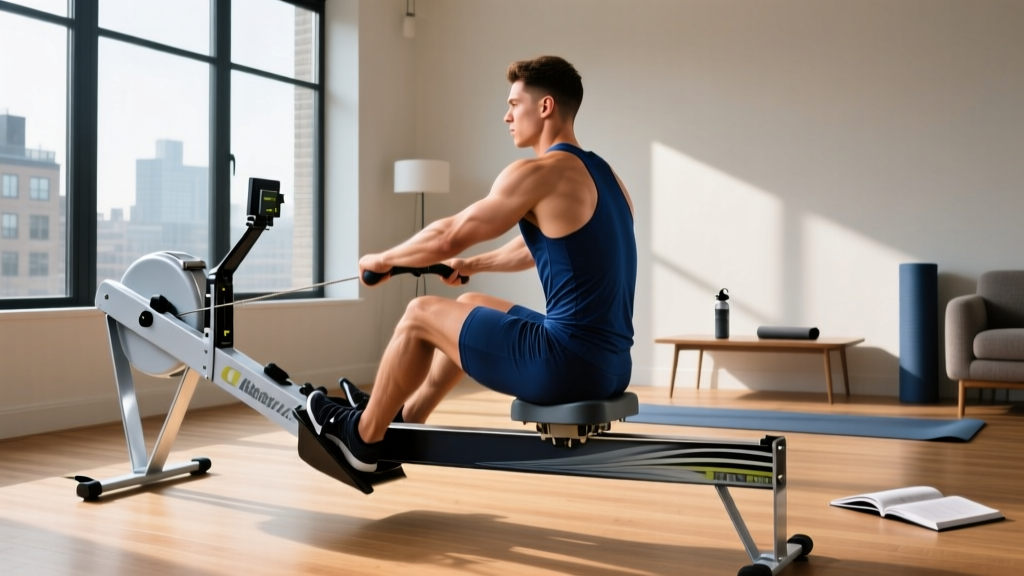
Rowing Guide: NordicTrack Commercial 2450 Folding Treadmill Alternative
Skillrun Treadmill vs Spin, Upright & Recumbent Bike Budget

Stair Climber Guide: Proper Running Form on Treadmill Compared

dogPACER LF 3.1 Treadmill vs Rivals: 2026 Features Comparison
Is the Treadmill or StairMaster Better for Weight Loss? 2026 Belt Maintenance Data
