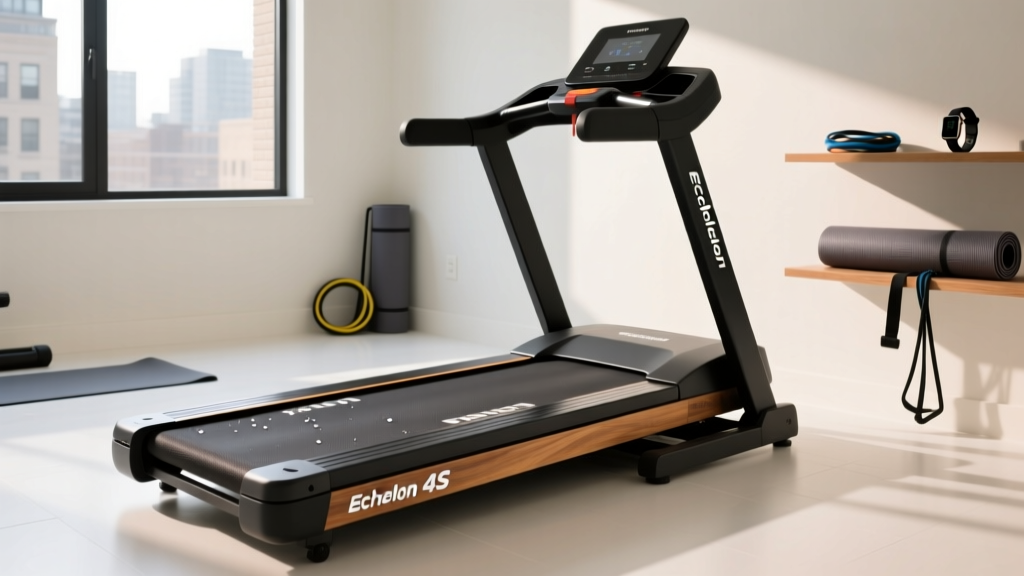
Echelon Stride 4S Treadmill Review: Ultimate Belt Maintenance Guide
Read our Echelon Stride 4S treadmill review focusing on belt maintenance. Learn exact lubrication intervals, silicone types, and tension adjustments.

Beyond the Unboxing: Why the Echelon Stride 4S Demands Specific Belt Care
When consumers search for an Echelon Stride 4S treadmill review, they typically focus on its space-saving foldable footprint, 8 MPH top speed, and seamless app connectivity. However, as a senior technician evaluating compact cardio equipment in 2026, I can tell you that the true lifespan of this 1.5 HP walking pad is entirely dictated by one critical factor: deck friction. The Stride 4S is a marvel of compact engineering, but its smaller motor and high-friction compact deck mean that neglecting belt maintenance will rapidly degrade the machine.
Unlike commercial gym treadmills with 4.0 HP continuous duty motors and massive cooling fans, the Stride 4S relies on a 1.5 HP motor that must work efficiently to move the 17-inch by 50-inch running belt. If the belt dries out, friction spikes, amp draw increases, and the lower motor control board will eventually overheat and fail. This guide bypasses the basic unboxing experience and dives deep into the exact, millimeter-precise maintenance protocols required to keep your Stride 4S running silently for years.
The Anatomy of the Stride 4S Belt System
To properly maintain the Echelon Stride 4S, you must understand the materials involved. The running belt is constructed from a multi-ply PVC composite with a textured top layer for grip and a smooth, low-friction underside. Beneath this belt sits the deck—a medium-density fiberboard (MDF) panel coated with a phenolic resin wax.
The Friction Threshold
The phenolic coating is designed to work in tandem with liquid silicone to create a micro-hydrodynamic layer. When this layer is compromised, the PVC backing begins to physically abrade the resin. According to equipment repair data cited by Consumer Reports, excessive deck friction is the number one cause of premature motor burnout in home treadmills. For a compact unit like the Stride 4S, maintaining this hydrodynamic layer is non-negotiable.
The 100% Silicone Mandate: What to Use (and What Will Destroy Your Treadmill)
The most catastrophic mistake a user can make during treadmill maintenance is reaching for the wrong household lubricant. You must use 100% pure liquid silicone specifically formulated for fitness equipment.
⚠️ CRITICAL WARNING: The WD-40 FallacyNever use WD-40, PTFE (Teflon) sprays, or any petroleum-based distillates on your Stride 4S. Petroleum solvents will chemically dissolve the PVC backing of the belt and strip the phenolic wax off the MDF deck. This creates a gummy, irreversible residue that will spike the motor's amp draw and void your Echelon warranty. A replacement motor control board costs between $120 and $150, while a ruined deck and belt combo costs roughly $60 to $80.
For the Stride 4S, I recommend purchasing a 100% silicone treadmill lubricant that includes a specialized extension tube (often sold in 4 oz bottles for $10 to $15). The extension tube is mandatory for reaching the center of the 17-inch wide belt without having to completely detach the motor hood.
Step-by-Step Lubrication Protocol for the Stride 4S
Proper application is just as important as the lubricant itself. Follow this exact procedure to ensure even distribution without over-saturating the deck, which can cause the belt to slip and track off-center.
- Power Down and Unplug: Always disconnect the Stride 4S from the wall outlet. Capacitors in the motor control board can retain a charge, and you do not want the belt engaging while your hands are underneath it.
- Loosen the Belt (Optional but Recommended): Using a 6mm Allen wrench, turn both rear roller adjustment bolts counter-clockwise by exactly one full turn. This relieves tension, making it easier to lift the belt.
- Lift and Insert: Reach under the center of the belt and lift it approximately 2 to 3 inches off the deck. Insert the applicator tube of your 100% silicone lubricant.
- Measure the Application: Squeeze exactly 0.5 ounces (approx. 15 ml) of silicone onto the deck while moving the tube in a wide zig-zag pattern from the center toward the left edge. Repeat this with another 0.5 ounces on the right side. Do not exceed 1 ounce total per session.
- Retension and Distribute: Return the rear roller bolts to their original position (one full turn clockwise). Plug the machine in, stand on the side rails, and power the treadmill to 2.0 MPH. Let it run for 3 minutes. Then, walk normally on the belt for 5 minutes to evenly distribute the silicone across the entire phenolic deck.
Data Matrix: Lubrication Intervals Based on Weekly Mileage
Factory manuals often provide a generic 'every 3 months' recommendation, but this ignores user variance. A heavy runner will degrade the silicone layer much faster than a light walker. Use the table below to determine your specific maintenance schedule.
| Weekly Mileage | User Profile | Lubrication Interval | Belt Inspection Frequency |
|---|---|---|---|
| Under 5 miles | Light Walker (Under 150 lbs) | Every 6 months | Monthly |
| 5 to 12 miles | Moderate Walker / Light Jogger | Every 3 months | Bi-Weekly |
| 12 to 20 miles | Dedicated Runner (Up to 8 MPH) | Every 6 weeks | Weekly |
| 20+ miles | High-Volume Athlete | Every 30 days | Before every run |
Diagnosing Belt Slip vs. Motor Lag on the 1.5 HP System
One of the most common complaints found in any Echelon Stride 4S treadmill review is 'hesitation' or 'stuttering' during a workout. Users often assume the motor is dying, but 90% of the time, this is either a loose belt or a failing motor control board. Here is how to perform the Stomp Test to differentiate the two.
The Stomp Test Procedure
Set the treadmill to a slow walking pace (2.0 MPH). Walk normally for a few seconds, then abruptly plant your lead foot heavily onto the belt, attempting to momentarily stop it with your body weight while holding the handrails.
- Scenario A (Belt Slip): If the front roller continues to spin but the belt stops moving under your feet, your belt is too loose or the deck is entirely devoid of lubrication (causing the belt to stick to the deck while the roller spins freely).
- Scenario B (Motor/Board Lag): If the front roller and the belt both stop simultaneously, or if the machine throws an error code and shuts down, you are experiencing motor drag or a control board amperage limit trip. This indicates severe internal friction requiring immediate deck lubrication, or a failing lower board.
Proper walking mechanics also play a role in machine longevity. As noted by the American Council on Exercise (ACE), maintaining a smooth, consistent gait reduces the localized impact friction that degrades specific zones of a compact treadmill deck.
Tensioning the Rear Roller: The 1/4-Turn Rule
If your Stomp Test reveals belt slip, or if the belt is tracking heavily to the left or right, you must adjust the rear roller tension. The Echelon Stride 4S uses standard rear adjustment bolts accessible from the back end caps.
💡 Pro Technician Tip: Never Over-TensionOvertightening the belt stretches the PVC fibers and puts immense lateral stress on the roller bearings. A stretched belt cannot be fixed; it must be replaced. Furthermore, excessive tension forces the 1.5 HP motor to work harder just to turn the empty belt, drastically reducing the machine's maximum user weight capacity.
To fix left-tracking: Insert your 6mm Allen wrench into the LEFT rear bolt. Turn it clockwise by exactly 1/4 of a turn. Do not touch the right bolt. Let the machine run at 3.0 MPH for two minutes. If it still tracks left, repeat the 1/4 turn on the left side.
To fix right-tracking: Turn the RIGHT rear bolt clockwise by 1/4 of a turn.
Rule of thumb: Always adjust the side the belt is moving toward, and never turn the bolt more than 1/4 turn at a time.
Frequently Asked Questions (FAQ)
Can I use silicone spray aerosol instead of liquid silicone?
No. Aerosol sprays contain propellants (like butane or propane) and often lack the viscosity required for treadmill decks. The propellants can dry out the PVC, and the overspray will coat your treadmill's internal electronics, attracting dust to the motor brushes. Always use liquid silicone with an applicator tube. For more visual guidance on application techniques, WikiHow's treadmill maintenance guide offers excellent step-by-step imagery.
How do I know if my Stride 4S belt is stretched beyond repair?
If you have tightened the rear roller bolts to the point where the adjustment bolt is almost fully threaded into the rear cap (leaving less than 1/4 inch of thread visible), and the belt still slips during the Stomp Test, the belt has reached its maximum tensile stretch. It is time to order a replacement belt (Part # usually found on the underside of the current belt, costing around $45 to $60).
Does folding the Stride 4S affect belt alignment?
Folding the unit vertically does not inherently misalign the belt, but moving the folded unit across uneven floors while on its transport wheels can cause the frame to experience micro-torsions. Over time, this can slightly shift the deck alignment. Always ensure the treadmill is placed on a level surface and that all four leveling feet are firmly touching the floor before powering on the machine.
More gear to consider
All reviews
Sole F80 Treadmill Assembly vs Under Desk Treadmills: Office Guide

Upgrade Your Treadmill Walk: Rowing Machine Setup & Buying Guide

Folding Treadmill Engine Care: Small Space Longevity Guide
Under Desk Treadmill Review: Budget vs Matrix Treadmill User Manual

LifeSpan TR1200 DT Treadmill Belt Maintenance & 2026 Care Trends
