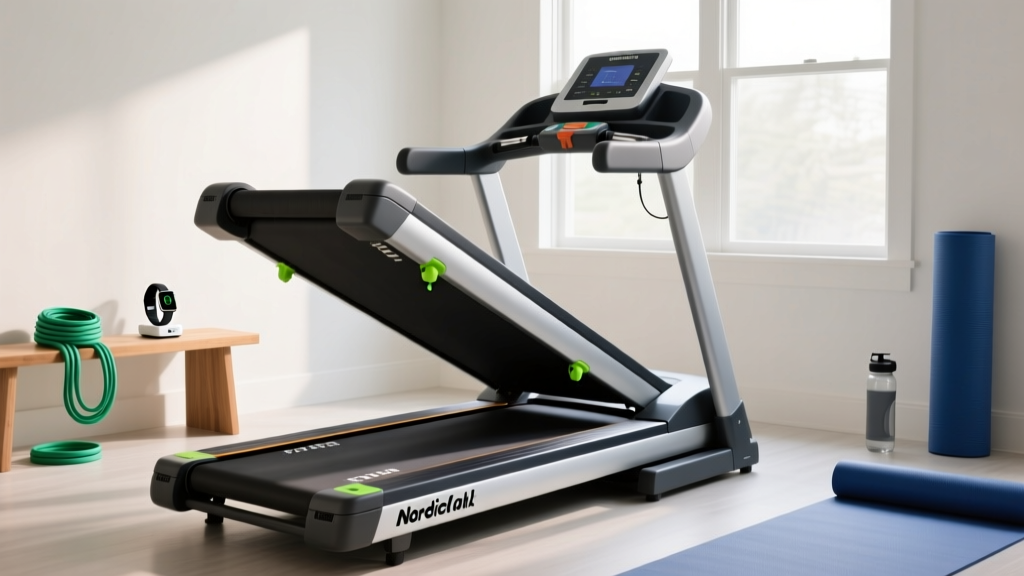
Sprint Training Treadmill Motor Guide: HP & Specs
Discover how to choose the right motor size, CHP, and AC/DC type for your sprint training treadmill. Avoid overheating and belt slip with our expert guide.

The Physics of Sprinting: Why Motor Size Matters
Sprinting on a treadmill is fundamentally different from steady-state jogging. When you push past 10 mph and enter maximum velocity sprinting, the kinetic energy and sudden impact forces demand immense torque from the machine. According to biomechanical guidelines from the National Strength and Conditioning Association (NSCA), sprint mechanics require rapid ground reaction forces that can exceed three to four times a runner's body weight. On a motorized belt, this translates to massive, instantaneous drag every time your foot strikes the deck.
If you are investing in a dedicated sprint training treadmill for high-intensity interval training (HIIT) or athletic conditioning, the motor is the single most critical component. An underpowered motor will experience belt lag, thermal shutdowns, and premature capacitor failure. This comprehensive guide breaks down the exact motor specifications, horsepower metrics, and architectural differences you need to evaluate in 2026 to ensure your equipment can handle explosive athletic performance.
⚠️ Marketing Warning: Never buy a sprint training treadmill based on "Peak Horsepower." Peak HP is the absolute maximum output the motor can hit for a fraction of a second before failing. It is a marketing gimmick. Always evaluate machines based on Continuous Duty Horsepower (CHP).Decoding Horsepower: CHP vs. HP for High-Intensity Training
Continuous Duty Horsepower (CHP) measures the motor's ability to sustain a specific power output over an extended period without overheating. For a standard walking or light jogging treadmill, a 2.5 CHP motor is generally sufficient. However, sprinting introduces severe mechanical stress. When you accelerate rapidly from 3 mph to 12 mph, the motor controller must draw a massive surge of amperage to overcome the inertia of the flywheel and the friction of your body weight on the belt.
The American College of Sports Medicine (ACSM) notes that high-intensity interval training places unique cardiovascular and biomechanical demands on the body, requiring equipment that responds instantaneously to speed changes. If your treadmill lacks the CHP to support these rapid transitions, the belt will momentarily slow down upon foot strike, altering your sprint mechanics and increasing the risk of hamstring strains or Achilles injuries.
Minimum CHP Requirements by User Weight
Motor size requirements scale directly with user mass and target sprint speed. Use the matrix below to determine your baseline requirements for a motorized sprint training treadmill.
| User Weight | Minimum CHP (10-12 mph) | Ideal CHP (12+ mph Sprints) |
|---|---|---|
| Under 150 lbs | 3.0 CHP | 3.5 CHP |
| 150 - 200 lbs | 3.5 CHP | 4.0 CHP |
| 200 - 250 lbs | 4.0 CHP | 4.5 CHP |
| 250+ lbs | 4.5 CHP | 5.0+ CHP (Commercial AC) |
AC vs. DC Motors: The Hidden Factor in Sprint Performance
Most residential treadmills priced under $3,000 utilize Direct Current (DC) motors. DC motors are cost-effective, lightweight, and operate quietly at low speeds. However, they rely on internal carbon brushes and small cooling fans. When subjected to the extreme heat generated by repeated sprint intervals, DC motors can suffer from thermal throttling, where the internal controller intentionally reduces power to prevent a fire hazard.
For serious athletes, an Alternating Current (AC) motor is the gold standard. AC induction motors, found in commercial-grade units like the Woodway 4Front or Matrix T7xi, do not use carbon brushes. They generate significantly less internal friction, run much cooler, and deliver consistent, unwavering torque regardless of the belt speed. While an AC motor treadmill will typically cost between $5,000 and $8,000, the lifespan of the motor is virtually indefinite under normal use, and it will never suffer from the mid-sprint belt lag associated with overheating DC units.
The Role of the Motor Controller (PWM)
The motor is only half the equation; the motor controller dictates how power is delivered. High-end sprint training treadmills utilize advanced Pulse Width Modulation (PWM) controllers. A premium PWM controller samples the belt speed thousands of times per second, adjusting the voltage instantly when it detects the micro-decelerations caused by foot strikes. If a treadmill has a 4.0 CHP motor but a cheap, low-frequency controller, you will still experience a "choppy" feel at top speeds.
2026 Market Breakdown: Top Sprint-Ready Treadmill Motors Compared
To contextualize these specifications, here is a comparison of popular treadmill architectures currently on the market, analyzed specifically through the lens of sprint training viability.
| Model | Motor Type & Size | Top Speed | Est. Price (2026) | Sprint Viability |
|---|---|---|---|---|
| Sole F85 | 4.0 CHP DC | 12 mph | $1,999 | Good (Requires cooldown intervals) |
| NordicTrack 2450 | 4.0 CHP DC | 12 mph | $2,799 | Good (Heavy flywheel aids momentum) |
| Matrix T7xi | 4.2 HP AC Induction | 12.5 mph | $4,500 | Excellent (No thermal throttling) |
| Woodway 4Front | Commercial AC / Slatted | 18 mph | $6,500+ | Elite (Zero belt friction, max torque) |
Real-World Failure Modes: What Kills Underpowered Motors?
Understanding how treadmill motors fail during sprint training helps you identify engineering flaws before purchasing. Biomechanical data from ExRx highlights the extreme deceleration forces generated during the stance phase of sprinting. When an underpowered motor meets these forces, several specific failure modes occur:
- Thermal Overload Tripping: DC motors feature a thermal switch that cuts power entirely if internal temperatures exceed 105°C (221°F). During a 30-second all-out sprint, an inadequate motor can trip this switch mid-stride, causing the belt to stop instantly—a massive safety hazard.
- Belt Slip and Flywheel Lag: If the motor lacks the torque to maintain belt speed under heavy load, the drive belt connecting the motor to the front roller will slip. This results in a "choppy" sensation and accelerates wear on the roller pulley.
- Capacitor Degradation: The start/run capacitors on the motor controller endure massive electrical spikes during rapid acceleration. Cheap capacitors will bulge and fail within 12 to 18 months of regular HIIT sprint training, requiring a $150 to $300 control board replacement.
- Drive Belt Stretching: Underpowered motors force the system to rely on the physical tension of the drive belt to transfer momentum. Over time, this stretches the Kevlar or rubber drive belt, leading to misalignment and deck friction.
Expert Buying Framework: Calculating Your Exact Motor Needs
Do not rely solely on the manufacturer's suggested user weight limit. Use this step-by-step framework to verify if a treadmill's motor is truly built for sprinting:
- Verify the CHP Rating: Ignore Peak HP. Ensure the spec sheet explicitly states a minimum of 4.0 Continuous Duty Horsepower if you weigh over 175 lbs and plan to exceed 10 mph.
- Check the Motor Warranty: A manufacturer confident in their motor's thermal management will offer a Lifetime warranty on the motor and a minimum of 3 years on parts/labor. If the motor warranty is only 5 or 10 years, it is likely a lower-grade DC unit.
- Assess the Flywheel Mass: A heavier front roller flywheel (measured in lbs/kg) stores kinetic energy, reducing the instantaneous load on the motor during foot strikes. Look for machines that advertise a heavy-duty or oversized flywheel.
- Evaluate the Deck Lubrication System: Motor strain is directly tied to deck friction. Ensure the treadmill features a premium silicone-impregnated belt or an auto-lubrication system. A dry deck can increase motor amperage draw by up to 30%, effectively neutralizing a high CHP rating.
Pro-Tip for Sprint Athletes: If your budget does not allow for a commercial AC motor treadmill like the Woodway or Matrix, consider a high-end curved manual treadmill (e.g., TrueForm or AssaultRunner). Because they are self-powered by the runner's stride, they entirely eliminate the motor bottleneck, allowing for unlimited top speeds and perfect sprint mechanics, though they require a different pacing strategy than motorized units.
Ultimately, selecting the right motor for your sprint training treadmill is an investment in both your athletic progression and your physical safety. By prioritizing Continuous Horsepower, understanding the thermal limits of DC versus AC architectures, and demanding high-quality motor controllers, you can build a home gym setup capable of withstanding the explosive demands of elite-level conditioning.
More gear to consider
All reviews
NOHRD Treadmill or Rower? Buying Guide, Technique & Mistakes
2026 Review: The Motor in Treadmill Tech for Small Folding Models

ProForm Carbon TL Treadmill Specs: Compact Cardio Maintenance

Elliptical vs Treadmill Value: What is Level 3 Incline on Treadmill?

Does Incline Treadmill Build Glutes? Portable Cardio Care