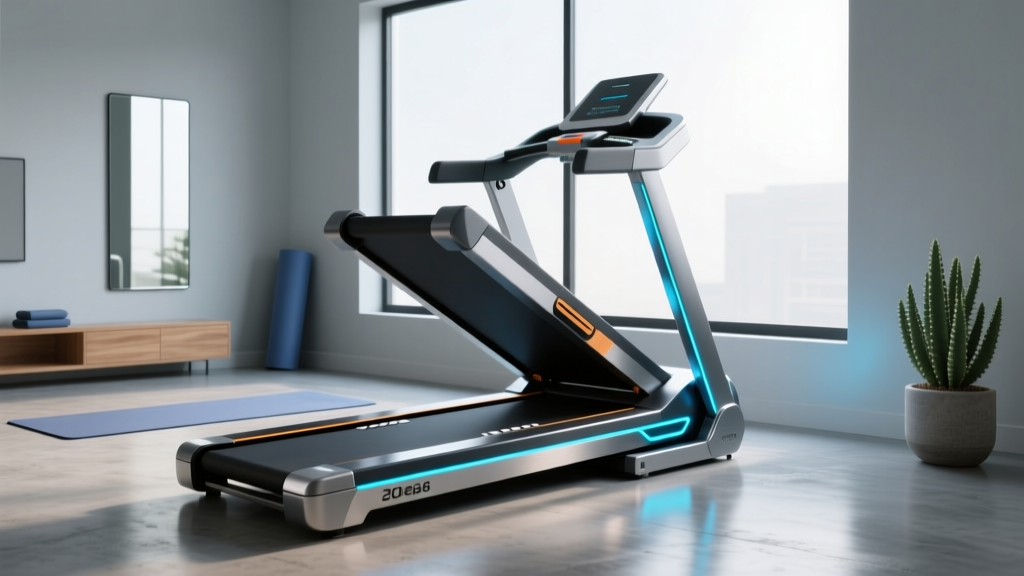
Elliptical vs Treadmill: NordicTrack Treadmill A2550 Space Layouts
Master your home gym layout. We compare elliptical vs treadmill space requirements, using the NordicTrack treadmill A2550 footprint as a 2026 benchmark.

The Spatial Reality: Elliptical vs. Treadmill Footprints
Designing a home gym in 2026 requires more than just picking the machine with the best interactive display; it demands a rigorous analysis of spatial geometry, traffic flow, and structural loading. When homeowners debate the merits of an elliptical vs treadmill for home cardio, the conversation often defaults to joint impact or calorie burn. However, from a layout and interior design perspective, the decision hinges on three-dimensional volume, clearance zones, and acoustic transfer.
While modern fitness equipment has trended toward ultra-compact, foldable designs, many homes still feature legacy workhorses, or buyers are looking at the secondary market for heavy-duty commercial feel. Understanding the spatial demands of older, robust models is critical for optimizing multi-use rooms, finished basements, and spare bedrooms.
Legacy Benchmarks: The NordicTrack Treadmill A2550 Footprint
To understand modern space optimization, we must establish a baseline. The NordicTrack treadmill A2550 remains a popular reference point in home gym design forums due to its classic, heavy-duty chassis and widespread availability on the secondary market. Unlike the ultra-slim walking pads or auto-folding treadmills dominating 2026 showrooms, the A2550 represents the traditional 'fixed-footprint' cardio machine.
Deconstructing the A2550 Spatial Profile
- Base Dimensions: Approximately 78 inches long by 30 inches wide (16.25 square feet of dead floor space).
- Weight: Roughly 205 lbs, requiring a permanent dedicated zone rather than a 'stash-and-hide' approach.
- Belt Surface: 20" x 55", which dictates the user's stride envelope and necessitates lateral safety clearances.
When designing a room around a machine with the footprint of the NordicTrack treadmill A2550, interior designers recommend a minimum 24-inch 'swing and stumble' clearance on the left, right, and rear of the deck. This pushes the functional spatial requirement from 16.25 sq. ft. to nearly 35 sq. ft. of dedicated, unobstructed floor area.
Vertical Geometry: Ceiling Height and Step-Up Clearance
The most frequently miscalculated metric in home cardio layout is vertical clearance. This is where the elliptical vs treadmill debate shifts dramatically based on your home's architecture.
📐 The Ceiling Clearance Formula (2026 Standard)Minimum Ceiling Height = User Height + Machine Step-Up Height + 6 Inches (Hand Clearance)
Treadmill Deck Elevation
Traditional motorized treadmills, including models in the lineage of the A2550, feature a deck height ranging from 8 to 10 inches to accommodate the motor housing and incline mechanics. For a 6-foot (72-inch) tall user, you need a minimum ceiling height of 86 inches (7'2") to prevent hair from brushing the ceiling or hands from striking low-hanging fixtures during an incline sprint.
Elliptical Pedal Arc
Ellipticals present a more complex vertical challenge. The pedal height on a standard front-drive or rear-drive elliptical (like the Sole E95 or NordicTrack SE7i) ranges from 12 to 18 inches at the peak of the stride arc. Furthermore, the user's head moves vertically during the elliptical motion. In rooms with low ceilings—such as finished basements with drop ceilings or HVAC ductwork—an elliptical can easily become a hazard, making the lower-profile treadmill the superior spatial choice.
Dimensional Matrix: Space Requirements Compared
The following matrix contrasts the legacy footprint of the NordicTrack treadmill A2550 against modern 2026 space-saving equivalents to aid in your layout planning.
| Machine Type / Model | L x W Footprint | Step-Up Height | Min. Ceiling (6' User) | Foldable? |
|---|---|---|---|---|
| NordicTrack A2550 (Legacy Benchmark) | 78" x 30" | ~9 inches | 7' 2" | No (Fixed Frame) |
| NordicTrack T Series 10 (Modern Treadmill) | 70" x 30" (27" folded depth) | 8.5 inches | 7' 1" | Yes |
| Sole E95 (Modern Elliptical) | 70" x 28" | 14 inches (Peak Arc) | 7' 8" | No |
| Peloton Guide / Compact Bike (Alternative) | 48" x 24" | N/A (Seated) | Standard 8' 0" | Wheeled |
Room Layout, Traffic Flow, and Environmental Factors
According to spatial design guidelines highlighted by Architectural Digest, a home gym must be treated as a high-traffic, high-humidity zone. Placing your cardio machine is not just about where it fits, but how it interacts with the room's environment.
The Dismount Zone and Door Swings
Never place a treadmill or elliptical in the direct swing path of a bedroom or basement door. Users dismounting a fatigued stride need a minimum 3-foot 'decompression zone' at the rear of the machine. If you are utilizing a machine with the fixed 78-inch length of the NordicTrack treadmill A2550, ensure the rear clearance does not intersect with walkways or pet corridors.
HVAC Vents and Screen Glare
Cardio machines generate significant localized heat and require cross-ventilation. However, placing an elliptical or treadmill directly over a floor HVAC vent will result in dust accumulation inside the machine's motor housing and flywheel bearings. Furthermore, position the machine so that the user faces parallel to windows, rather than directly into them, to prevent severe glare on interactive touchscreens during peak morning or evening hours.
"Proper equipment placement mitigates up to 40% of premature motor failures caused by dust ingestion and thermal throttling in home environments." — Consumer Reports Treadmill Buying Guide
Floor Loading, Acoustics, and Vibration Transfer
Space optimization also involves the Z-axis: the floor beneath the machine. The American Council on Exercise (ACE) emphasizes the importance of structural integrity and impact absorption in home gym setups.
Static vs. Dynamic Loading
An elliptical distributes weight relatively evenly across four stabilizer pads. A treadmill, however, subjects the floor to dynamic, repetitive impact forces. A 180-lb runner on a treadmill generates up to 540 lbs of downward force per stride. If you are placing a heavy, legacy-style treadmill on a second-floor bedroom or a suspended wooden subfloor, you must position the machine perpendicular to the floor joists to distribute the dynamic load. Always use a 3/8-inch thick, high-density rubber equipment mat to disperse point-loads and dampen acoustic vibration transfer to rooms below.
Electrical Layout and Cable Management
Modern home cardio machines require dedicated 15-amp circuits to prevent breaker trips during high-incline, high-speed motor draws. When mapping your layout, ensure the power cord does not stretch across a walking path. If your room's outlets are poorly placed, utilize a heavy-duty, 12-gauge appliance extension cord routed securely under a rubber floor mat or behind baseboard molding to eliminate trip hazards.
Decision Framework: Which Machine Fits Your Room?
Use this rapid spatial decision tree to finalize your equipment choice based on your room's architectural constraints:
- The Low-Ceiling Basement (Under 7' 4"): Choose a Treadmill. The lower deck height and minimal vertical head movement make it the only safe option for taller users.
- The Narrow Galley Room (Under 8' Wide): Choose an Elliptical. The narrower 28-inch width and lack of lateral belt-stumble risk allow for tighter wall-to-wall clearances.
- The Multi-Use Guest Room: Choose a Folding Treadmill (Modern equivalent). Legacy fixed frames like the A2550 will consume the room permanently, whereas a modern folding chassis can be tucked into a 10-inch vertical envelope against the wall.
- The Second-Floor Bedroom (Noise Sensitive): Choose an Elliptical. The magnetic resistance and lack of repetitive foot-strike impact will drastically reduce low-frequency noise transfer to the floor below.
Frequently Asked Questions
Can I place an elliptical or treadmill directly on carpet?
It is highly discouraged. Carpet fibers and underlying padding trap heat, which can cause treadmill motors to overheat and throttle. Furthermore, carpet dust is pulled directly into the flywheel and belt mechanisms. Always use a PVC or rubber equipment mat to create a stable, breathable barrier.
How much space do I actually need behind a treadmill?
Safety standards dictate a minimum of 24 to 36 inches of clear space behind the rear roller of the treadmill. In the event of a slip or emergency stop, this zone prevents the user from being thrown into a wall, desk, or glass window.
Are older models like the NordicTrack A2550 still viable for home gyms?
From a purely mechanical standpoint, older heavy-duty models offer excellent durability and wide running surfaces. However, from a 2026 spatial and technological perspective, they lack the folding capabilities, Bluetooth FTMS connectivity, and energy-efficient motors of modern equivalents. They are best suited for dedicated, single-use garage gyms or finished basements where square footage is abundant and the machine will not need to be moved.
More gear to consider
All reviews
Rowing Machine Guide: Technique Mistakes and Treadmill Moving Service

Rowing Machine Buying Guide: Ditch the Treadmill Bar Grip

Elliptical vs Treadmill: How Much Electric Does a Treadmill Use?
METs Meaning on Treadmills Explained: Head-to-Head Cardio Machine Noise Comparison
Elliptical vs Aerobic Exercise Treadmill: Budget & Value Guide