
Power Rack vs Squat Rack vs Stand: Best Way to Do Dumbbell Rows
Comparing power racks, squat racks, and squat stands to find the best way to do dumbbell rows. Discover specs, pricing, and setup tips.

The Home Gym Rack Dilemma: Beyond Just Squats
When outfitting a home gym in 2026, the debate between a power rack, a squat rack (half rack), and squat stands usually centers on squats, bench presses, and pull-ups. However, serious lifters know that a rack is a multi-functional ecosystem. One of the most critical, yet frequently overlooked, factors in rack selection is how it facilitates heavy back training—specifically, finding the best way to do dumbbell rows while protecting your lumbar spine and maximizing latissimus dorsi activation.
Dumbbell rows are a staple for building a thick, wide back. But as you progress past 75-pound dumbbells, traditional bent-over rows place immense shear force on the lower back. The ExRx biomechanics database notes that unsupported torso angles during rowing movements significantly increase erector spinae fatigue, which can limit your ability to overload the lats. The right rack setup solves this by offering bracing points, incline bench integration, and band-resistance anchors.
In this head-to-head comparison, we break down the power rack, the squat rack, and the squat stand to determine which setup provides the ultimate environment for heavy rowing, alongside their general versatility and 2026 market pricing.
Head-to-Head: The Three Rack Contenders
1. The Power Rack (Full Cage)
The power rack is the undisputed king of the home gym. Constructed from 3x3-inch, 11-gauge steel, modern full cages like the Rep Fitness PR-4000 or the Rogue Monster RM-3 offer unmatched stability and attachment compatibility.
- Footprint: Typically 48x48 inches or 53x53 inches (requires significant floor space and ceiling height).
- 2026 Pricing: $1,199 to $3,800+ depending on the brand and attachment bundles.
- Row Versatility: Unmatched. The enclosed cage allows you to pin an adjustable incline bench at a 30-to-45-degree angle securely. You can also attach lat row towers or use the uprights to anchor heavy resistance bands for accommodating tension rows.
2. The Squat Rack (Half Rack)
Half racks, such as the Titan T-3 Half Rack or Rogue SML-2C, feature two main front uprights and a rear storage/weight-plate peg system. They provide an open-front design that makes loading and unloading heavy dumbbells significantly easier than reaching inside a full cage.
- Footprint: Roughly 48x36 inches (shallower depth, ideal for low ceilings or tight garages).
- 2026 Pricing: $699 to $1,400.
- Row Versatility: Excellent for single-arm rows. The open front allows you to step inside the rack's footprint, using the front upright as a bracing post for your non-working hand, completely neutralizing lower-back strain while allowing for a massive stretch at the bottom of the movement.
3. Squat Stands (Minimalist)
Squat stands are essentially two independent vertical posts. Models like the Rogue S-Series or Rep Fitness SB-400 are designed for minimalists, CrossFit garages, or outdoor patios.
- Footprint: Minimalist (often just 2x2 feet per stand, stored away when not in use).
- 2026 Pricing: $249 to $450.
- Row Versatility: Poor for supported rows. Because there is no crossmember or cage structure, you cannot safely wedge a bench for chest-supported rows. You are relegated to traditional unsupported bent-over rows or Pendlay rows on the open floor.
Comparison Matrix: Specs, Pricing, and Row Ergonomics
| Feature | Power Rack (Full Cage) | Squat Rack (Half Rack) | Squat Stands |
|---|---|---|---|
| Average 2026 Cost | $1,200 - $3,800+ | $700 - $1,400 | $250 - $450 |
| Steel Gauge | 11-Gauge (3x3) | 11-Gauge (3x3) | 11 to 14-Gauge (2x2 or 3x3) |
| Chest-Supported Rows | Excellent (Bench pins securely) | Good (Requires careful bench placement) | Not Recommended (Safety hazard) |
| Single-Arm Bracing | Good (Use uprights, but cage limits space) | Excellent (Open front, easy access) | Poor (No vertical bracing posts) |
| Band-Resisted Rows | Excellent (Multiple low anchor points) | Good (Base anchors available) | Poor (Risk of tipping stands) |
Executing the Best Way to Do Dumbbell Rows in Each Setup
According to the ACE Fitness Exercise Library, the primary failure mode of the dumbbell row is the premature fatigue of the lower back before the lats reach muscular failure. To achieve the best way to do dumbbell rows, you must manipulate your environment to remove the lower back from the equation. Here is how each rack type handles this biomechanical challenge.
⚠️ Biomechanical Warning: The Tipping Hazard
When using squat stands or un-bolted half racks, never anchor heavy resistance bands to the base for seated or standing rows. The lateral force of a heavy row can easily tip a 150lb squat stand, leading to catastrophic injury. Always use a full power rack or bolted-down half rack for band-assisted or band-resisted rowing variations.
The Power Rack Method: The Chest-Supported Incline Row
If you own a full power rack, the absolute best way to do dumbbell rows is the chest-supported incline row.
- Set an adjustable FID (Flat/Incline/Decline) bench to a 30-degree or 45-degree incline.
- Slide the bench into the center of the rack. For maximum safety, rest the base of the bench against the rear crossmember or pin it using the rack's safety spotter arms so it cannot slide backward during the pull.
- Lie face down, holding heavy dumbbells (e.g., 90-120 lbs each).
- Row the weight toward your hips, driving the elbows past the torso. Because your chest is pinned to the bench, zero momentum can be used, and the lumbar spine is entirely unloaded.
Expert Tip: Use the rack's Westside hole spacing (1-inch holes in the bench zone) to micro-adjust the safety arms, creating a perfect shelf for your bench base.
The Half Rack Method: The Upright-Braced Single-Arm Row
Half racks shine for the upright-braced single-arm row. This variation allows for an incredible stretch at the bottom of the movement, which is vital for muscle hypertrophy.
- Stand inside the half rack, facing outward or sideways.
- Grab the front upright with your non-working hand. Lean back slightly, letting your body weight create tension.
- With a heavy dumbbell in your working hand, let it hang so you feel a deep stretch in the lat.
- Pull the dumbbell to your hip pocket. The upright brace allows you to pull with 100% of your back's force without worrying about balance or lower-back stabilization.
The Squat Stand Method: The Pendlay-Style Floor Row
If you only have squat stands, your best option is the Pendlay row executed on the open floor in front of the stands.
- Hinge at the hips until your torso is strictly parallel to the floor.
- Start each rep with the dumbbells resting dead-stop on the rubber flooring.
- Explode the weight up to the ribcage, then control the descent back to the floor.
While effective for power development, this method limits the sheer volume you can handle compared to the supported variations available in cages and half racks.
Expert Verdict: Which Rack Fits Your Floor Plan and Goals?
Choosing the right equipment ultimately comes down to your spatial constraints, budget, and dedication to back hypertrophy. As noted in extensive testing by Garage Gym Reviews, the attachment ecosystem of a rack is what dictates its long-term value.
Buy the Power Rack if: You have the ceiling height (minimum 84 inches recommended), the budget ($1,200+), and you prioritize chest-supported movements, lat towers, and band work. It provides the safest, most versatile environment for the best way to do dumbbell rows via incline bench setups.
Buy the Squat Rack (Half Rack) if: You are dealing with low ceilings, a shallow garage bay, or you simply hate the claustrophobia of a full cage. The open-front design makes grabbing heavy dumbbells for single-arm bracing rows incredibly fluid and efficient.
Buy Squat Stands if: You are on a strict sub-$500 budget, train outdoors, or need to clear your floor space daily. Just be prepared to rely on strict, unsupported bent-over rows and accept the lower-back fatigue that comes with them.
"A rack is not just a place to store a barbell; it is the structural foundation of your gym's exercise menu. If heavy, spine-safe dumbbell rows are a priority in your programming, a full cage or a well-anchored half rack is a non-negotiable investment."
Ultimately, eliminating lower-back limitations is the true secret to back growth. By matching your rack style to the appropriate rowing variation, you ensure that your lats—not your erectors—are the limiting factor in every single set.
More gear to consider
All reviews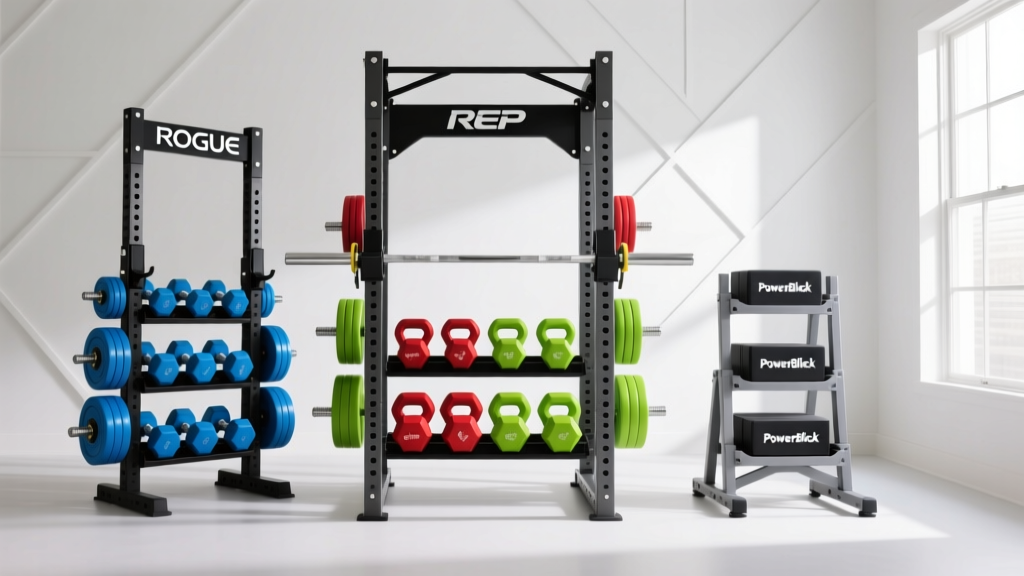
Best Racks for Your Dumbbell Only Workout Routine in 2026

Cast Iron vs Comp Kettlebells & How to Train Rear Delts With Dumbbells
Beginner Guide to Amazon Basics Neoprene Dumbbells for Home Workouts
Kettlebell Guide: Cast vs Competition & Barbell or Dumbbell Rows

2026 Loadable Dumbbell Trends: Adapting Dumbbell Squat Form
