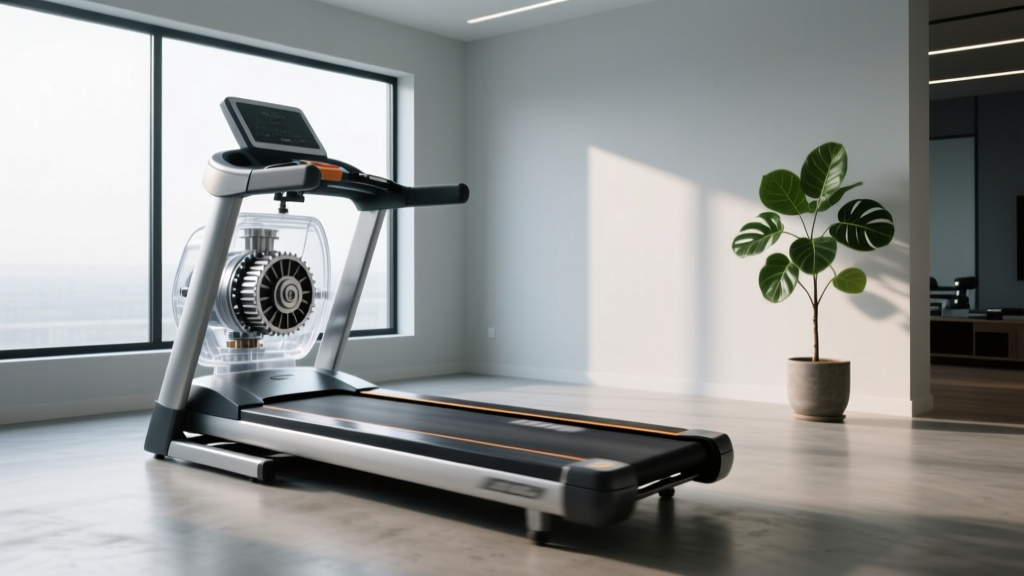
Pro Form Treadmill vs Stair Climber: 2026 Home Guide
Deciding between a Pro Form treadmill and a home stair climber? Our 2026 guide compares specs, joint impact, and costs to help you choose the right cardio.

The Home Cardio Dilemma: Horizontal vs. Vertical Training
Outfitting a home gym in 2026 requires ruthless prioritization of floor space, budget, and biomechanical longevity. For years, the default choice for cardiovascular conditioning has been the traditional treadmill. However, as physical therapy insights and high-intensity interval training (HIIT) trends evolve, vertical climbing machines have surged in popularity. If you are currently researching a Pro Form treadmill but find yourself intrigued by the low-impact, high-yield promise of vertical steppers, you are facing a classic cardio crossroads.
This comprehensive analysis serves a dual purpose: we will benchmark the current Pro Form treadmill lineup against the market's leading vertical climbers, while simultaneously functioning as your definitive stair climber machine for home use guide. By the end of this breakdown, you will know exactly which machine aligns with your ceiling height, joint health, and fitness objectives.
Quick Decision Framework
- Choose the Treadmill if: You are training for outdoor road races, require a walking pad alternative for low-intensity steady-state (LISS) cardio, and have a dedicated room with standard 8-foot ceilings.
- Choose the Stair Climber if: You want to maximize glute/quad activation, need to minimize tibiofemoral joint impact, and have limited horizontal floor space but adequate vertical clearance.
The Baseline: Evaluating the Pro Form Treadmill Lineup
When shopping for a Pro Form treadmill, consumers are generally looking at two distinct tiers in 2026: the budget-friendly Carbon series and the premium Pro series. Let us look at the exact specifications and real-world failure points of the most popular models.
ProForm Carbon TLX vs. ProForm Pro 9000
The Carbon TLX (retailing around $599) features a 2.6 CHP Mach Z motor and a 16" x 50" tread belt. It is an excellent entry-level machine for walking and light jogging. However, the edge case failure mode here is motor overheating; users exceeding 220 lbs who attempt sustained running at 7+ mph will find the motor struggling to dissipate heat, leading to premature belt friction and motherboard errors.
Conversely, the ProForm Pro 9000 (approximately $1,199) boasts a robust 3.6 CHP motor and a 20" x 60" belt. This accommodates a full sprinting stride for users up to 6'4". The integration of iFIT's auto-adjusting incline (up to 12%) simulates outdoor terrain beautifully. Yet, the hidden cost is the mandatory iFIT subscription (roughly $39/month for family plans); without it, the machine's massive 22-inch HD touchscreen becomes little more than a basic digital readout.
The Ultimate Stair Climber Machine for Home Use Guide
Transitioning from horizontal running to vertical stepping requires a complete paradigm shift in how you evaluate equipment. A stair climber machine for home use is not just about resistance levels; it is about spatial geometry and drive-train durability. Here is what you must scrutinize before purchasing.
1. The Ceiling Clearance Trap (The #1 Buyer Mistake)
The most common reason home stair climbers are returned within 30 days is ceiling height. Unlike a Pro Form treadmill where your head remains at a static elevation, a stair climber elevates your entire body by the step-up height of the machine.
The Clearance Formula: Your Height + 15 inches (average pedal elevation at peak) + 4 inches (safety buffer) = Minimum Ceiling Height.
Example: A 6'0" user (72") + 15" + 4" = 91 inches. You need a minimum ceiling height of 7 feet 7 inches just to avoid grazing the ceiling at the top of the stride. If your home has standard 8-foot (96") ceilings, you are safe. If you are converting a basement with drop-ceilings or HVAC ducting, measure carefully.
2. Pedal Geometry and Step-Up Mechanics
Budget models like the Sunny Health & Fitness SF-S9023 (approx. $350) utilize a chain-driven hydraulic system with narrow, 10-inch pedals. While financially accessible, the narrow pedal depth forces users to stand on their mid-foot, which improperly shifts the load away from the glutes and heavily onto the calves and Achilles tendon.
Premium models like the Bowflex Max Trainer M9 (approx. $2,299) use a magnetic eddy-current resistance system and feature wide, 14-inch textured platforms. This allows the user to drive through the heel, properly engaging the posterior chain (glutes and hamstrings) and mimicking the biomechanics of hiking a steep grade.
Head-to-Head Comparison Matrix
To visualize the differences between the premier Pro Form treadmill options and the leading home stair climbers, review the 2026 specification matrix below.
| Feature | ProForm Pro 9000 (Treadmill) | Bowflex Max Trainer M9 (Climber) | Sunny SF-S9023 (Budget Climber) |
|---|---|---|---|
| Price Range | $1,199 | $2,299 | $350 |
| Footprint (L x W) | 76.5" x 32" | 49" x 30.5" | 47" x 23" |
| Min. Ceiling Req. | User Height + 6" | User Height + 15" | User Height + 18" |
| Primary Muscle Focus | Calves, Quads, Cardio | Glutes, Hamstrings, Core | Calves, Quads |
| Joint Impact | Moderate to High | Very Low (Closed Kinetic Chain) | Low to Moderate |
Biomechanics, Joints, and Cardiovascular Yield
When deciding between these machines, understanding the physiological toll on your body is paramount. According to the Mayo Clinic, low-impact exercises are critical for preserving cartilage in individuals with early-stage osteoarthritis or previous meniscus injuries. Running on a treadmill, even with advanced deck cushioning like Pro Form's ProShox, generates a ground reaction force equivalent to 2.5 times your body weight with every foot strike.
Stair climbers operate in a closed kinetic chain, meaning your foot never leaves the pedal. This eliminates the impact shockwave traveling up the tibia to the knee joint. Furthermore, the American Council on Exercise (ACE) notes that vertical climbing recruits significantly more fast-twitch muscle fibers in the gluteus maximus compared to horizontal walking, leading to a higher Excess Post-exercise Oxygen Consumption (EPOC) effect—meaning you burn more calories at rest after a 20-minute climbing session than a 20-minute jog.
Pro-Tip for Heart Rate Zones: The American Heart Association recommends targeting 70-85% of your maximum heart rate for vigorous cardiovascular improvement. Because stair climbers engage the massive muscles of the lower body simultaneously, users typically hit Zone 4 (vigorous) heart rate zones 30% faster on a climber than on a treadmill set to a 3% incline.Long-Term Maintenance and Hidden Costs
A frequently overlooked aspect of home gym ownership is the maintenance schedule. Treadmills and stair climbers fail in entirely different ways.
Treadmill Maintenance Realities
If you purchase a Pro Form treadmill, you are committing to belt lubrication. The deck and belt create immense friction. You must apply 100% silicone lubricant under the belt every 150 miles or every 3 months. Failure to do so will cause the motor to draw excess amperage, eventually tripping the internal thermal breaker or frying the motor control board. Furthermore, the belt will require tensioning and centering adjustments via the rear roller bolts at least twice a year.
Stair Climber Maintenance Realities
Stair climbers do not require belt lubrication, but they suffer from pivot-point wear. The pedal arms on models like the Sunny SF-S9023 rely on bushings that can develop a squeaking 'play' after 400 hours of use, requiring lithium grease application to the lateral hinges. High-end models like the Bowflex M9 use sealed magnetic resistance, which is virtually maintenance-free, though the internal drive belt connecting the pedals to the flywheel may need tensioning by a certified technician after 3 to 5 years of heavy use.
Final Verdict: Which Machine Earns Your Floor Space?
The choice between a Pro Form treadmill and a home stair climber ultimately hinges on your specific physiological needs and spatial constraints.
- Buy the ProForm Pro 9000 Treadmill if: You are a runner training for 5Ks or marathons, you prefer long-form LISS cardio while watching television, and you have the floor space (over 6 feet in length) to accommodate a full running stride.
- Buy the Bowflex Max M9 Stair Climber if: You suffer from knee or lower back pain, you want to maximize glute hypertrophy, you only have a 4x3 foot corner available, and your ceilings are at least 8 feet high.
- Buy the Sunny SF-S9023 if: You are on a strict sub-$500 budget, you primarily want a tool for short, 15-minute warm-ups or HIIT finishers, and you are willing to tolerate a slightly narrower pedal stance.
By matching the machine's biomechanical profile to your body's reality, you ensure your 2026 home gym investment yields dividends in cardiovascular health and muscular endurance for years to come.
More gear to consider
All reviews
GXT Treadmill Stress Test: Clinical Buying Guide & Setup

Beyond Ok Go Treadmills: Stair Climber Setup Guide
How Do You Turn On a Treadmill? Compact Portable Models Reviewed

Air Bike vs Assault Bike: Watts & Treadmill Mile Time Chart Guide

High Intensity Cardio Treadmill vs Upright, Recumbent & Spin Bikes