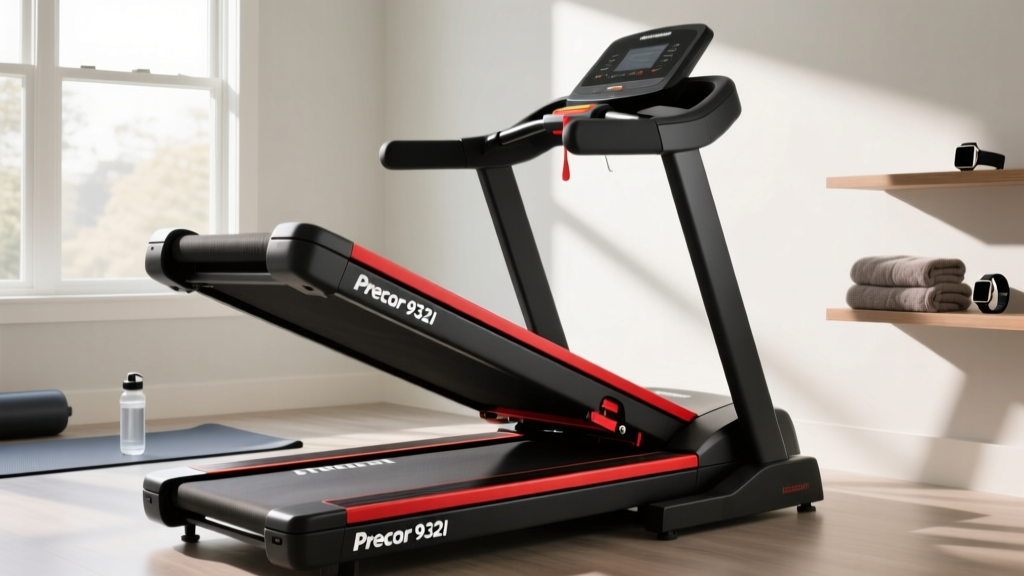
ProForm 9000 Treadmill Review: 2026 Compact Cardio Market
Read our ProForm 9000 treadmill review and 2026 market analysis comparing heavy-duty rigs to the booming trend of compact portable cardio equipment.

The ProForm 9000 Benchmark: Heavy-Duty vs. The Space Crunch
When conducting a comprehensive ProForm 9000 treadmill review, it is easy to be impressed by the sheer engineering of traditional, full-sized cardio machines. The ProForm SMART Pro 9000 has long served as a benchmark in the mid-tier home fitness market. Featuring a robust 3.0 CHP Mach Z commercial-grade motor, a spacious 20 x 60-inch tread belt, and a 0-12% incline range, it delivers a premium gym experience. Priced historically around $1,299, it offers undeniable value for serious runners.
Footprint and Physics: The 265-Pound Problem
However, the 2026 home fitness landscape is defined by spatial constraints and urbanization. The ProForm 9000 measures approximately 76.5 inches long, 32 inches wide, and 63 inches high, weighing in at a massive 265 pounds. Even with its folding deck, the base footprint permanently consumes over 22 square feet of floor space. For the modern apartment dweller or the multi-use home office, this physical footprint is becoming a dealbreaker. This reality has triggered a massive market pivot away from stationary behemoths toward compact portable cardio equipment options.
2026 Market Analysis: The Explosion of Portable Cardio
Over the last three years, the home fitness equipment sector has bifurcated. While premium, heavy-duty rigs still hold a niche among dedicated marathoners, the highest growth sector is ultra-compact, stowable cardio. According to industry analyses, the global market for walking pads and portable steppers has grown by over 34% year-over-year since 2023. Consumers are no longer just looking for high-intensity interval training (HIIT) machines; they are optimizing for Non-Exercise Activity Thermogenesis (NEAT).
NEAT refers to the calories burned through daily, low-intensity movements. As highlighted by the Mayo Clinic, increasing your daily NEAT through consistent, low-impact movement like walking can significantly impact long-term metabolic health and weight management. Compact cardio equipment allows users to accumulate 10,000+ steps a day while working at a standing desk, seamlessly integrating fitness into a sedentary lifestyle without requiring a dedicated 'gym room'.
Market Matrix: Traditional vs. Compact Cardio
To understand the trade-offs between a traditional rig like the ProForm 9000 and modern portable alternatives, we must look at the raw specifications.
| Metric | ProForm SMART Pro 9000 | KingSmith WalkingPad R2 | Hydrow Wave (Rower) | Sunny SF-E9020 (Elliptical) |
|---|---|---|---|---|
| Primary Use Case | High-intensity running, incline training | Under-desk walking, NEAT accumulation | Full-body low-impact conditioning | Seated active recovery, light cardio |
| Machine Weight | 265 lbs | 62 lbs | 102 lbs | 33 lbs |
| Active Footprint | ~22 sq ft | ~7 sq ft | ~11 sq ft | ~3 sq ft |
| Max User Weight | 325 lbs | 240 lbs | 275 lbs | 220 lbs |
| 2026 Avg. Price | $1,299 | $499 | $1,599 | $159 |
Top Compact Alternatives Dominating the 2026 Market
1. Walking Pads (The NEAT Revolution)
The KingSmith WalkingPad R2 remains a dominant force in the portable treadmill space. Unlike the ProForm 9000, the R2 utilizes a dual-fold hinge system that reduces its storage height to just 10 inches, allowing it to slide under a sofa or bed. It features a 2.5 HP peak motor (significantly lower than the ProForm's continuous 3.0 CHP) and limits top speed to 7.5 mph with the handrail deployed. It is strictly a walking and light-jogging machine, but its integration with standing desks has made it the best-selling compact cardio unit of the year.
2. Foldable Smart Rowers
Rowing machines are notoriously long, often requiring 8 feet of clearance. The Hydrow Wave disrupted this in 2026 by shrinking the chassis by 15% compared to the original Hydrow, bringing the weight down to 102 lbs and utilizing an electromagnetic resistance system that requires zero maintenance compared to traditional water or air rowers. When stored vertically, its footprint is roughly 2 square feet, making it viable for small urban apartments while still delivering a full-body, high-calorie-burn workout that a walking pad cannot match.
3. Under-Desk Magnetic Ellipticals
For users with joint restrictions who cannot tolerate the repetitive impact of a walking pad, portable ellipticals like the Sunny Health & Fitness SF-E9020 offer a compelling alternative. Weighing just 33 lbs, this unit features an 8-inch stride and an 8-level magnetic resistance dial. While it lacks the digital ecosystem of smart machines, its mechanical simplicity means there are virtually no electronic failure points, making it a highly reliable, low-cost entry into portable cardio.
Failure Modes & Edge Cases in Portable Equipment
Transitioning from heavy-duty equipment to compact options introduces specific mechanical vulnerabilities that buyers must understand.
⚠️ Critical Warning: DC Motor Thermal Throttling
Most compact walking pads utilize Direct Current (DC) motors to save weight and reduce deck thickness. Unlike the heavy-duty Alternating Current (AC) or high-inertia DC motors found in the ProForm 9000, these compact motors are highly susceptible to thermal throttling. If a user exceeding 200 lbs attempts to jog at 6 mph for more than 45 continuous minutes, the internal temperature will trigger a safety shutoff. Rule of thumb: Never buy a walking pad for continuous, high-intensity running.
Another common failure mode in the compact category is hinge degradation. On foldable walking pads, the central locking latch is typically made of high-density ABS plastic. Over 12 to 18 months of daily folding and unfolding, this latch can develop micro-fractures, leading to a dangerous 'buckling' sensation in the center of the track during use. Users must inspect this hinge monthly and apply dry PTFE lubricant to the track belt to reduce motor strain.
Final Verdict: The Decision Framework
Should you invest in a traditional rig or pivot to compact portable cardio? The American Heart Association recommends at least 150 minutes of moderate-intensity aerobic activity per week. How you achieve this dictates your equipment needs.
- Choose the ProForm 9000 (or similar heavy-duty treadmills) if: You are training for endurance events, require speeds over 10 mph, need aggressive incline training (12%+), and have a dedicated, climate-controlled space of at least 30 square feet.
- Choose a Walking Pad (e.g., WalkingPad R2) if: Your primary goal is increasing daily step count, combating sedentary office work via a standing desk, and you need to stow the equipment out of sight daily.
- Choose a Compact Rower/Elliptical if: You require low-impact, full-body conditioning but lack the spatial volume for a traditional Concept2 or NordicTrack elliptical.
The 2026 cardio market is no longer about finding the 'biggest' machine; it is about finding the most frictionless integration into your daily life. Compact portable cardio equipment has evolved from novelty gadgets to legitimate, data-backed health tools that rival traditional machines in long-term adherence.
More gear to consider
All reviews
Small Space Folding Treadmill Review & Treadmill Disposal Costs

Do Treadmills Burn Fat? The Belt Maintenance Guide for Max Results
Echo Treadmill vs Motorized: A Beginner's Step-by-Step Guide
Folding Treadmills for Small Spaces to Prevent Knee Pain After Jogging

Treadmill Bike Amazon Alt: Air Bike vs Assault Bike Space Guide