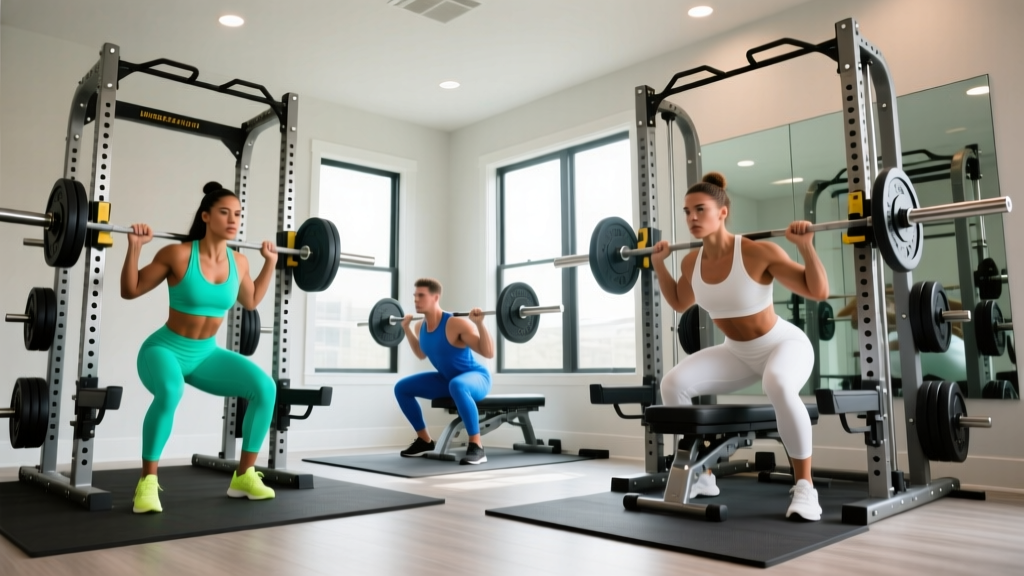
Power Rack vs Squat Rack vs Stand: Arnold Dumbbell Press Setup
Step-by-step guide to choosing a power rack, squat rack, or squat stand for your home gym, optimized for safety and the Arnold dumbbell press.

Building a home gym in 2026 requires balancing spatial constraints, budget, and exercise versatility. While most buying guides focus purely on barbell squats and bench presses, a well-rounded hypertrophy program demands dedicated shoulder work. The Arnold dumbbell press is a cornerstone movement for medial and anterior deltoid development, but it introduces unique spatial and safety challenges that directly impact your choice of squatting equipment.
If you are trying to decide between a full power rack, a half squat rack, or a minimalist squat stand, your overhead pressing mechanics should heavily influence your decision. This beginner-friendly, step-by-step guide will walk you through the exact dimensions, safety requirements, and spatial clearances needed to build the ultimate home gym setup optimized for the Arnold press and heavy compound lifts.
Step 1: Understand the Biomechanics and Clearance Needs
Before spending $500 to $1,500 on steel uprights, you must understand the physical footprint of the Arnold dumbbell press. Popularized by Arnold Schwarzenegger, this movement begins with a supinated (underhand) grip at shoulder height and rotates into a pronated (overhand) lockout overhead. According to the American Council on Exercise (ACE), this rotational path increases the range of motion and time under tension, but it also demands significant lateral elbow clearance.
Expert Insight: The Wingspan ProblemStandard power racks have an internal width of 43 to 49 inches. If you have a broad wingspan and use wide-handled dumbbells (like 50lb+ hex dumbbells), your elbows or the dumbbell heads can clip the uprights during the bottom supinated phase of the Arnold press. This makes the open-face design of squat stands and half racks highly advantageous for strict shoulder isolation.
Furthermore, performing this movement safely requires an adjustable FID (Flat/Incline/Decline) bench, such as the REP Fitness AB-3100 2.0 ($249) or the Rogue Adjustable Bench 3.0 ($395). You must account for the bench's footprint, the dumbbell arc, and your own body mechanics when measuring your available floor space.
Step 2: Compare the Big Three Rack Configurations
When evaluating a power rack vs squat rack vs squat stand, you are essentially choosing between maximum safety, spatial efficiency, and budget. Below is a 2026 market comparison of the three primary configurations, keeping heavy dumbbell pressing and barbell safety in mind.
| Feature | Full Power Rack | Half Squat Rack | Squat Stand |
|---|---|---|---|
| Example Model | REP Fitness PR-4000 | Titan T-3 Half Rack | Rogue SML-2C (90") |
| Approx. Price | $849 - $1,200 | $649 - $800 | $415 - $450 |
| Lateral Clearance | Restricted (43"-49" inside) | Unrestricted (Open front) | Unrestricted (Open front) |
| Safety Spotting | Superior (4-point cage) | Excellent (Extended arms) | Moderate (Add-on arms) |
| Footprint | ~48" x 48" (Large) | ~48" x 36" (Medium) | ~48" x 24" (Compact) |
For a beginner focused on hypertrophy and dumbbell work, the restricted lateral clearance of a full power rack can be frustrating during wide rotational presses. However, the power rack remains the undisputed king of safety for heavy, unsupervised barbell bench pressing and squatting.
Step 3: Evaluate Your Ceiling Height and Bench Compatibility
The most common mistake beginners make in 2026 is purchasing a 90-inch tall squat stand or power rack for a room with standard 8-foot (96-inch) ceilings. This leaves a mere 6 inches of clearance between the top of the rack and your ceiling.
The 8-Foot Ceiling Dilemma
If you plan to do pull-ups, a 90-inch rack is virtually unusable in an 8-foot room unless you mount it to a concrete floor and accept that your head will scrape the drywall at the top of the movement. For the Arnold dumbbell press, a 90-inch rack is generally fine because you are seated. However, if you ever transition to standing overhead barbell presses or standing dumbbell shoulder presses, the top crossmembers of a 90-inch rack will block your lockout.
- Solution A: Buy a 72-inch rack (like the Rogue S-2 72" Squat Stand). This solves the ceiling issue and provides ample overhead clearance, but completely eliminates the ability to do pull-ups on the rack.
- Solution B: Buy a 90-inch rack but ensure your adjustable bench allows you to sit deep enough inside the footprint to clear the crossmembers during seated Arnold presses.
Step 4: Selecting the Right Safety Spotter Arms
Failing a heavy Arnold dumbbell press is a unique failure mode. Unlike a barbell bench press where the weight drops straight down onto your chest, heavy dumbbells tend to fall laterally or backward if your rotator cuff fatigues at the lockout sticking point. According to strength and conditioning guidelines, having reliable spotters or mechanical catch systems is non-negotiable when lifting near your 5-rep max.
"When executing seated dumbbell presses inside a rack, always set the safety spotter arms just below your shoulder height. If your shoulders give out during the rotational phase, you can simply drop your elbows onto the spotter arms, preventing the dumbbells from crashing onto your hardwood floor or your toes."
If you opt for a REP Fitness PR-4000 Power Rack, the 3x3 inch 11-gauge steel uprights and included sandwich-style safety straps provide an incredibly secure catch zone for dropped dumbbells. If you choose a squat stand, you must purchase extended safety spotter arms (such as the Titan T-2 Folding Spotter Arms, ~$129) that protrude at least 20 inches forward to catch the dumbbells before they hit the ground.
Step 5: Final Decision Framework and Budgeting
To finalize your home gym purchase, use this practical decision framework based on your specific spatial and training constraints:
Choose the Full Power Rack If:
- You have a dedicated garage or basement with 9-foot ceilings or higher.
- Your budget exceeds $1,000 (including safety attachments and pull-up bars).
- You plan to lift heavy barbells alone and require 4-point cage safety.
- You don't mind maneuvering your bench carefully to avoid clipping the uprights during the bottom phase of the Arnold press.
Choose the Half Squat Rack If:
- You want the heavy-duty stability of a 6-point base but need the open-front clearance for wide-grip dumbbell presses and lateral movements.
- You want to integrate a lat pulldown or cable tower attachment in the future (most half racks support these modular add-ons).
Choose the Squat Stand If:
- You are working with a strict budget under $600.
- Your workout space is a small spare bedroom or apartment where the rack must be pushed into a corner when not in use.
- Your primary focus is dumbbell hypertrophy (like the Arnold press, lateral raises, and Romanian deadlifts) rather than maximal 1-rep barbell squats.
By prioritizing the biomechanical requirements of your core exercises—like the rotational clearance needed for the Arnold dumbbell press—you ensure that the steel you buy today will serve your training safely and effectively for years to come. Measure your ceiling, check your wingspan, and invest in quality safety spotters before your first heavy pressing session.
More gear to consider
All reviews
Dumbbell for Strength Training vs Barbell: Knurling Mistakes
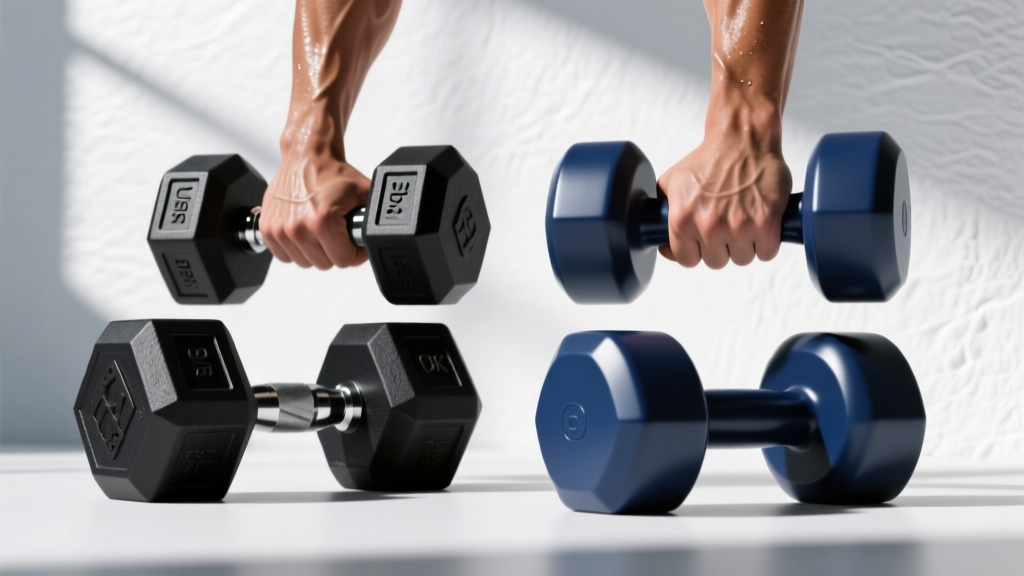
Rubber Hex vs Urethane: Best Gear for Different Arm Workouts with Dumbbells

Rubber Hex vs Urethane: Budget Guide for the Dumbbell Z-Press

Loadable Dumbbells for Bent Over Dumbbell Reverse Flyes: Value Guide

Bumper vs Iron Plates: Rack Setups for the Isolated Dumbbell Curl