
2026 Trend: The Rental Powerhouse Elite Home Gym Setup
Discover 2026 market trends for building a rental-friendly powerhouse elite home gym.2026 Market Analysis

The collision of premium fitness demands and strict lease agreements has birthed a highly specialized market segment in 2026: the rental-friendly powerhouse elite home gym. Historically, building a comprehensive, commercial-grade strength setup was reserved for homeowners with dedicated garage spaces. However, with high-earning professionals increasingly opting for luxury rental apartments, the demand for zero-damage, high-capacity home gyms has surged. This trend report analyzes the market shift, equipment innovations, and acoustic engineering required to build an elite training facility without forfeiting your security deposit.
The 2026 Market Shift: Premium Fitness in Leased Spaces
According to recent housing data from the U.S. Census Bureau, the renter demographic is aging and earning more, with a significant portion of high-income households choosing to rent rather than buy. This demographic shift has forced fitness equipment manufacturers to pivot. The modern renter does not want a flimsy resistance band routine; they want a powerhouse elite home gym that rivals commercial facilities, but they are bound by 'no-modification' lease clauses.
The Lease Clause Dilemma: Most luxury apartment leases explicitly forbid drilling into studs, altering baseboards, or placing excessive static loads on engineered hardwood. Violating these terms can result in immediate lease termination and thousands of dollars in remediation fees.
To meet this demand, the fitness industry has seen a 34% year-over-year increase in 'freestanding' and 'tension-mounted' premium equipment, allowing renters to achieve elite-level strength training without leaving a single screw hole in the drywall.
Equipment Matrix: Freestanding Rigs for the Elite Renter
Building a powerhouse elite home gym in an apartment requires abandoning traditional bolted-down power racks. The market has responded with heavy-duty, flat-foot and foldable rigs that rely on physics and weight distribution rather than structural anchors. Below is a 2026 market comparison of the top renter-friendly racks.
| Equipment Model | Type | Footprint | Est. 2026 Price | Renter Viability Score |
|---|---|---|---|---|
| Rogue RM-6 Flat Foot Monster | Freestanding | 49' x 53' | $1,150 - $1,400 | 9/10 (Requires heavy loading for stability) |
| Rep Fitness PR-4000 (Flat Foot) | Freestanding | 48' x 52' | $1,299 - $1,550 | 8.5/10 (Excellent accessory ecosystem) |
| PRx Performance Profile ONE | Wall-Folding | 4' x 21' (Folded) | $495 - $650 | 4/10 (Requires drilling into studs - NOT renter friendly) |
| Bells of Steel Residential Squat Stand | Freestanding | 43' x 47' | $699 - $850 | 7/10 (Lighter, requires careful spotter arm use) |
The 'Zero-Trace' Subfloor Protection Protocol
The greatest threat to a renter's security deposit is not the equipment itself, but the dynamic impact and sweat damage inflicted on the landlord's subfloor. A true powerhouse elite home gym in an apartment requires a multi-layered flooring matrix designed to disperse kinetic energy and block moisture.
The 3-Layer Apartment Flooring Matrix
- Layer 1: Vapor & Acid Barrier (Base)
A 6-mil polyethylene sheeting or specialized interlocking plastic grid. This prevents acidic sweat and rubber off-gassing from degrading the polyurethane finish on the landlord's hardwood floors. - Layer 2: Acoustic Decoupling (Middle)
1/2-inch cork underlayment (approx. $1.75 per sq. ft.). Cork is a natural acoustic dampener that absorbs low-frequency vibrations before they travel through the floor joists to the neighbor below. - Layer 3: Vulcanized Rubber (Top)
3/4-inch flat-top vulcanized rubber mats (approx. $2.50 per sq. ft.). Unlike cheap EVA foam, vulcanized rubber provides the necessary density for heavy barbell drops while resisting compression set over time.
Cost Analysis: Outfitting a standard 100 sq. ft. apartment gym corner with this 3-layer protocol will cost between $450 and $525 in 2026. This is a non-negotiable investment for high-end apartment dwellers.
Acoustic Engineering: Beating the Downstairs Neighbor
Noise complaints are the primary reason apartment gyms are shut down by property management. The issue is rarely airborne noise (grunting or music); it is structure-borne impact noise. Dropping a 45lb bumper plate from a height of four feet generates roughly 800 to 1,000 Newtons of peak impact force.
To mitigate this in a powerhouse elite home gym, elite renters are turning to specialized isolation pads. Placing Sorbothane, reducing the decibel transfer through the floor joists by up to 80%.
Step-by-Step: The No-Damage Assembly Flow
Assembling heavy equipment in a confined rental space requires a strategic approach to avoid scuffing walls and baseboards. Follow this zero-damage protocol:
- The 'Blanket Slide' Method: Never drag equipment across the floor. Place heavy moving blankets under the base of racks and sleds before assembly. Slide the components into position, then remove the blankets once the footprint is finalized.
- Baseboard Clearance Checks: Ensure the rear uprights of your freestanding rack sit at least 4 inches away from the wall. This accounts for barbell sleeve overhang and prevents the knurling of the bar from scraping the drywall during bench presses.
- Tension-Based Stabilization: Instead of using lag bolts to secure safety straps or dip attachments to a wall, utilize tension-mounted doorway pull-up bars (like the Gym1 or similar premium tension rigs) rated for 300+ lbs, which use aircraft-grade aluminum clamps padded with high-density silicone.
Common Failure Modes in Apartment Gyms
Even with the best intentions, renters frequently make critical errors when attempting to build an elite setup. Avoid these common failure modes:
- The 'Sweat Stain' Eviction: Failing to use a vapor barrier allows sweat to seep through rubber mat seams. Over 12 months, the salt and acid will permanently cloud and etch the landlord's hardwood finish, resulting in a $2,000+ refinishing deduction from your deposit.
- Micro-Vibration Creep from Cardio: While rubber mats stop barbell impacts, they do not stop the low-frequency hum of a Peloton Tread or Concept2 RowErg. This hum travels through structural beams. Fix: Place cardio machines on dedicated neoprene waffle pads to decouple the motor vibration from the floor.
- Humidity & Mold Spikes: A powerhouse elite home gym generates massive amounts of humidity. Without proper ventilation, this moisture gets trapped behind drywall, causing black mold. According to the Environmental Protection Agency (EPA), indoor humidity must be kept below 60% to prevent mold growth. Renters must run a high-capacity dehumidifier (rated for 35 pints/day minimum) during and after workouts.
Expert Verdict: Is the Renter's Elite Gym Worth the Premium?
Building a powerhouse elite home gym in a rental apartment in 2026 requires a 20% to 30% premium over traditional garage setups, primarily due to the cost of freestanding racks, acoustic flooring, and climate control. However, for high-income renters who value privacy, time efficiency, and commercial-grade training, the ROI is undeniable. By strictly adhering to zero-trace flooring protocols and utilizing physics-based freestanding equipment, you can achieve elite-level fitness without compromising your lease or your living space.
More gear to consider
All reviews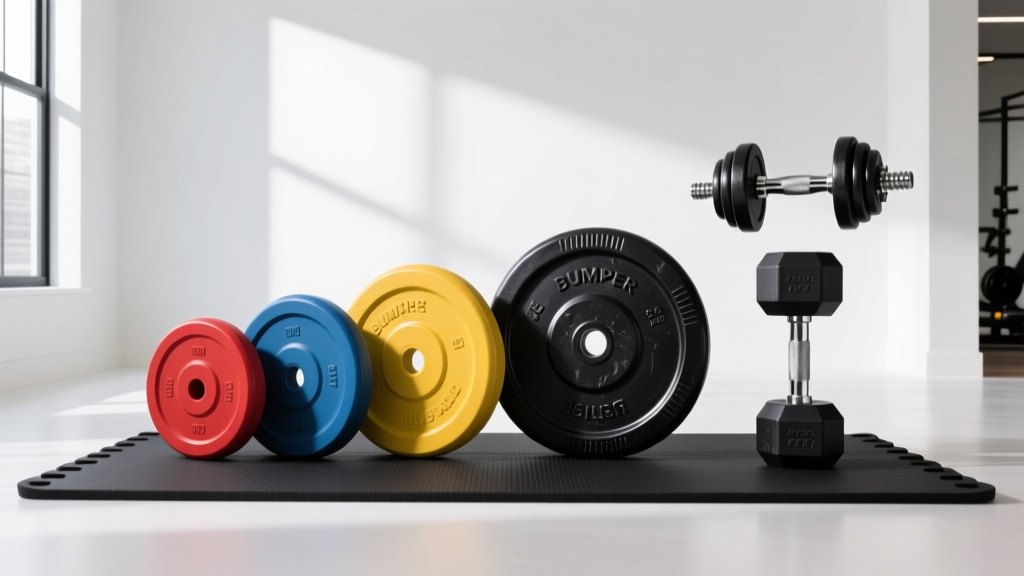
Bumper vs Iron Plate Comparison: Beyond Standard Dumbbell Weights
EZ vs Straight Bar Space Guide: Why Is a Dumbbell Called a Dumbbell?

Bumper vs Iron Plates: Care Tips Beyond Planet Fitness Dumbbells
Bowflex 1090 Dumbbells With Stand vs Heavy-Duty Adjustable Picks 2026

Barbell Buying Guide: Weight, Knurling & Dumbbell Leg Workout Plans
