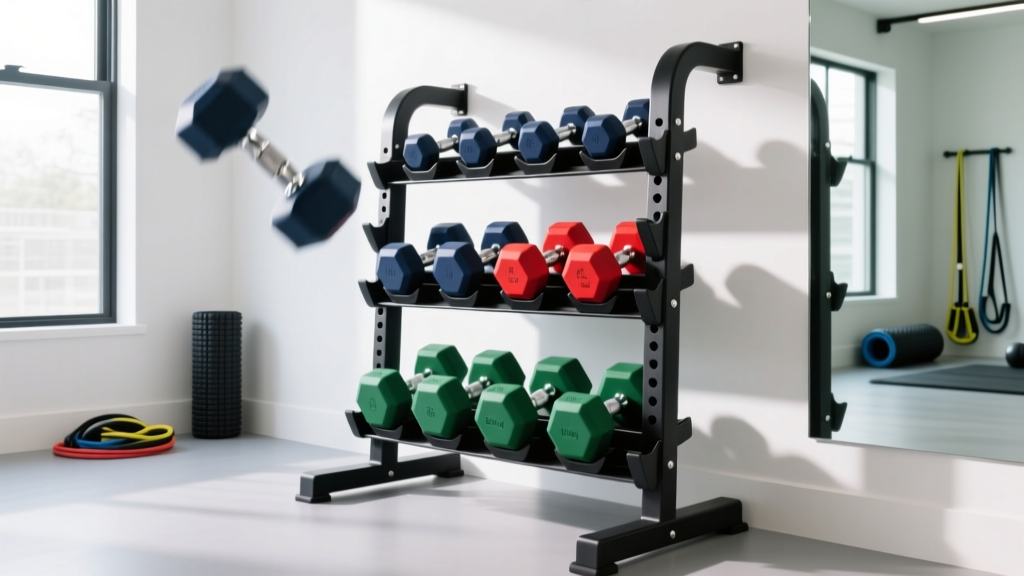
Form & Gear Mistakes: Rear Delt Flys with Dumbbells & Plate Types
Troubleshoot common home gym errors. Learn proper form for rear delt flys with dumbbells and why choosing Olympic vs standard weight plates matters.

The Intersection of Biomechanics and Equipment Selection
Building a functional, long-term home gym requires mastering two parallel learning curves: human biomechanics and equipment engineering. Many lifters hit frustrating plateaus not because they lack effort, but because they are battling poor exercise form and fundamentally flawed gear. Two of the most common culprits in the 'Free Weights & Racks' category are improper execution of rear delt flys with dumbbells and the costly mistake of investing in standard 1-inch weight plates over Olympic 2-inch plates.
In this comprehensive troubleshooting guide, we break down the exact failure modes of posterior deltoid isolation exercises and expose the 'starter kit trap' of standard weight plates. Whether you are trying to build 3D shoulders or future-proof your garage gym, understanding these nuances will save you time, money, and potential injury.
Troubleshooting Rear Delt Flys with Dumbbells
The posterior deltoid is a notoriously stubborn muscle group. It is frequently overshadowed by the mid-traps and rhomboids during pulling movements. According to biomechanical analyses documented by ExRx, the rear delt functions primarily as a horizontal abductor of the humerus. However, most lifters unknowingly sabotage this isolation through three critical form mistakes.
Mistake 1: Excessive Scapular Retraction (The Mid-Trap Hijack)
The most pervasive error during rear delt flys with dumbbells is aggressively squeezing the shoulder blades together at the top of the movement. While scapular retraction is ideal for barbell rows or lat pulldowns, it is counterproductive here. When you retract your scapulae, you shift the mechanical tension away from the rear deltoid and onto the mid-traps and rhomboids.
- The Fix: Maintain a 'protracted' or neutral scapular position. Imagine trying to push the dumbbells toward the side walls rather than squeezing them together behind your back. Keep a slight forward rounding in your upper back to stretch the rear delts at the bottom of the movement.
Mistake 2: Ignoring the Scapular Plane
Flaring the elbows out at a perfect 90-degree angle to the torso places immense shearing force on the glenohumeral joint and limits the rear delt's line of pull.
- The Fix: Adopt the scapular plane (roughly 30 to 45 degrees forward from the frontal plane). This aligns the humerus with the natural orientation of the shoulder blade, optimizing rear deltoid fiber recruitment while protecting the rotator cuff.
Mistake 3: Using the Wrong Dumbbell Profile
Equipment matters. Bulky adjustable dumbbells, such as the popular Bowflex SelectTech 552s, feature wide, blocky ends that can physically collide with your torso or bench before the rear deltoid reaches a full stretch at the bottom of the fly. For optimal stretch-mediated hypertrophy—a concept heavily supported by recent sports science literature and the National Strength and Conditioning Association (NSCA)—you need a compact profile. Urethane hex dumbbells or compact adjustables like the Nuobell 80lb or PowerBlock Elite EXP allow for a deeper, unobstructed stretch.
💡 Pro-Tip: The Chest-Supported Advantage
To completely eliminate lower back momentum and cheating, perform your rear delt flys with dumbbells on an incline bench set to 30-45 degrees. Rest your chest against the pad. This removes the ability to 'heave' the weight and forces the posterior deltoids to handle 100% of the load.
The Equipment Trap: Olympic vs Standard Weight Plates
While mastering your form is critical, your progress will ultimately be bottlenecked by your hardware. When outfitting a home gym, beginners are often lured by the low upfront cost of 'Standard' weight plates and barbells. This is a notorious trap that forces lifters to completely rebuild their equipment inventory within 18 months.
Defining the Difference: 1-Inch vs 2-Inch (50mm)
The terminology 'Standard' is actually a misnomer in the professional fitness industry. What big-box stores call 'Standard' features a 1-inch (25.4mm) center hole. 'Olympic' equipment, governed by the specifications of the International Weightlifting Federation (IWF), features a 2-inch (50mm) center hole.
Why Standard Plates Are a Dead End
- Sleeve Length Limitations: Standard 1-inch dumbbell handles and barbells have incredibly short sleeves (usually 6 to 8 inches). A standard 1-inch dumbbell handle maxes out at around 50-60 lbs. Once your rear delt flys, presses, or rows progress past this weight, you are forced to buy expensive fixed-weight dumbbells.
- Power Rack Incompatibility: Standard 1-inch barbells are typically 6 feet long and lack the structural integrity to be safely racked on standard power racks. The J-hooks on almost all commercial and high-end home squat racks are designed exclusively for the longer, thicker sleeves of Olympic barbells.
- Bar Whip and Tensile Strength: Standard bars are often made of low-grade steel that will permanently bend if you load them past 150 lbs or drop them during a deadlift. Olympic bars utilize high-tensile steel (190,000+ PSI) designed to flex and return to shape.
Comparison Matrix: Standard vs Olympic Plates
Use this matrix to understand why transitioning to Olympic plates is a non-negotiable step for serious lifters.
| Feature | Standard (1-Inch) | Olympic (2-Inch / 50mm) |
|---|---|---|
| Hole Diameter | 1 inch (25.4mm) | 2 inches (50mm) |
| Material Quality | Cement-filled vinyl or cheap cast iron | Calibrated steel, virgin rubber, urethane |
| Max Dumbbell Load | ~50-60 lbs per hand | 150+ lbs per hand (using loadable handles) |
| Power Rack Fit | Rarely compatible / Unsafe | Universal industry standard |
| 2026 Avg Cost | $1.00 - $1.50 / lb | $1.50 - $3.50 / lb |
How to Future-Proof Your Free Weight Setup
If you are currently using standard plates, you don't necessarily need to throw them away, but you must stop investing in the ecosystem. Here is a practical, step-by-step framework to transition your home gym without wasting money.
Step 1: Invest in an Olympic Barbell First
Allocate your budget toward a high-quality 7-foot Olympic barbell. Look for a bar with a tensile strength of at least 190,000 PSI, dual knurl marks, and bronze or needle bearings. The Titan Fitness Olympic Barbell or the Rogue Ohio Bar (priced between $200 and $295) are exceptional entry-to-mid-tier options that will last a lifetime.
Step 2: Switch to Loadable Dumbbell Handles
Instead of buying a $1,500 rack of fixed hex dumbbells, purchase a pair of Olympic loadable dumbbell handles. The Titan Fitness Loadable Dumbbell Handles (retailing around $79.99 for the pair) feature 10-inch sleeves. By sliding your 2-inch Olympic bumper or iron plates onto these handles, you can create heavy dumbbells for lunges, presses, and heavy rows, utilizing the exact same plates you use on your barbell.
"The greatest mistake a home gym owner can make is buying into a closed ecosystem. Standard 1-inch plates limit your ceiling. Olympic plates are a universal currency in the strength world—you can take them to any commercial gym, use them on any rack, and load them onto any implement."
Step 3: Choose the Right Olympic Plate Material
When buying Olympic plates, match the material to your training style:
- Cast Iron / Machined Iron: Best for general strength training, bodybuilding, and powerlifting. They are thin, allowing you to load more weight on the bar. Expect to pay around $1.50 to $2.00 per pound.
- Virgin Rubber Bumpers: Essential if you are doing Olympic weightlifting (cleans, snatches) or dropping weights from overhead. A standard 45lb Titan Elite Bumper costs roughly $65.
- Urethane: The premium choice for commercial gyms and high-end home setups. Urethane (like the Rogue Urethane Plates) doesn't degrade, smell, or fade like rubber, but commands a premium price of $3.00+ per pound.
Frequently Asked Questions (FAQ)
Can I use Olympic plates on a standard 1-inch barbell?
No. Olympic plates have a 2-inch (50mm) center hole, which will slide right off a 1-inch standard barbell. While plastic adapter bushings exist to convert Olympic plates to 1-inch bars, they are highly discouraged. They introduce slop, instability, and safety hazards, especially during dynamic movements or heavy pressing.
What is the best dumbbell weight for rear delt flys?
Because the rear deltoid is a small muscle group operating on a long lever arm (your extended arm), you will use significantly less weight than you do for pressing or rowing. Most intermediate male lifters will find 15 lb to 30 lb dumbbells per hand to be the sweet spot for strict, chest-supported rear delt flys. Focus on the 12-20 repetition range with a 2-second pause at the peak contraction.
Are 1-inch standard plates completely useless?
They aren't entirely useless for very light, high-rep accessory work, resistance band anchors, or budget-friendly kids' fitness setups. However, for any adult pursuing progressive overload, hypertrophy, or strength gains, the 1-inch standard ecosystem is a financial dead end that will ultimately require you to buy Olympic gear anyway.
✅ The FitGearPulse Verdict: Stop fighting your equipment. Perfect your scapular mechanics on rear delt flys with dumbbells, ditch the 1-inch standard plates, and invest in the 50mm Olympic standard. Your shoulders—and your wallet—will thank you in the long run.More gear to consider
All reviews
Bumper vs Iron Plate Longevity & Incline Dumbbell Curl Form Setups
EZ vs Straight Bar: Space Layouts & Single Dumbbell Bulgarian Split Squat

Dumbbell Pullover vs Skull Crusher: Neoprene Dumbbell Mistakes
Home Gym Setup for Incline Alternating Dumbbell Curls with Neoprene Weights

Power Rack vs Squat Stand: Space for Dumbbell Box Step Overs?