
Power Rack vs Squat Rack vs Squat Stand & Dumbbell Pads Guide
Compare power racks, squat racks, and squat stands for your home gym. Learn rig dimensions, pricing, and how to integrate dumbbell pads safely.

The Architecture of Heavy Lifting: Choosing Your Core Rig
When outfitting a garage gym in 2026, the centerpiece is undeniably the lifting rig. The debate between a power rack, a squat rack (half rack), and squat stands is a foundational rite of passage for home gym owners. However, choosing the right metal skeleton is only half the battle; you must also consider how your rig integrates with your broader accessory ecosystem, specifically your dumbbell pads, flooring, and attachment modularities. This in-depth buying guide breaks down the exact dimensions, pricing, and real-world failure modes of each rig type to help you make an informed, data-driven investment.
The Core Contenders: Defining the Rigs
Power Racks (Full Cages)
The undisputed king of the home gym is the full power rack. Premium models like the Rep Fitness PR-4000 or the Rogue RM-6 Monster Rack utilize 3x3-inch, 11-gauge steel tubing and feature a fully enclosed six-post design. Priced between $1,099 and $3,500+, these racks offer maximum safety for solo lifters. The enclosed cage allows for the use of safety straps or pin-and-pipe spotter arms on all four sides, meaning you can fail a heavy squat or bench press from any angle without risking a crush injury. Furthermore, the 3x3 uprights provide an extensive attachment ecosystem, accommodating everything from lat pulldowns to belt squat carriages.
Squat Racks (Half Racks)
Half racks, such as the Titan Fitness T-3 Half Rack or the Rogue HR-2, offer a compelling middle ground. Priced between $699 and $1,400, they feature a smaller rear footprint but extend forward with dual spotter arms. This open-front design is highly favored by Olympic weightlifters who need to snatch or clean from the floor without hitting the front uprights. However, the forward weight bias means half racks must be heavily bolted to the floor or loaded with rear weight storage horns to prevent tipping during aggressive barbell racking.
Squat Stands
Minimalist and budget-friendly, squat stands like the Rogue SML-2C Monster Lite consist of two independent uprights. Priced between $475 and $550, they are ideal for low-clearance garages or lifters on a strict budget. While they excel at holding a barbell for squats and presses, they lack inherent lateral stability and offer minimal attachment options. According to safety guidelines published by the National Strength and Conditioning Association (NSCA), utilizing independent stands for heavy, unspotted lifting carries a significantly higher risk profile than enclosed cages, necessitating strict bolting protocols and careful weight management.
Head-to-Head Comparison Matrix
| Feature | Power Rack | Squat Rack (Half) | Squat Stands |
|---|---|---|---|
| Average Price Range | $999 - $3,500+ | $699 - $1,400 | $350 - $600 |
| Tubing Profile | 3x3 11-Gauge | 3x3 11-Gauge | 2x3 or 3x3 |
| Inherent Safety | Maximum (Enclosed) | High (Front Spotters) | Low (Requires Bolting) |
| Attachment Ecosystem | Extensive | Moderate | Minimal |
| Hole Spacing (Bench Zone) | 1-inch (Westside) | 1-inch or 2-inch | 2-inch Standard |
| Ideal For | Heavy Solo Lifts | Olympic Lifts/Space | Garages/Low Budget |
Integrating Dumbbell Pads and Accessory Ecosystems
When buyers focus solely on the uprights, they often neglect the micro-accessories that dictate the daily user experience. A critical, frequently overlooked component in this ecosystem is the integration of dumbbell pads. In the context of a modern home gym, this term encompasses two distinct but equally vital pieces of equipment that must be factored into your spatial and purchasing decisions.
1. UHMW J-Cup Liners (Rack Protection Pads)
If you frequently perform heavy dumbbell bench presses, goblet squats, or dumbbell lunges inside your rack, metal-on-metal contact will quickly destroy both the knurling on your dumbbells and the powder coat on your J-cups. Upgrading to J-cups lined with Ultra-High-Molecular-Weight (UHMW) polyethylene dumbbell pads is mandatory for equipment longevity. These high-density plastic inserts absorb acoustic shockwaves, reducing the metallic 'clang' of racking by up to 80%, and prevent micro-fractures in welded J-cup brackets over years of repetitive impact.
2. High-Density EVA Foam Floor Pads
For hypertrophy-focused lifters running heavy drop-sets, dropping 100lb hex dumbbells onto bare concrete or thin horse-stall mats will eventually shatter the rubber casing and damage the subfloor. Thick, high-density EVA foam dumbbell pads (typically 3/4-inch to 1.5-inches thick) placed in the drop-zone adjacent to your rack are essential. According to equipment longevity tests documented by Garage Gym Reviews, utilizing dedicated drop pads extends the lifespan of premium urethane dumbbells by years, while also protecting your concrete slab from spalling and reducing noise transfer to adjacent rooms.
Spatial Planning Tip: When measuring your floor plan for a power rack, remember to add 36 inches of clearance on the left and right sides specifically for your dumbbell pads and dumbbell rack. A standard 48x48 inch rack footprint actually requires a 120x48 inch operational zone to safely execute heavy dumbbell flyes and drop-sets without striking the uprights.Spatial Geometry and Installation Realities
Before purchasing, you must map your spatial geometry. A standard 90-inch power rack requires a minimum ceiling height of 96 inches to allow for pull-ups with a full 4-inch clearance above the head. If your ceiling is 80 inches, you must pivot to a short 72-inch rack or a squat stand. Furthermore, hole spacing dictates your bench press precision. Budget racks often feature 2-inch hole spacing throughout the entire upright, making micro-loading bench press increments frustrating. Premium 2026 models utilize 'Westside' 1-inch spacing in the bench zone for exact J-cup placement, eliminating the dangerous scenario of having to un-rack the barbell from too high or too low.
Real-World Failure Modes and Edge Cases
- The 'Wobble' Effect on Squat Stands: When using squat stands for heavy dumbbell floor presses, the independent uprights can shift if bumped. Without a cross-member stabilizer bar, the stands lack torsional rigidity. Always use 3/8-inch concrete wedge anchors or bolt the stands directly to a reinforced wooden platform.
- Spotter Arm Interference: On half-racks, the front-mounted spotter arms can obstruct the natural arc of a dumbbell fly or floor press if not adjusted correctly. Always opt for adjustable, pin-and-pipe safeties over static flip-downs to ensure your dumbbell pads and movement paths remain unobstructed.
- Powder Coat Shearing: Cheap racks use low-grade paint that chips upon impact. When metal is exposed, oxidation begins within weeks in humid garages. Always verify the rack uses a durable textured powder coat or consider adding UHMW protective pads to all high-impact zones.
The 2026 Verdict: Which Rig Should You Buy?
Your final decision hinges on three variables: budget, ceiling height, and training style. If you train alone, lift heavy, and want a modular attachment ecosystem, invest in a 3x3 Power Rack like the Rep PR-4000. If you prioritize Olympic weightlifting and need an open floor plan for your dumbbell pads and sled work, choose a Half Rack. If you are on a strict budget and possess a low-clearance garage, bolt down a pair of heavy-duty Squat Stands from Rogue Fitness and prioritize high-density floor padding.
Building a home gym is an exercise in risk management and spatial optimization. Do not compromise on the thickness of your safety spotter arms or the density of your dumbbell pads to save a few dollars. Your equipment should protect your body and your investment for decades.
More gear to consider
All reviews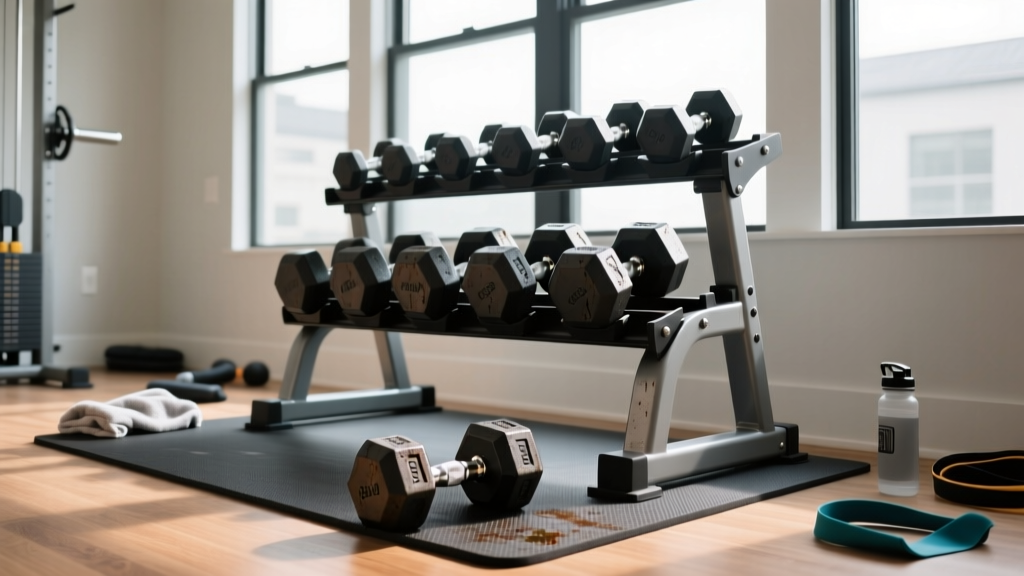
Dumbbell Rack Care and Storage After a Heavy Legs Dumbbell Workout

Power Rack vs Squat Rack vs Squat Stand for Kettlebells or Dumbbells

Floor Presses with Dumbbells: Barbell Weight & Knurling Mistakes
Stiff Legged Deadlifts with Dumbbells: Top Neoprene Picks

Olympic Barbell Guide: Weight, Knurling & Lat Pulls with Dumbbells
