
Are Dumbbells Enough? Top Neoprene Sets for Home Use (2026)
Wondering if dumbbells are enough for your home gym? We compare top neoprene dumbbell sets for 2026, analyzing durability, grip, and price per pound.

The Core Question: Are Dumbbells Enough for Your Home Gym?
As home fitness spaces continue to evolve in 2026, space and budget constraints often lead lifters to ask a fundamental question: are dumbbells enough to build muscle, increase strength, and maintain long-term fitness? The short answer, backed by biomechanics and exercise science, is a resounding yes—provided you select the right equipment and program intelligently.
Unlike fixed-path machines, dumbbells require significant stabilization from secondary muscle groups. According to the Mayo Clinic's guidelines on strength training, free weights engage stabilizer muscles and promote functional strength that translates directly to daily movements. Furthermore, dumbbells allow for unilateral training, which corrects bilateral strength imbalances and reduces the sheer spinal loading associated with heavy barbell squats or deadlifts.
However, not all dumbbells are created equal. For home use—where equipment is often stored in living spaces, garages, or apartments—the neoprene coated dumbbell has emerged as a dominant choice. This guide puts the top neoprene dumbbell sets head-to-head to help you decide which brand deserves your floor space.
Material Science: Why Neoprene for Home Use?
Neoprene, scientifically known as polychloroprene, is a synthetic rubber that offers a distinct tactile and protective profile. When evaluating home gym flooring and equipment, the coating material dictates the longevity, odor, and user experience of the gear.
| Feature | Neoprene Coating | Virgin Rubber | Urethane (PU) |
|---|---|---|---|
| Price per Pound (2026) | $1.30 - $1.85 | $2.00 - $3.50 | $4.50 - $7.00 |
| Odor Off-Gassing | Low to None | High (requires weeks) | None |
| Drop Tolerance | Moderate (can tear) | High | Very High |
| Surface Texture | Soft, matte grip | Firm, slightly porous | Hard, smooth |
For the average home user performing controlled movements (e.g., goblet squats, floor presses, lateral raises), neoprene provides an excellent balance of floor protection and acoustic dampening without the pungent "tire smell" associated with cheap recycled rubber.
Head-to-Head: Top Neoprene Dumbbells for Home Use
We tested the three most prevalent neoprene dumbbell lines on the market in 2026, evaluating handle ergonomics, coating durability, and weight accuracy.
1. CAP Barbell Neoprene Dumbbell Weights (The Budget Standard)
Price: ~$1.45/lb | Handle Diameter: 35mm | Weight Tolerance: ±3%
CAP Barbell remains the ubiquitous entry-level choice. The hexagonal neoprene heads prevent rolling, and the solid cast-iron core provides a dense, compact profile. The chrome handle features a moderate, somewhat passive knurling pattern. While adequate for light to moderate sets, the passive knurling becomes a liability during high-rep or sweaty sessions, often requiring chalk or grip tape for sets over 35 lbs.
2. Yes4All Neoprene Coated Dumbbells (The Ergonomic Contender)
Price: ~$1.60/lb | Handle Diameter: 33mm - 36mm (tapered) | Weight Tolerance: ±2%
Yes4All has aggressively captured market share by improving upon the CAP design. Their standout feature is the contoured, ergonomic handle that slightly tapers toward the center, reducing wrist strain during pressing movements. The knurling is noticeably more aggressive than CAP's, providing superior grip security. However, the neoprene coating on the edges of the hex heads is slightly thinner, making them more prone to cosmetic chipping if dropped on concrete.
3. Tone Fitness Neoprene Dumbbells (The Light-Weight Specialist)
Price: ~$1.85/lb | Handle Diameter: 38mm | Weight Tolerance: ±5%
Tone Fitness dominates the 5 lb to 20 lb range, frequently bundled with aerobic or light-resistance programs. The handles are unknurled, relying entirely on the smooth chrome finish and a slightly thicker 38mm diameter. These are excellent for physical therapy, Pilates, or high-rep metabolic conditioning, but they are entirely unsuited for progressive overload or heavy hypertrophy work.
Handle Ergonomics and Muscle Activation
The diameter and knurling of a dumbbell handle directly impact force output. Research published in the National Institutes of Health (NIH) regarding resistance training variables highlights that grip security is a primary limiting factor in motor unit recruitment. If your central nervous system detects grip slippage, it will inhibit maximal force production in the target muscle.
Because neoprene dumbbells are generally capped at a maximum weight of 50 lbs per hand, grip fatigue is less of an issue than it is with 100 lb+ urethane sets. However, for movements like unilateral dumbbell rows or Romanian deadlifts (RDLs), the aggressive knurling on the Yes4All sets provides a distinct advantage over the smoother CAP Barbell handles.
Failure Modes: When Neoprene Coatings Degrade
While neoprene is highly resistant to water and sweat, it possesses a critical vulnerability: Ultraviolet (UV) and Ozone degradation.
⚠️ CRITICAL CARE WARNING:Never store neoprene dumbbells in direct sunlight or in an uninsulated garage where temperatures exceed 95°F (35°C). Prolonged UV exposure breaks down the polychloroprene polymer chains, causing the coating to "melt" into a permanently sticky, tar-like residue that will ruin your flooring and grip. Always store them indoors on a dedicated rack.
Additionally, cleaning neoprene with ammonia-based cleaners or bleach will strip the matte finish, leaving the surface slick and dangerous during overhead presses.
The 50-Pound Ceiling: A Critical Limitation
When asking "are dumbbells enough," you must confront the manufacturing reality of neoprene: it is rarely produced in sets heavier than 50 lbs. Because neoprene is less dense than bare iron or urethane, a 60 lb neoprene dumbbell would be so physically massive that the heads would collide during a neutral-grip bench press or hit your knees during a goblet squat.
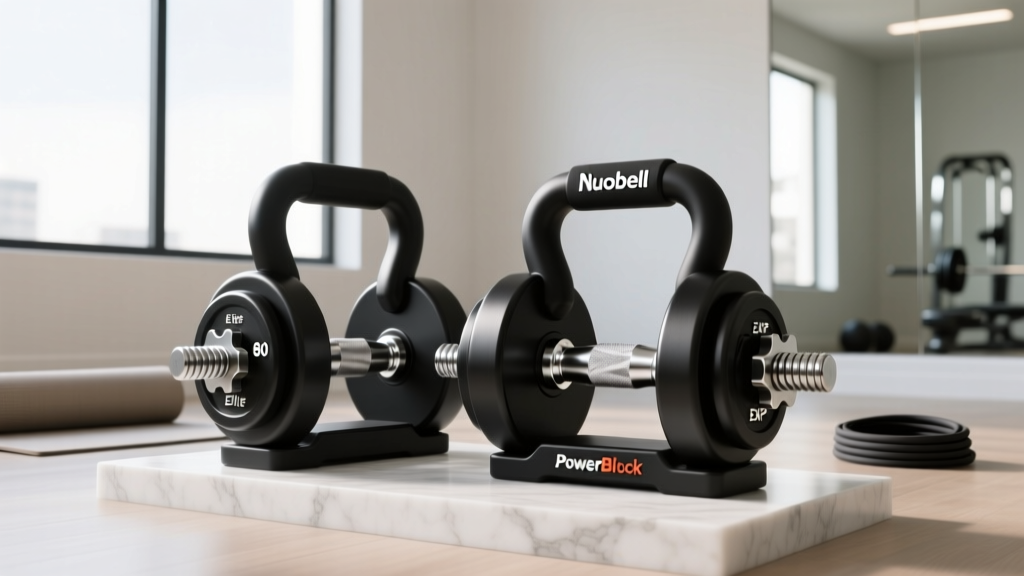
If your strength levels exceed 50 lbs per hand for major compound movements, neoprene dumbbells alone will not be enough. You will eventually need to transition to adjustable dumbbells (like PowerBlocks or Nuobells) or invest in a barbell setup.
Programming Framework: Maximizing a Neoprene Set
If you are committed to a 5 lb–50 lb neoprene set, you can easily stretch its lifespan for 2 to 3 years of progressive overload by manipulating biomechanical leverage and tempo, aligning with the CDC's Physical Activity Guidelines for muscle-strengthening activities.
- Unilateral Focus: Shift from bilateral goblet squats to Bulgarian Split Squats. A 50 lb dumbbell held in a split squat position provides immense quad and glute stimulus without requiring 100+ lbs of total load.
- 1.5 Rep Style: Perform a full range of motion rep, come halfway up, lower back down, and then come all the way up. This counts as one rep and doubles the time-under-tension (TUT), making a 35 lb dumbbell feel like 50 lbs.
- Eccentric Overloads: Use a 3-to-4 second negative phase on dumbbell floor presses and RDLs. The micro-tears in the muscle fascia during the eccentric phase drive hypertrophy even when absolute load is capped.
Final Verdict: Which Set Wins?
So, are dumbbells enough? For beginners to intermediate lifters focusing on general fitness, hypertrophy, and functional movement, a comprehensive neoprene set is more than enough to yield transformative results.
For the best overall home gym experience in 2026, the Yes4All Neoprene Coated Dumbbells take the head-to-head victory. The marginal increase in price per pound over CAP Barbell is entirely justified by the superior, aggressive knurling and ergonomic handle taper, which significantly improves safety and comfort during high-volume training. Just remember to keep them out of the sun, respect the 50 lb ceiling, and program your tempos accordingly.
More gear to consider
All reviews
Bumper vs Iron Plate Longevity & Incline Dumbbell Curl Form Setups
Best Adjustable Dumbbells for a Heavy Trap Dumbbell Workout (2026)

Squatting with Dumbbells: Rack Storage & Maintenance Tips

Troubleshooting Dumbbell 21s: Adjustable Dumbbell Comparison & Form Mistakes

Dumbbell Bench Press to Barbell Conversion: Loadable Dumbbell Guide
