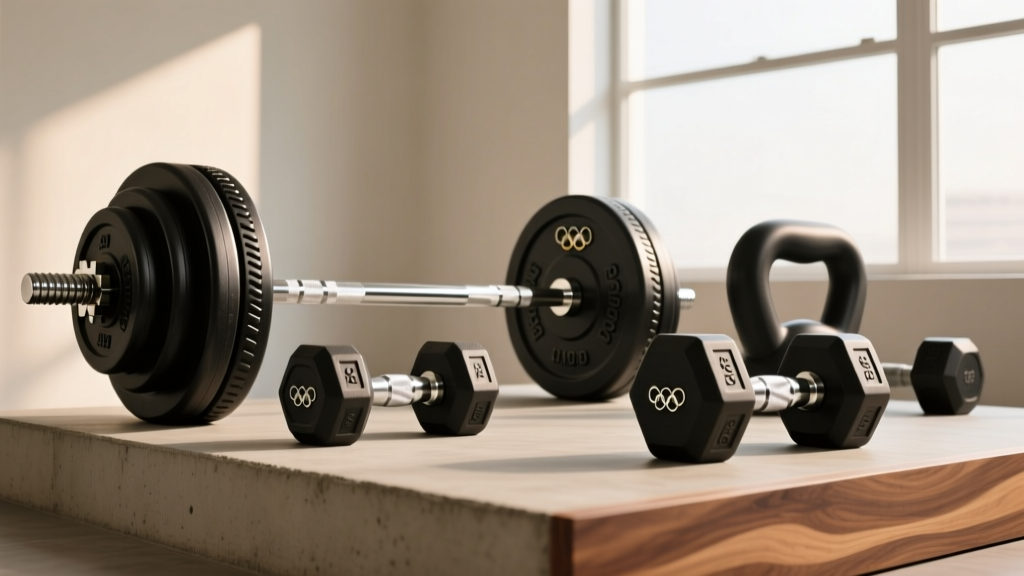
Space Layouts for Alternate Incline Dumbbell Curls: Hex vs Urethane
Optimize your gym layout for the alternate incline dumbbell curl. Compare rubber hex and urethane dumbbell storage, clearance, and spatial footprints.

Designing a dedicated arm station in a home or commercial gym requires more than just purchasing an adjustable bench. When programming the alternate incline dumbbell curl, spatial geometry becomes a critical factor. This specific movement demands a precise bench angle, significant lateral clearance for the alternating arm swing, and strategic weight storage to ensure safety and flow. The type of dumbbell you choose—specifically the debate between rubber hex dumbbells and urethane dumbbells—dictates your storage footprint, rack placement, and overall layout efficiency.
In 2026, with garage gyms shrinking in average square footage and commercial facilities maximizing member capacity, understanding the intersection of biomechanics and equipment dimensions is essential. This guide breaks down how to optimize your floor plan for the alternate incline dumbbell curl based on your chosen dumbbell material.
The Biomechanical Footprint of the Alternate Incline Curl
Before selecting storage solutions, we must define the operational zone of the exercise. According to biomechanics references like ExRx, the incline dumbbell curl places the long head of the biceps brachii in a maximally stretched position. To achieve this, the bench must be set to a 30-to-45-degree incline.
Because the movement is alternating, one arm extends backward past the torso while the other curls upward. This creates a dynamic 'swing radius' that static exercises like hammer curls do not require.
Rubber Hex vs. Urethane: Dimensional and Storage Differences
The physical anatomy of the dumbbell head directly impacts how and where you can store them relative to your newly defined 90x64-inch operational zone.
Rubber Hex Dumbbells: The Bulk Factor
Rubber hex dumbbells feature a cast-iron core encased in a thick layer of recycled or virgin rubber. The hexagonal shape prevents rolling, which is their primary spatial advantage. However, the rubber coating adds significant bulk. A 40-pound rubber hex dumbbell has a noticeably larger head diameter than its urethane counterpart. Because of their flat edges, hex dumbbells can be stored on flat, wall-mounted shelving units, entirely eliminating their floor footprint.
Urethane Dumbbells: The Density Advantage
Urethane is a premium, high-density polymer. As seen in top-tier models like the Rogue Urethane Dumbbells, the material allows for a much more compact head profile. A 40-pound urethane dumbbell is sleeker, easier to grip, and takes up less physical space on a rack. However, their round shape means they will roll off flat shelves. They strictly require tiered saddle racks or A-frame floor stands, which consume valuable floor space that must be carefully positioned outside the curl station's swing radius.
| Feature | Rubber Hex Dumbbells | Urethane Dumbbells |
|---|---|---|
| Head Profile | Bulky, Hexagonal | Compact, Round |
| Storage Type | Flat Wall Shelves or Floor Rack | Tiered Saddle Rack (Floor) |
| Floor Space Required | 0 sq ft (if wall-mounted) | ~6 to 9 sq ft (for 3-tier rack) |
| Drop Durability | Moderate (Rubber can tear) | High (Absorbs impact) |
| Average 2026 Cost | $1.10 - $1.40 / lb | $2.60 - $3.20 / lb |
Designing the Optimal Layout for Curl Stations
How you arrange your gym depends heavily on which dumbbell type you select. Here are two distinct layout blueprints optimized for the alternate incline dumbbell curl.
Blueprint A: The Narrow Garage Gym (Rubber Hex Layout)
In a narrow space (e.g., a single-car garage bay), floor space is at a premium. You cannot afford a freestanding 3-tier dumbbell rack eating into your swing radius.
- The Setup: Mount heavy-duty flat steel shelves directly on the wall behind or adjacent to the bench.
- The Execution: Store your Rep Fitness Rubber Hex Dumbbells on these flat shelves. The hexagonal shape prevents them from rolling off.
- Spatial Benefit: By moving storage to the vertical plane, you preserve the full 64-inch width required for the alternating arm extension. You can place the bench just 12 inches from the wall, provided the wall shelves are mounted high enough (at least 48 inches off the floor) to avoid head clearance issues when sitting up.
Blueprint B: The Open Floor Plan (Urethane Layout)
In a basement or commercial facility where wall space is limited but floor space is available, urethane is the superior choice for ergonomics and aesthetics.
- The Setup: Utilize a freestanding 3-tier or 5-tier saddle rack.
- The Execution: Position the rack exactly 36 inches away from the lateral edge of the bench. This places the rack safely outside the 20-inch swing radius, ensuring that if you fatigue and drop the dumbbell during the alternating curl, it won't bounce off the steel rack frame.
- Spatial Benefit: Urethane's compact heads allow a 3-tier rack to hold pairs from 5 to 50 pounds in a footprint of just 3 feet by 2 feet. The sleek profile also makes picking up and cleaning the weights from a saddle rack much faster during supersets.
'The biggest mistake lifters make with incline curls is placing the dumbbell rack too close to the bench head. When you lean back at 45 degrees and extend your arm backward, a poorly placed rack becomes a severe elbow-strike hazard. Always measure your arm span plus the dumbbell length before locking in your rack position.' — Facility Layout Guidelines, FitGearPulse Archives
Environmental Constraints: Ventilation and UV Exposure
Space optimization is not just about physical dimensions; it also encompasses environmental layout constraints, which differ wildly between rubber and urethane.
The Off-Gassing Factor (Rubber Hex)
Virgin and recycled rubber emit volatile organic compounds (VOCs) when new, creating a distinct, pungent odor. If your curl station is located in a poorly ventilated corner of a basement, this smell will concentrate. When planning a rubber hex layout, the station must be positioned within 10 feet of an active HVAC return vent, an open window, or an exhaust fan. You must allocate 'airflow space' around the storage shelves to prevent odor trapping.
The UV Degradation Factor (Urethane)
Urethane does not off-gas, making it ideal for sealed, climate-controlled rooms. However, urethane is susceptible to UV degradation. Prolonged exposure to direct sunlight will cause the polymer chains to break down, leading to a chalky, brittle surface and eventual de-bonding from the steel core. If your gym layout features large south-facing windows, your urethane saddle rack must be positioned outside the direct solar path, or you must invest in UV-blocking window films.
Real-World Failure Modes in Curl Stations
When executing the alternate incline dumbbell curl, fatigue often leads to compromised form or careless drops. Understanding how each material fails helps inform your layout safety margins.
⚠️ Edge Case Warning: The Hex Bounce HazardRubber hex dumbbells have hard, angular edges. If dropped from the top of an incline curl onto a bare concrete floor, the rubber can compress and tear, or worse, the dumbbell can bounce unpredictably due to the flat hex edges striking the floor at an angle. If your layout features hard flooring without drop pads, you must enforce a strict 'lower with control' rule, or allocate space for a 3/4-inch thick rubber drop mat directly beneath the bench zone.
Urethane, conversely, has a slight natural give and a round profile that disperses impact energy more predictably. While you should never intentionally drop dumbbells from an incline position, urethane offers a much higher margin of safety for both the equipment and the flooring in high-traffic layouts.
Final Verdict: Which Wins the Space Game?
The choice between rubber hex and urethane dumbbells for your alternate incline dumbbell curl station ultimately depends on your spatial priorities:
- Choose Rubber Hex if: You have zero floor space to spare for a freestanding rack, possess sturdy walls capable of supporting 500+ lbs of flat shelving, and have adequate ventilation to manage rubber off-gassing. It is the ultimate space-saving hack for narrow garage gyms.
- Choose Urethane if: You have an open floor plan, prioritize a premium, odor-free environment, and want the ergonomic benefits of a compact head that makes clearing the body during the alternating backward extension significantly easier.
By aligning your dumbbell material with your room's architectural constraints, you ensure that the alternate incline dumbbell curl remains a safe, effective, and unobstructed staple in your 2026 training regimen.
More gear to consider
All reviews
Bumper vs Iron Plate Care: Dumbbell Chest Crossover Floor Safety

2026 Trends: EZ Curl Bar vs Straight Bar and Dumbbell Delt Exercises

Barbell Guide: Knurling, Weight & What Muscle Does Dumbbell Curls Work?
Cast Iron vs Competition Kettlebells & Dumbbell Pulldown Guide

Power Rack vs Squat Rack vs Stand for Core Dumbbell Workouts