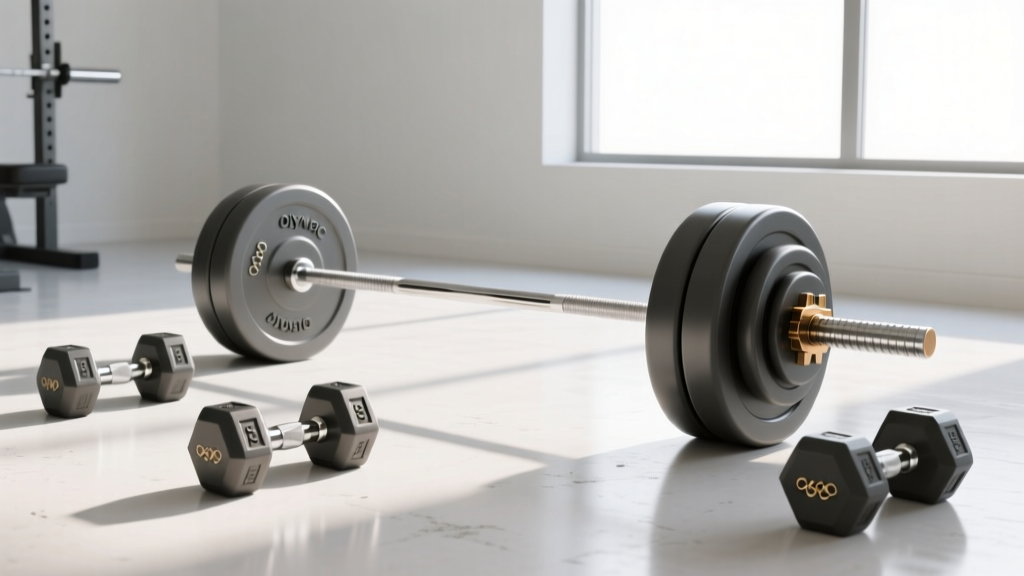
Olympic Barbell Knurling Guide & Dumbbell Rear Shoulder Fly Pairings
Explore our Olympic barbell buying guide on weight and knurling, plus how to pair heavy lifts with the dumbbell rear shoulder fly for complete shoulder health.

The Foundation of Strength: Understanding Olympic Barbell Weight
Building a elite-tier home gym in 2026 requires a meticulous approach to equipment selection. While flashier machines often grab attention, the Olympic barbell remains the undisputed king of strength development. However, not all barbells are created equal. When navigating an Olympic barbell buying guide, weight tolerances and knurling patterns are the two most critical factors that dictate performance, longevity, and safety. According to the International Weightlifting Federation (IWF), a standard men's Olympic barbell must weigh exactly 20kg (44.09 lbs) and measure 2200mm in total length, while a women's bar weighs 15kg (33.07 lbs) and measures 2010mm. But in the commercial and home gym market, how closely do manufacturers adhere to these specs?
Weight Tolerance Matrix
- Competition Grade (Eleiko, Uesaka): +/- 10 grams. Priced between $800 - $1,200.
- High-End Training (Rogue, American Barbell): +/- 1% (approx. 200g). Priced between $300 - $600.
- Budget/Amazon Brands: +/- 5% or more. Often weighing 42-43 lbs instead of a true 44 lbs. Priced under $150.
For serious lifters, a barbell that is even 2% light can skew your progressive overload tracking over a multi-year training block. Always look for manufacturers that explicitly state their weight tolerance in grams or percentages, rather than vague claims of "standard weight."
Decoding Knurling: Volcano, Mountain, and Hill Patterns
The knurling is the tactile interface between your hands and the bar. It is the single most subjective aspect of any Olympic barbell buying guide, as the wrong pattern can tear your calluses during high-volume deadlifts or fail to provide adequate grip during a heavy back squat. In modern barbell manufacturing, knurling is generally categorized into three distinct geometric patterns:
1. The Volcano Pattern (Aggressive to Moderate)
Often considered the gold standard for powerlifting and heavy strength training, the volcano pattern is created by machining the steel at an angle that leaves a sharp, pronounced peak with a small crater in the center. This design provides multiple biting edges that dig into the skin without acting like a cheese grater. The Rogue Ohio Bar and the Ohio Power Bar are famous for their exceptional volcano knurling, offering a secure grip that excels in both pulling and pressing movements.
2. The Mountain Pattern (Highly Aggressive)
Mountain knurling features sharp, pointed peaks without the central crater. It is highly aggressive and designed specifically for heavy, low-rep deadlifts and squats where chalk is heavily utilized. While it offers unparalleled grip security, it can be punishing on the hands during high-volume Olympic lifts or hip thrusts. The legendary Texas Power Bar is the archetype of mountain knurling.
3. The Hill Pattern (Mild to Moderate)
Hill knurling features rounded, flatter peaks. This pattern is much gentler on the hands and is typically found on Olympic weightlifting bars (where the bar must spin rapidly in the hook grip) and multi-purpose bars. If your training involves a mix of heavy compounds and high-rep functional fitness work, a hill or mild volcano pattern is the safest choice to prevent hand tears.
Barbell Knurling & Specification Comparison Table
| Barbell Model | Knurl Pattern | Shaft Diameter | Tensile Strength | Center Knurl | 2026 Est. Price |
|---|---|---|---|---|---|
| Rogue Ohio Power Bar | Aggressive Volcano | 29mm | 205,000 PSI | Yes (Deep) | $395.00 |
| Eleiko Sport Training Bar | Mild Hill | 28mm | 215,000 PSI | No | $845.00 |
| Texas Power Bar | Aggressive Mountain | 28.5mm | 190,000 PSI | Yes (Wide) | $350.00 |
| Rep Fitness Excalibur II | Deep Volcano | 28.5mm | 200,000 PSI | Yes (Moderate) | $349.00 |
Bridging the Gap: Heavy Compounds and the Dumbbell Rear Shoulder Fly
While an Olympic barbell builds immense baseline strength in the prime movers (pectorals, lats, quads, glutes), it often falls short in addressing the smaller, critical stabilizer muscles of the shoulder girdle. Heavy barbell bench pressing and overhead pressing heavily recruit the anterior and medial deltoids, frequently leaving the posterior deltoids underdeveloped. This muscular imbalance is a primary culprit behind shoulder impingements and poor posture in intermediate and advanced lifters.
This is where the dumbbell rear shoulder fly becomes an indispensable component of a well-rounded strength program. By isolating the posterior deltoid, rhomboids, and mid-traps, the dumbbell rear shoulder fly acts as the perfect structural counterbalance to heavy barbell pressing. According to biomechanical analyses by ExRx.net, performing rear lateral raises with a slight bend in the elbow and a pronated or neutral grip maximizes posterior deltoid activation while minimizing latissimus dorsi takeover.
Programming the Dumbbell Rear Shoulder Fly
To effectively pair this isolation movement with your heavy barbell work, consider the following programming parameters:
- Timing: Always perform the dumbbell rear shoulder fly at the end of your workout. Fatiguing your rear delts before heavy barbell squats or bench presses will compromise your shoulder stability and bar path.
- Angles: Utilize an incline bench set to 30 degrees. Chest-supported incline dumbbell rear shoulder flies eliminate momentum and lower back involvement, ensuring strict isolation of the target musculature.
- Equipment Selection: For home gyms, adjustable dumbbells like the Nuobell 80lb or PowerBlock Pro series are ideal. They allow for micro-loading in 2.5lb increments, which is crucial for rear deltoid work where strength gains are measured in ounces, not pounds.
- Volume: Aim for 3 to 4 sets of 12-20 repetitions. The posterior deltoid responds exceptionally well to metabolic stress and higher time-under-tension protocols.
2026 Equipment Buying Matrix: Barbells & Isolation Tools
When outfitting your free weights and racks category, balancing your budget between primary barbell investments and secondary isolation tools is key. Below is a strategic allocation guide for a $1,500 free weight budget.
| Equipment Category | Recommended Gear | Budget Allocation | Primary Function |
|---|---|---|---|
| Olympic Barbell | Multi-Purpose Bar (Volcano Knurl, 190k+ PSI) | $300 - $400 | Heavy compound lifting, CNS adaptation |
| Weight Plates | Urethane Grips or Virgin Rubber Bumpers (250 lbs) | $500 - $600 | Progressive overload, drop safety |
| Adjustable Dumbbells | 5-50lb or 5-80lb Adjustable Set (e.g., Core Home, Nuobell) | $400 - $500 | Unilateral work, dumbbell rear shoulder fly, joint health |
Frequently Asked Questions
Do I need a center knurl on my Olympic barbell?
If you primarily back squat and front squat, a center knurl provides valuable tactile feedback to ensure the bar is perfectly centered on your traps or deltoids. However, if you focus on Olympic weightlifting (snatch, clean and jerk) or exclusively bench press and deadlift, a bar without a center knurl will save your shins and chest from unnecessary abrasion.
What is the ideal weight for a dumbbell rear shoulder fly?
Most intermediate lifters should use 10lb to 25lb dumbbells for strict rear shoulder flies. The posterior deltoid is a relatively small muscle group; using excessively heavy weights inevitably recruits the biceps, traps, and lats, robbing the rear delt of the targeted stimulus. Focus on a 2-second pause at the peak contraction.
How often should I maintain my barbell knurling?
In 2026, most high-quality bars feature ceramic coatings, zinc, or chrome that resist oxidation. However, chalk and dead skin will clog the knurling valleys. Use a stiff nylon brush (never wire, which can strip coatings) and a light application of 3-in-One oil or specialized barbell cleaner once a month to maintain the bite of your volcano or mountain knurl.
More gear to consider
All reviews
McGregor Dumbbell Biomechanics: Research-Backed Feature Analysis
Dumbbell Challenge Survival: Rack Storage and Maintenance Care

Perfect Dumbbell Shrug Form Using Loadable Dumbbells in Small Gyms
Dumbbell Walking Lunges Alternative: Power Rack vs Squat Rack vs Stand

Olympic Barbell Buying Guide: Knurling vs Lat Pulldown Smith Machine
