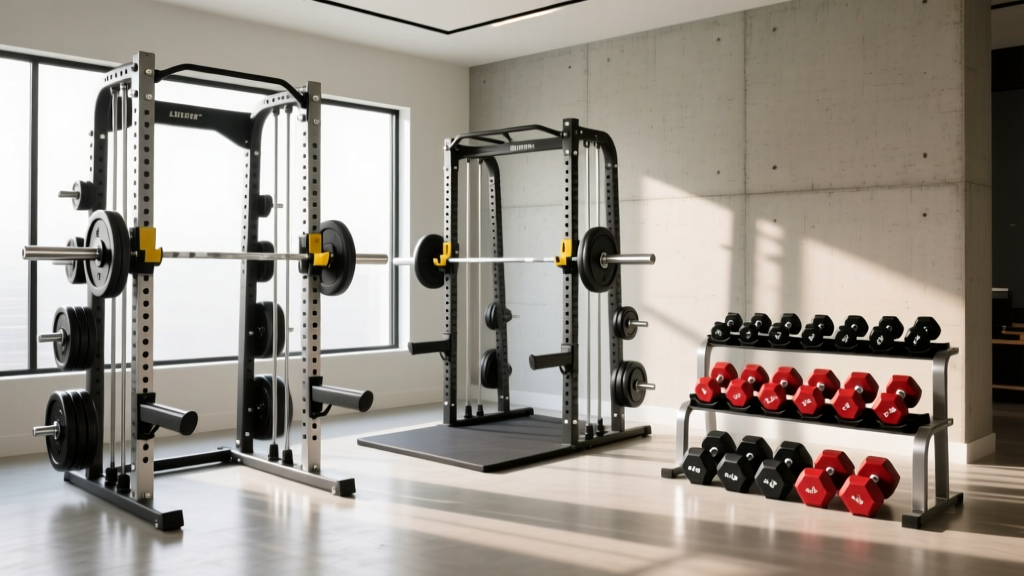
5 Day Dumbbell Split Upgrade: Power Rack vs Squat Rack vs Stand
Transitioning from a 5 day dumbbell split? Compare power racks, squat racks, and squat stands with exact specs, pricing, and safety tips for 2026.

The Limitations of a Pure 5 Day Dumbbell Routine
If you have been building your physique with a dedicated 5 day dumbbell split, you have already established a fantastic foundation of unilateral strength and joint stability. However, as you progress into intermediate and advanced territory, you will inevitably hit a logistical wall. Maneuvering 90-pound dumbbells into a flat bench press position or loading 100-pound goblet squats drains your energy before the working set even begins. Furthermore, a pure dumbbell routine lacks the central nervous system (CNS) overload that heavy barbell squats and rack pulls provide.
To safely bridge the gap between dumbbell isolation and heavy compound barbell movements, you need a containment system. But walking into the home gym equipment market in 2026 can be overwhelming. Do you need a full power rack, an open squat rack, or minimalist squat stands? This guide breaks down the exact metallurgy, footprint dimensions, and safety mechanisms of each option to help you make the right upgrade.
Decision Framework: When to Upgrade- Stick to Dumbbells if: Your max working weight is under 60 lbs per hand, you live in a strict rental with no anchoring options, and your ceiling height is under 7 feet.
- Upgrade to a Rack System if: You want to incorporate barbell squats, bench presses, or need a safe 'bail-out' zone for heavy solo dumbbell presses where dropping a weight could cause severe injury.
Squat Stands: The Minimalist Entry Point
Squat stands consist of two independent uprights designed to hold a barbell at shoulder height. They are the most space-efficient option, often featuring a footprint of just 2 square feet when not in use.
Technical Specs & Real-World Edge Cases
The industry gold standard for squat stands is the Rogue SML-1 Monster Lite Squat Stand (priced around $495 in 2026). It features 11-gauge 3x3-inch steel uprights and 5/8-inch hardware. The 3x3 upright dimension is critical; cheaper 2x2 stands (often 14-gauge steel) suffer from lateral wobble when re-racking heavy barbells or performing kipping pull-ups.
The Tipping Hazard: The primary failure mode of squat stands is forward tipping. When you unrack a heavy barbell, the center of gravity shifts forward. If the stands are not bolted into concrete or equipped with rear counterbalance weight storage horns, they can tip onto the lifter. According to safety guidelines highlighted by the National Strength and Conditioning Association (NSCA), independent stands must always be secured or heavily counter-weighted for solo lifting.
Squat Racks: Bridging the Gap
A squat rack (often called a half-rack or open-top rack) connects the two front uprights with a crossmember and usually includes a pull-up bar and rear weight storage pegs. This design solves the tipping issue inherent to squat stands by using the weight plates stored on the back as a counterbalance.
Footprint and Hole Spacing
Take the Bells of Steel Open Rack (approximately $549). It utilizes a 3x3 11-gauge steel frame with a depth of about 34 inches including the storage horns. The key advantage here is 'Westside hole spacing.' Premium racks feature 1-inch hole spacing in the bench press and squat zones, allowing you to set safety arms exactly where you need them, rather than being forced into 2-inch increments that might be too high (crushing your chest) or too low (failing to catch the bar).
While squat racks offer excellent safety for squats and bench presses, they lack the overhead lateral support required for heavy overhead pressing or kipping movements inside the cage.
Power Racks: The Ultimate Safe Haven
A power rack (or full cage) features four or six vertical posts connected by top and bottom crossmembers, creating a fully enclosed lifting zone. For lifters transitioning from a 5 day dumbbell routine to heavy, solo barbell training, a power rack is non-negotiable for peace of mind.
Safety Straps vs. Pin-and-Pipe
When configuring a power rack like the Rep Fitness PR-4000 (starting around $699), you must choose your safety mechanism.
- Pin-and-Pipe: Traditional steel pipes. Highly durable, but they can damage the knurling on your barbell and create a loud, jarring metal-on-metal clang when you fail a rep.
- UHMW Safety Straps: Made from ultra-high-molecular-weight polyethylene plastic. These absorb the impact of a dropped barbell, protect your bar's knurling, and are significantly easier to adjust mid-workout. As noted in extensive stress-testing by Garage Gym Reviews, UHMW straps rated for 1,000+ lbs are now the preferred choice for modern home gyms.
Power racks also allow you to safely perform heavy dumbbell bench presses inside the cage. If you lose control of a 100-lb dumbbell, you can simply drop it, and the enclosed uprights prevent it from rolling away or crushing your extremities.
Head-to-Head Comparison Matrix
| Feature | Squat Stands | Squat Rack (Half-Rack) | Power Rack (Full Cage) |
|---|---|---|---|
| Average Footprint | 2 sq ft (up to 12 sq ft with base) | 12 - 16 sq ft | 16 - 24 sq ft |
| 2026 Price Range | $250 - $550 | $400 - $750 | $600 - $1,200+ |
| Safety for Solo Squats | Low (unless bolted) | High | Maximum |
| Pull-Up Capability | Limited (strict only) | Good (if rear stabilized) | Excellent (kipping safe) |
| Best For | Garage gyms under 80 sq ft | Lifters wanting open space & storage | Heavy solo lifting & full enclosures |
Step-by-Step: Measuring and Anchoring Your Setup
Do not order a rack until you have completed this 4-step spatial audit. Many beginners buy 90-inch tall racks only to realize their garage ceiling slopes down to 84 inches at the back wall.
- Map the Ceiling Apex: Measure the height of your ceiling at the exact spot the rack will sit. Subtract 6 inches from this number to ensure you have clearance for pull-ups and overhead barbell presses. If your clearance is under 84 inches, you must order a 'Short' configuration (usually 72-inch uprights).
- Calculate the 'Fail Zone': Ensure you have at least 24 inches of clearance in front of the rack. If you fail a squat and need to walk the bar forward to the safety pins, you need physical space to maneuver.
- Verify Floor Levelness: Use a 4-foot spirit level on your concrete or rubber matting. If the floor slopes more than 1/4 inch over 4 feet, your rack will twist when bolted down, misaligning the safety pins. Use steel shims under the base plates to correct this before tightening the anchor bolts.
- Anchor to Structural Elements: If bolting to concrete, use 3/8-inch wedge anchors (not sleeve anchors). If bolting to a wood-framed platform, ensure your platform is constructed with 3/4-inch tongue-and-groove plywood screwed directly into 4x4 or 2x6 floor joists, as detailed in structural guides by Rogue Fitness.
Frequently Asked Questions
Can I use a power rack strictly for my 5 day dumbbell routine?
Yes, and it is highly recommended for safety. Performing heavy dumbbell floor presses or incline presses inside a power rack allows you to set the safety pins just below your range of motion. If your shoulder gives out or you lose your grip, you can drop the dumbbells safely without them falling onto your face or torso.
Is 14-gauge steel safe for a home gym rack?
While 14-gauge steel can technically hold 800+ lbs of static weight, it lacks the rigidity of 11-gauge steel. When you re-rack a heavy barbell, 14-gauge uprights will flex and vibrate, which can loosen hardware over time. For a lifelong investment, always insist on 11-gauge or 7-gauge steel with 3x3-inch dimensions.
What is the best flooring to put under a rack?
Use 3/4-inch thick, 4x8 foot vulcanized rubber horse stall mats. They provide the necessary shock absorption for dropped weights and offer enough traction to prevent the rack from sliding during aggressive barbell unracking. Never place a rack directly on bare concrete or standard foam puzzle mats, as the latter will compress unevenly and destabilize the frame.
More gear to consider
All reviews
Budget Loadable Dumbbells for Your Three Day Dumbbell Workout

Barbell Weight & Knurling: Setup for Dumbbell Hang Squat Clean
2026 Market Trends: Storage Racks for Dumbbell Rows for Beginners

Dumbbell Z Press vs. Barbell: Olympic Bar Weight & Knurl Guide
Exercise for Upper Chest with Dumbbells: Loadable Budget Guide
