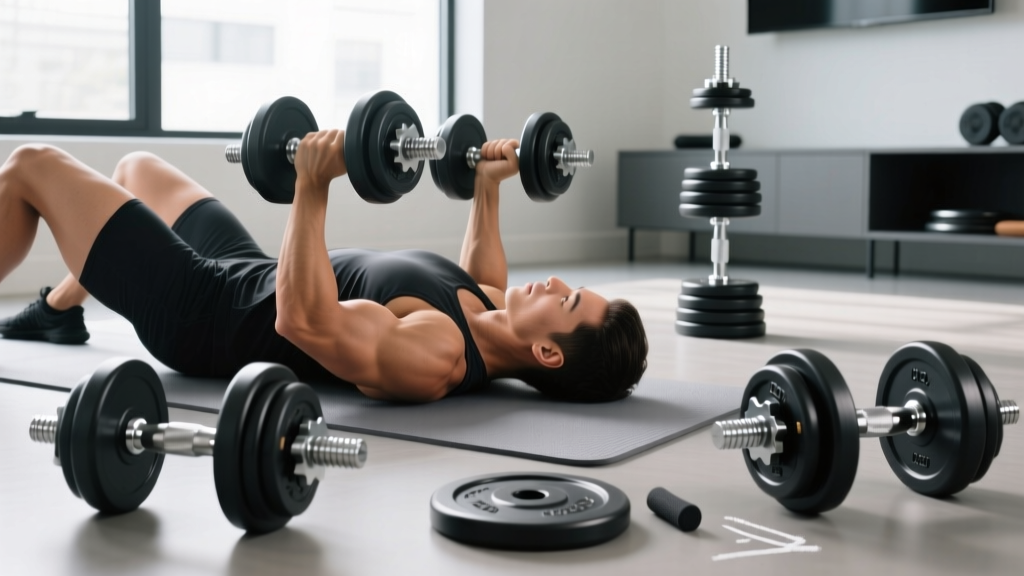
Beyond the Dumbbell Fly Press: Barbell Weight & Knurling Guide
Transitioning from the dumbbell fly press to heavy barbell work? Our 2026 beginner's guide breaks down Olympic barbell weights, knurling types, and top picks.

The Biomechanical Bridge: From Dumbbell Fly Press to the Barbell
For many beginners, chest development starts with isolation and hybrid movements. The dumbbell fly press—often referred to in biomechanics circles as the squeeze press or hex press—is a phenomenal staple for targeting the sternal head of the pectoralis major while minimizing anterior deltoid involvement. According to the ExRx biomechanics directory, this movement forces continuous adduction, creating immense metabolic stress and hypertrophy.
However, as you progress into your second or third year of lifting, the stabilizing demands of dumbbells create a neurological ceiling. You simply cannot overload the central nervous system with a dumbbell fly press the way you can with a heavy compound barbell bench press. Transitioning to an Olympic barbell is mandatory for raw strength development. But walking into a gym or browsing online retailers in 2026 reveals a dizzying array of barbell specifications. This step-by-step guide will decode Olympic barbell weights, shaft diameters, and the critical science of knurling to ensure your first barbell purchase perfectly bridges the gap from your dumbbell origins.
Step 1: Decoding Olympic Barbell Weights and Dimensions
A common beginner misconception is that all Olympic barbells weigh 45 pounds. In reality, the International Weightlifting Federation (IWF) and the International Powerlifting Federation (IPF) recognize distinct standards that drastically alter how the bar feels in your hands, especially when transitioning from the ergonomic handles of dumbbells.
The 20kg (44 lb) Men's Olympic Standard
The standard men's Olympic bar weighs exactly 20kg (roughly 44 lbs, though often rounded to 45 lbs in commercial gyms). The defining feature of this bar is its 28mm shaft diameter. This thickness provides the necessary rigidity for heavy squats and bench presses, but beginners with smaller hands may find it challenging to secure a full false grip or hook grip without adequate grip strength conditioning.
The 15kg (33 lb) Women's Olympic Standard
The women's Olympic bar weighs 15kg (33 lbs) and features a noticeably thinner 25mm shaft diameter. Do not let the gendered naming convention fool you; this bar is an exceptional choice for any beginner, regardless of gender, who struggles with the 28mm shaft thickness. The 25mm shaft allows for a more secure wrap of the fingers, reducing forearm fatigue during high-volume bench pressing and making the transition from dumbbells much smoother.
According to USA Weightlifting equipment standards, the 15kg bar also features a shorter overall sleeve length, meaning it can hold fewer bumper plates than a 20kg bar. For 95% of beginners, this is not a limiting factor until you are benching well over 300 lbs.
Step 2: The Knurling Matrix (Your Grip's Best Friend)
Knurling is the cross-hatched pattern machined into the steel shaft of the barbell. It is the single most important factor in barbell selection because it dictates your grip security. When you are used to the rubber or neoprene coating of dumbbells, raw steel knurling can feel abrasive. Understanding the three primary knurl geometries will save your hands and your wallet.
| Knurl Type | Geometry Profile | Aggressiveness | Best Application | Example Model |
|---|---|---|---|---|
| Mountain | Sharp, narrow peaks | High (Tears skin) | Low-rep Powerlifting, Heavy Squats | Rogue Ohio Power Bar |
| Volcano | Deep rim with cratered center | Medium-High (Grippy) | All-Around, Hypertrophy, Bench | Rogue Ohio Bar |
| Hill | Rounded, shallow peaks | Low (Passive) | High-Rep CrossFit, Pure Beginners | Rep Fitness EX Bar |
Why Volcano Knurling is the 2026 Gold Standard
For a lifter transitioning from the dumbbell fly press to barbell benching, volcano knurling is the undisputed champion. The CNC lathe cuts a deep rim into the steel but leaves a tiny 'crater' in the center of each diamond. This provides incredible surface area for grip friction without the sharp, skin-tearing peaks of mountain knurling. It locks your hands in for heavy bench presses but won't destroy your calluses during high-rep accessory work.
Step 3: Tensile Strength, Whip, and Sleeve Rotation
Beyond weight and grip, the internal engineering of the barbell dictates its longevity and performance.
- Tensile Strength (PSI): This measures the breaking point of the steel. A minimum of 165,000 PSI is required for a safe beginner bar. Premium bars push past 190,000 PSI, ensuring the bar will never permanently bend, even if dropped on safety pins during a failed bench press.
- Whip vs. Stiffness: 'Whip' is the flex of the bar under load. Powerlifters want stiff bars (deadlifts, bench), while Olympic weightlifters want high whip (cleans, snatches). For general hypertrophy and beginner strength, a moderate-whip multi-purpose bar is ideal.
- Bushings vs. Bearings: Inside the sleeves are the rotation mechanisms. Bronze bushings provide a slow, controlled spin—perfect for the bench press and squat. Needle bearings spin rapidly, which is mandatory for Olympic lifts but unnecessary (and more expensive) for a beginner focused on pressing.
Step 4: Top 2026 Barbell Recommendations by Budget
Based on current market pricing and knurling quality, here are the top entry-to-mid-level barbells for beginners graduating from dumbbell routines.
1. The Premium All-Rounder: Rogue Ohio Bar
Priced around $295, the Rogue Ohio Bar is the benchmark of the industry. It features a 190k PSI shaft, dual knurl marks (IPF and IWF), and a perfectly machined volcano knurl. It uses composite bushings for a smooth, reliable spin that feels incredibly stable during heavy bench pressing.
2. The Budget Champion: Bells of Steel Bare Steel Bar
Coming in at approximately $169, this bar offers a volcano knurl that rivals bars twice its price. The bare steel shaft requires occasional oiling to prevent rust, but the tactile feedback and grip security are unmatched in the sub-$200 category.
3. The High-Rep Specialist: Rep Fitness EX Bar
At $189, the EX bar features a milder 'hill' knurl. If your routine heavily incorporates high-rep circuit training, or if you have highly sensitive hands that are still adapting from rubber-coated dumbbells, this bar provides enough grip to keep you safe without causing micro-tears to your skin.
🛠️ Pro-Tip: Barbell Maintenance Routine
Unlike rubber dumbbells, steel barbells require maintenance to preserve their knurling and prevent oxidation. Once a month, use a stiff bronze brush to scrub chalk and dead skin out of the knurl valleys. Follow up by applying a few drops of 3-in-One oil to the shaft and sleeves, wiping off the excess with a microfiber cloth. This takes 3 minutes and will extend the life of your barbell by decades.
Frequently Asked Questions
Do I need a center knurl for bench pressing?
A center knurl helps you visually and physically align your torso on the bar during the bench press. However, if you plan to do front squats, a sharp center knurl will severely irritate your neck. Most modern multi-purpose bars feature a mild, passive center knurl that offers the best of both worlds.
Can I use a 15kg women's bar for heavy bench pressing?
Absolutely. The 15kg bar is rated to hold well over 500 lbs of plate weight. The only limitation is the physical space on the sleeve; if you are using thick bumper plates, you might run out of room before you hit 400 lbs. For standard iron plates, space is rarely an issue.
Will my grip fail on a barbell if I'm used to the dumbbell fly press?
The dumbbell fly press relies heavily on wrist stability and pec adduction, but the grip demand is relatively low compared to a heavy barbell bench press. Expect your forearms and grip to fatigue faster during your first few weeks with a barbell. Utilize the volcano knurling to your advantage, and consider incorporating farmer's carries into your routine to build crush-grip endurance.
More gear to consider
All reviews
2026 Dumbbell Storage Trends: Racks for All Types of Dumbbell Squats

Barbell Collar Setup & Alternative Exercise for One Arm Dumbbell Row

Best Adjustable Dumbbells for the Jump Squat With Dumbbells

Rubber Hex vs Urethane: 2026 Trends & the Dumbbell Lawnmower Pull
Best Neoprene Dumbbells for a Dumbbell Only Workout Transformation