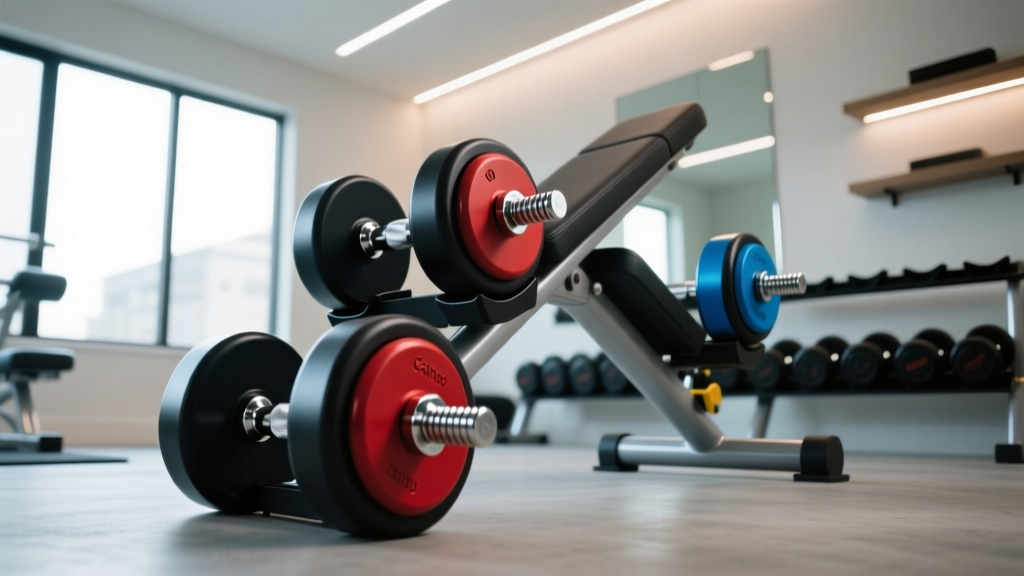
Loadable Dumbbells for Dumbbell Squats for Quads: Budget Breakdown
Discover the true cost of loadable dumbbells vs fixed sets. We break down sleeve specs, plate economics, and the best handles for heavy leg day.

The Economics of Leg Day: Fixed vs. Loadable Dumbbells
Building serious lower body mass requires progressive overload, but outfitting a home gym with fixed dumbbells heavy enough for leg day is a financial black hole. When programming heavy dumbbell squats for quads, the limiting factor is rarely your leg strength initially; it is the physical capacity and cost of your equipment. Fixed rubber hex dumbbells typically cost between $3.00 and $4.50 per pound. To own a pair of 70-pound dumbbells, you are looking at an upfront cost of roughly $500 to $600 for a single pair. Once you outgrow them, they become expensive paperweights.
Enter the loadable dumbbell handle. By decoupling the grip from the weight, loadable dumbbells with interchangeable plates offer a mathematically superior path to heavy leg training. As we navigate the fitness equipment market in 2026, the cost of raw cast iron and steel remains a primary concern for home gym owners, making the modular approach not just a space-saver, but a vital budget optimization strategy.
| Equipment Type | Upfront Cost (Pair) | Cost Per Pound (Plates) | Max Load Capacity | Space Footprint |
|---|---|---|---|---|
| Fixed Rubber Hex (50 lbs) | $350 - $450 | $3.50 - $4.50/lb (embedded) | Fixed (50 lbs) | High (requires rack) |
| Standard 1-Inch Loadable | $40 - $60 | $1.50 - $2.50/lb (cast iron) | 40 - 60 lbs per handle | Low |
| Olympic 2-Inch Loadable | $130 - $180 | $2.00 - $4.00/lb (bumpers/iron) | 100 - 150+ lbs per handle | Medium |
| Proprietary Quick-Lock | $400 - $500 (with plates) | $3.50/lb (proprietary) | 120 - 165 lbs per handle | Very Low |
The data is clear: if you already own a barbell and Olympic plates, purchasing a pair of Olympic loadable handles is the most cost-effective way to unlock heavy unilateral and bilateral leg work without buying new weight.
Biomechanics and Hardware: Why Sleeve Specs Dictate Quad Gains
To understand why hardware specs matter, we must look at the biomechanics of the movement. According to ExRx.net's biomechanical breakdown of the dumbbell squat, maximizing quadriceps activation requires an upright torso to increase knee flexion while minimizing hip hinge. This is typically achieved through goblet squats, front-rack dumbbell squats, or suitcase squats with a highly upright posture.
Here is where loadable dumbbell design directly impacts your training: sleeve length and plate profile. If you are performing front-rack dumbbell squats for quads, the plates rest near your shoulders and forearms. If your loadable handle has a short 6-inch sleeve and you are using thick rubber hex plates or bumper plates, the physical diameter of the plates will clash with your forearms, ruining your wrist mechanics and forcing you to lean forward, thereby shifting the load away from the quads and onto the glutes and lower back.
Information Gain: The Plate Profile Problem
Standard 10-pound cast iron plates are roughly 1.1 inches thick, while a 10-pound competition bumper plate is 2.15 inches thick. A loadable handle with a 10-inch sleeve can hold 90 lbs of thin cast iron, but only 40 lbs of bumpers before maxing out. For heavy quad-focused squats, thin steel or cast iron plates are vastly superior for loadable handles because they keep the center of mass compact and prevent forearm interference during front-rack holds.
2026 Market Breakdown: Top Loadable Handles Priced Out
Not all interchangeable systems are created equal. The market is currently segmented into three distinct tiers based on budget, sleeve diameter, and locking mechanisms.
1. The Budget Tier: Yes4All Standard Threaded Handles
- Price: $45 - $65 per pair (handles only)
- Sleeve Spec: 1-inch standard diameter, 6.5-inch sleeve length
- Locking Mechanism: Threaded spin-lock collars
- The Verdict: These are the entry-level standard. However, spin-lock collars are a notorious failure point for leg day. During high-rep sets or when dropping the dumbbells after a grueling set of Bulgarian split squats, the momentum can unscrew the collar, leading to plates sliding off. They are fine for light goblet squats, but unsafe for heavy, max-effort quad training.
2. The Heavy-Duty Tier: Titan Fitness Loadable Dumbbell Handles
- Price: $149.99 per pair
- Sleeve Spec: 2-inch Olympic diameter, 10.5-inch sleeve length
- Locking Mechanism: Standard Olympic spring clips or clamp collars
- The Verdict: This is the ultimate value play for garage gym owners who already possess Olympic barbell plates. The 1.26-inch grip diameter mimics a standard barbell, and the 10.5-inch sleeves allow for massive loading potential (upwards of 120 lbs per hand if using thin steel plates). The upfront cost is slightly higher, but the cost-per-pound of added weight drops to nearly zero if you are repurposing existing plates.
3. The Premium Tier: Ironmaster Quick-Lock V2 Dumbbell Set
- Price: $459 (for a 120 lb set including handles and proprietary plates)
- Sleeve Spec: Proprietary square block design, 1.18-inch grip
- Locking Mechanism: Patented quick-lock screw (takes 2 seconds)
- The Verdict: While technically a 'selectorized' adjustable dumbbell, it functions on the principle of interchangeable modular plates. The square profile perfectly mimics a fixed rubber hex dumbbell, making it exceptionally stable for floor work and heavy goblet squats. The initial buy-in is steep, but the proprietary steel plates are virtually indestructible and eliminate the rattle and shift associated with traditional circular plates on a sleeve.
Failure Modes to Avoid When Scaling Up
When pushing the limits of your lower body, equipment failure is not just an annoyance; it is a safety hazard. Be aware of these specific edge cases when using loadable dumbbells for lower body work:
- Collar Slip on Incline Racks: If you are doing inclined dumbbell squats or step-ups where the dumbbell is angled downward, gravity will pull the plates against the collar. Spring clips on 2-inch Olympic sleeves can fail under dynamic lateral movement. Always use locking jaw collars (like Lock-Jaws or Rogue HG 2.0) for leg day.
- Knurling Tearing: Heavy quad sets require immense grip strength. Aggressive barbell-style knurling on loadable handles will tear calluses during high-volume hypertrophy blocks (e.g., 4 sets of 15). Look for handles with 'medium' or 'dumbbell-specific' knurling patterns.
- Center of Gravity Shifts: Loading a 15-inch handle with a single 45-pound bumper plate on each side creates a dumbbell that is 13 inches long. This unwieldy length makes it nearly impossible to hold in a front-rack position for Bulgarian split squats without the plates hitting your torso.
The Ultimate Budget Optimization Strategy
If your primary goal is hypertrophy and strength in the quadriceps without spending $2,000 on a full rack of fixed dumbbells, follow this phased purchasing strategy:
Phase 1: The Unilateral Multiplier (Months 1-6)
Purchase a pair of high-quality Olympic loadable handles (approx. $150). Use your existing barbell plates. Because unilateral movements like split squats and lunges require roughly half the weight of bilateral squats to achieve the same mechanical tension on the target muscle, a max load of 60-70 lbs per hand will sustain your quad growth for the better part of a year.
Phase 2: The Plate Profile Upgrade (Months 6-12)
Once you outgrow your bumper plates due to sleeve space limitations, invest in a set of thin cast iron or steel Olympic plates. Used steel plates can often be sourced locally for $1.00 to $1.50 per pound. This single upgrade will instantly double your loadable capacity per dumbbell without requiring you to buy new handles.
Phase 3: The Grip Bottleneck (Year 1+)
As your quad strength surpasses your grip strength, you will find that holding 90+ lb dumbbells for a full set of squats is impossible. Rather than buying heavier dumbbells, invest $20 in a pair of lifting straps. This allows you to bypass grip fatigue and continue overloading the quadriceps safely.
'The quadriceps are a massive, highly fatigue-resistant muscle group. They require high mechanical tension and deep ranges of motion to grow. Equipment that limits your range of motion—like overly thick bumper plates on short dumbbell sleeves—will artificially cap your hypertrophy potential.' — Biomechanics consensus in modern resistance training literature.
Frequently Asked Questions
Can I use loadable dumbbells for goblet squats?
Yes, but the locking mechanism matters. Threaded spin-lock collars can dig into your chest or collarbone during a heavy goblet squat. Quick-lock systems or flush-mounted Olympic collars are significantly more comfortable and safer for front-loaded movements.
Are loadable dumbbells safe to drop?
Never drop loadable dumbbells with circular plates. Unlike fixed rubber hex dumbbells, circular plates will roll upon impact, creating a severe ankle and toe crush hazard. If you plan on dropping weights after failure, you must use loadable handles with square/rectangular plates (like Ironmaster) or fixed hex dumbbells.
What is the best grip diameter for heavy leg work?
A grip diameter between 1.15 inches and 1.25 inches is optimal. Anything thicker (like 1.5-inch fat grips) will cause your forearms to fail long before your quadriceps reach mechanical failure during heavy squat sets.
More gear to consider
All reviews
Men's Leg Workouts with Dumbbells: Rubber vs Urethane

Space-Saving Layouts: Building a 140 lb Dumbbell with Plates
Collar Clamps Compared for Dumbbell Arm Workout for Beginners

What Incline for Incline Dumbbell Press? Loadable Dumbbell Care
Loadable Dumbbells for Rear Dumbbell Flys: Value Breakdown