Beyond the Dumbbells Holder: Barbell Collar & Clamp Comparison Guide
Secure your lifts and organize your space. Compare barbell collar and clamp types, from Lock-Jaw to Eleiko, and find the best sleeve security for your gym.

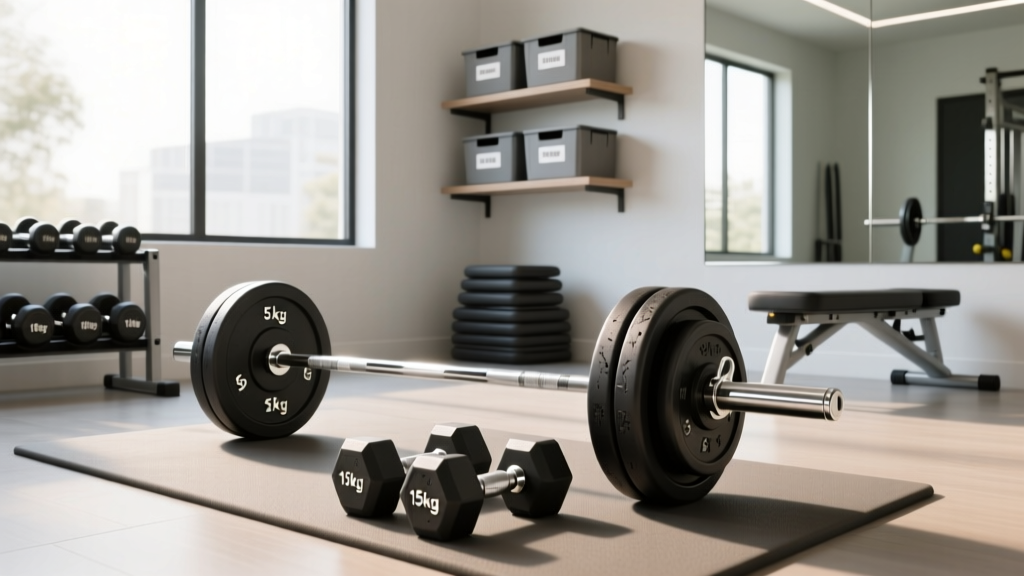
Building a safe, functional home or commercial gym goes far beyond selecting the right plates and bars. Before you even step up to the lifting platform, ensuring your gym floor is clear of tripping hazards is paramount. Investing in a heavy-duty, tiered dumbbells holder keeps your 100lb hex bells from rolling into your lifting space and protects the knurling from concrete damage. But once the floor is clear and you step up to the barbell, an entirely different safety hazard emerges: loose plates.
A shifting 45lb bumper plate during a heavy clean and jerk or a high-rep snatch complex can alter the barbell's center of mass in milliseconds, leading to catastrophic wrist, shoulder, or lower back injuries. Yet, barbell collars are often treated as an afterthought. As of 2026, the market is flooded with clamp styles, spinlocks, and competition-calibrated models, each engineered for specific training modalities. This in-depth buying guide and comparison matrix breaks down the engineering, failure modes, and real-world applications of every major barbell collar and clamp type on the market.
The Physics of Sleeve Security and Tolerance
To understand why certain collars fail, you must first understand the manufacturing tolerances of Olympic barbell sleeves. The International Weightlifting Federation (IWF) mandates that Olympic sleeves measure exactly 50mm in diameter. However, not all bars are created equal. Premium calibrated bars from brands like Eleiko or Werksan adhere to a strict 50.0mm (+/- 0.02mm) tolerance. Budget import bars, however, can measure anywhere from 49.2mm to 49.8mm.
Warning: The Tolerance TrapPlastic clamp collars rely on an interference fit and friction. If your barbell sleeve is 49.5mm and the collar is molded for 50.0mm, the clamping force drops exponentially. During high-velocity drops (like a missed snatch), the kinetic energy will overcome the reduced friction, causing the collar and plates to slide off the sleeve mid-air.
Comprehensive Barbell Collar and Clamp Types Comparison
1. Clamp-Style Collars (The Modern Standard)
Clamp collars utilize a lever-action mechanism to compress a collar body around the sleeve. They are the undisputed kings of commercial gyms, CrossFit boxes, and home garages due to their speed and ease of use.
- Materials: Typically crafted from glass-filled nylon, TPU (Thermoplastic Polyurethane), or aircraft-grade aluminum.
- Pros: Lightning-fast application (under 2 seconds per side); excellent grip on calibrated sleeves; wide variety of price points.
- Cons: Hinge mechanisms are prone to plastic fatigue over thousands of cycles; can slip on undersized budget bar sleeves.
- Market Leaders: Lock-Jaw Pro 2, Rogue HG 2.0, Bullz Weightlifting Collars.
2. Spinlock and Threaded Collars (The Traditionalist)
Spinlock collars thread onto the grooved ends of standard 1-inch bars or specialized Olympic bars. While largely obsolete in high-end Olympic weightlifting, they remain relevant for specific niche applications.
- Materials: Cast iron, chrome-plated steel, or solid brass.
- Pros: Virtually indestructible; zero risk of slipping off due to mechanical threading; adds precise micro-weight (some models weigh exactly 1.25kg or 2.5kg).
- Cons: Extremely slow to load and unload; requires bars with specific threaded ends; can strip threads if cross-threaded under load.
3. Competition Calibrated Collars (The Elite Tier)
According to the IWF Technical and Competition Rules, collars used in sanctioned Olympic weightlifting competitions must weigh exactly 2.5 kilograms each. These are precision-machined tools designed to secure massive loads (200kg+) during violent drops from overhead.
- Materials: Anodized aluminum bodies with steel internal locking pins and rubberized friction bands.
- Pros: Maximum clamping force; acts as calibrated weight; guaranteed to fit IWF-spec 50mm sleeves perfectly.
- Cons: Expensive ($75–$120+ per pair); heavy and cumbersome for casual gym-goers; requires two hands and deliberate effort to lock.
- Market Leaders: Eleiko Olympic Training Collars, Werksan Training Collars.
4. Spring Collars (The Outdated Relic)
Made from coiled spring steel, these are squeezed to open and slid onto the sleeve. While still sold in bulk for cheap commercial gym setups, they are universally despised by serious lifters.
- Pros: Incredibly cheap (often under $10 a pair); lightweight.
- Cons: Pinch fingers brutally; offer minimal lateral clamping force; lose tension over time; completely unsafe for Olympic lifts or heavy dropping.
Head-to-Head Data Matrix: 2026 Market Leaders
The table below synthesizes real-world testing data, pricing, and material specs for the most popular clamp and collar models available this year.
| Model | Type | Material | Weight (per pair) | Avg. Price | Best For |
|---|---|---|---|---|---|
| Lock-Jaw Pro 2 | Clamp | Glass-Filled Nylon | 0.55 lbs | $28.00 | General Fitness, Powerlifting |
| Rogue HG 2.0 | Clamp | TPU / Steel Hinge | 0.60 lbs | $35.00 | CrossFit, High-Rep Dropping |
| Eleiko Training | Competition | Aluminum / Steel | 11.02 lbs (5kg) | $85.00 | Olympic Weightlifting |
| Bullz Pro Clamp | Clamp | ABS Plastic | 0.45 lbs | $18.00 | Budget Home Gyms |
Failure Modes: When Collars Slip and Snap
Understanding how your equipment fails is the hallmark of an experienced lifter. Based on long-term durability testing in high-traffic commercial environments, here are the primary failure modes for modern barbell collars:
- Hinge Pin Shearing: In cheaper ABS plastic clamp collars, the metal pin holding the lever hinge together can shear off after roughly 2,000 open/close cycles, especially if users step on the lever to force it shut.
- UV and Ozone Degradation: For garage gym owners, TPU and nylon collars left in direct sunlight or unclimate-controlled spaces will suffer from UV degradation. The plastic becomes brittle, and the internal friction pads lose their elasticity, leading to slippage on the sleeve.
- Friction Pad Compression Set: The rubber or silicone pads inside the collar that grip the steel sleeve can develop a 'compression set' over time. This means the pad permanently deforms to the shape of the sleeve and loses its rebound clamping force. Premium models like the Rogue HG 2.0 use replaceable or highly resilient TPU pads to mitigate this.
Expert Insight: 'Never use a clamp-style collar on a barbell with heavily rusted or pitted sleeves. The microscopic peaks and valleys of rust will act like sandpaper, shredding the internal friction pads of your nylon or TPU collars within weeks. Always maintain your barbell sleeves with a light coat of 3-in-1 oil and a brass brush.'
Matching Your Collar to Your Training Modality
Your training style dictates the exact engineering requirements of your collar. Do not use a powerlifting collar for Olympic weightlifting, and vice versa.
Powerlifting and Strongman
In powerlifting, the bar is rarely dropped from overhead. The primary concern is lateral plate shift during heavy squats or bench presses. Standard clamp collars (like the Lock-Jaw Pro 2) are perfectly adequate here. The slow, controlled nature of the lifts means kinetic shock is minimal.
Olympic Weightlifting
Snatches and clean-and-jerks involve dropping 100kg+ from 6 feet in the air. The kinetic shockwave travels down the barbell sleeve, attempting to rattle the plates and collars outward. You must use heavy-duty, competition-style aluminum collars (Eleiko, Werksan) or premium reinforced clamps (Rogue HG 2.0) that feature secondary locking mechanisms or massive surface-area friction pads.
CrossFit and High-Volume Conditioning
Speed is everything. If you are doing 'Fran' or a complex involving 50+ ground-to-overhead repetitions, taking 10 seconds to thread a spinlock or wrestle with a stiff competition collar will ruin your workout time. Lightweight, lever-action TPU clamps are mandatory here for rapid plate changes.
Frequently Asked Questions
Do I need collars if I am only bench pressing?
Yes. While the bar is moving horizontally, an uneven grip or a slight tilt during a heavy press can cause plates to slide outward. This shifts the center of gravity, potentially dumping the bar onto your chest or neck. Always use collars, even for bench pressing.
Can I use clamp collars on standard 1-inch bars?
No. Clamp collars discussed in this guide are engineered specifically for 50mm (2-inch) Olympic sleeves. Using them on 1-inch standard bars will result in zero clamping force and an immediate safety hazard. You must use spring collars or specific 1-inch spinlocks for standard bars.
How do I clean and maintain my barbell collars?
Wipe down the internal friction pads with a damp cloth and mild degreaser every few months to remove chalk dust and dead skin. Chalk acts as a dry lubricant and will severely reduce the grip of your collar on the steel sleeve.
Final Thoughts on Gym Organization and Safety
A truly professional training environment is defined by its attention to detail. Just as you wouldn't leave your expensive urethane bells scattered on the floor without a proper dumbbells holder, you shouldn't trust your joints to subpar barbell security. Assess your training modality, check your barbell sleeve tolerances, and invest in a pair of collars that match the intensity of your lifts. Your equipment should facilitate your progress, not compromise your safety.
More gear to consider
All reviews
Barbell Knurling Guide: Plank Dumbbell Pull Through Muscles Worked

Barbell Collar Types & Dumbbell Front Raise Form Guide

EZ Curl Bar vs Straight Bar & Rear Delt Fly Dumbbell Bench 2026 Trends
Beyond the Dumbbell Yoga Workout: Olympic Barbell Weight & Knurling

Rubber vs Urethane Care & Chin-Up Alternative with Dumbbells