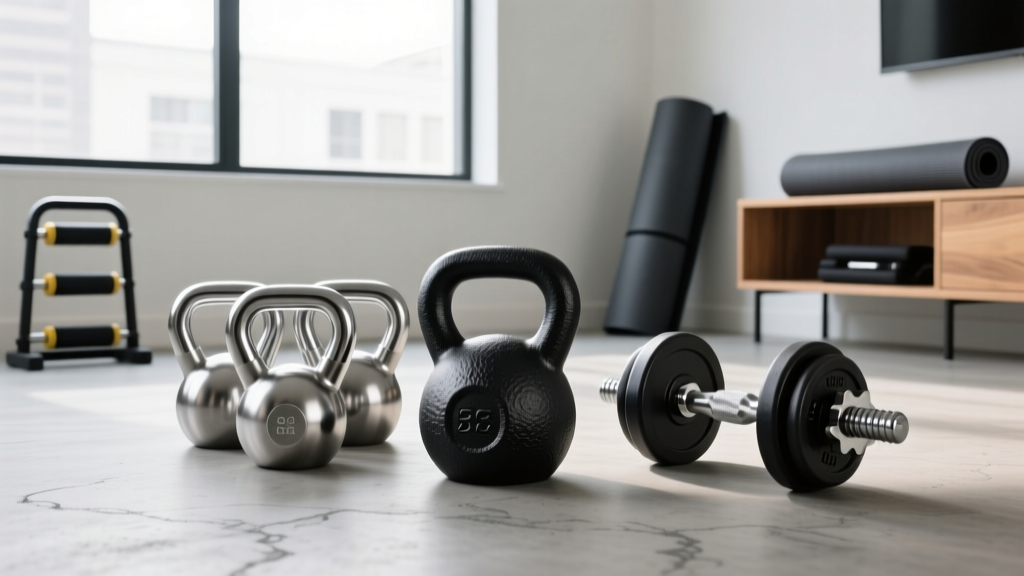
Space-Saving Do It Yourself Dumbbells: Loadable Plates
Discover how to build a space-saving loadable dumbbell system. Compare footprints, costs, and layouts for the ultimate DIY dumbbell setup in small home gyms.

The Spatial Crisis of Fixed Iron
When outfitting a compact home gym, the sheer physical footprint of traditional fixed-weight dumbbells is often the breaking point. A standard 5-to-50-pound rubber hex set requires a heavy-duty three-tier rack, consuming roughly 15 square feet of dedicated floor space when accounting for user clearance and walking paths. For lifters in apartments, single-car garages, or multi-purpose rooms, this spatial tax is unacceptable. When searching for space-saving do it yourself dumbbells, many mistakenly picture concrete-filled buckets, sandbags, or PVC-pipe contraptions. However, the true DIY approach for serious strength athletes involves architecting a custom, modular loadable dumbbell system using interchangeable plates and precision handles.
This modular method not only reclaims up to 75% of your floor plan but also offers infinite micro-loading scalability that fixed sets simply cannot match. By treating your dumbbells as a configurable layout puzzle rather than a static purchase, you can optimize your training space for 2026's modern home gym standards without sacrificing commercial-grade performance.
Architecting the Modular Loadable System
Building a high-performance loadable dumbbell setup requires careful selection of three distinct components: the handles, the plates, and the locking collars. Each element directly impacts both the spatial footprint and the biomechanical integrity of your lifts.
1. The Handles: Olympic vs. Standard Sleeves
The foundation of your DIY setup is the handle. You must immediately discard any standard 1-inch sleeve handles. Under heavy loads (exceeding 40 pounds per hand), 1-inch solid steel or hollow-core sleeves are prone to catastrophic bending, which ruins plate alignment and compromises wrist safety. Instead, you must source Olympic 2-inch sleeved handles with internal bronze or composite bushings.
- Rogue Loadable Dumbbell Handles: Featuring a 15.5-inch overall length and a 5.25-inch loadable sleeve, these are the gold standard. The 28.5mm shaft diameter provides an aggressive knurl that mimics a premium barbell, while the bronze bushings ensure smooth rotation during dynamic movements like snatches or cleans.
- Titan Fitness Olympic Dumbbell Handles: A slightly more budget-friendly alternative with a 16-inch overall length and a 5.5-inch sleeve. The extra quarter-inch of sleeve length allows for slightly heavier maximum loads, though the 25mm shaft may feel thin for lifters with larger hands during heavy pressing.
2. The Plates: Profile Thickness and Diameter
Space optimization extends to the plates themselves. The physical thickness of your plates dictates how much weight you can load onto a 5.25-inch sleeve. Standard cast-iron plates are relatively thin, but they chip and rust. Virgin rubber or urethane grip plates protect your floors but are significantly thicker, reducing your maximum loadable weight.
Furthermore, standard 450mm (17.7-inch) Olympic plates create a massive 'halo' effect around the handle. While fine for presses, this diameter severely restricts your range of motion during floor-based exercises like renegade rows, dumbbell snatches, or walking lunges, where the plates will strike the ground prematurely. For a true space-optimized DIY system, incorporate a mix of standard 450mm bumpers for heavy floor work and smaller-diameter fractional plates (100mm to 200mm) for unilateral and dynamic movements.
⚠️ The Sleeve Length Trap: Before purchasing plates, calculate your maximum load. A 5.25-inch sleeve can typically hold one 45lb bumper (2.5 inches thick) and two 10lb urethane plates (1.2 inches each) before running out of room for a collar. Always measure plate thickness before buying.3. The Collars: Minimizing Dead Space
Traditional spring clips are dangerous for dynamic movements and take up valuable sleeve real estate. Heavy-duty clamp collars are mandatory. The Lock-Jaw Pro Dumbbell Collars are highly recommended for space-constrained setups because their low-profile design consumes only 0.75 inches of sleeve space, leaving maximum room for plates. In contrast, standard barbell collars adapted for dumbbells can eat up 1.5 inches or more per side, effectively robbing you of 10 to 15 pounds of loadable capacity.
Footprint & Layout Matrix
To understand the true spatial advantage of a loadable DIY system, we must compare it against traditional home gym layouts. The following matrix illustrates the dedicated square footage required for a 5-to-50lb equivalent setup, factoring in the equipment footprint plus the mandatory 2-foot user clearance zone required for safe operation.
| Equipment Type | Physical Footprint | Total Dedicated Zone | Space Saved vs. Fixed |
|---|---|---|---|
| Fixed Hex Set (10 pairs) + 3-Tier Rack | 6.7 sq ft (44' x 22') | ~18.5 sq ft | Baseline |
| Adjustable Dumbbells (e.g., Bowflex 552) + Tray | 2.5 sq ft (Tray) | ~8.0 sq ft | 56% Reduction |
| DIY Loadable System + Vertical Plate Tree | 2.25 sq ft (18' x 18') | ~5.5 sq ft | 70% Reduction |
As highlighted by facility layout guidelines from the National Strength and Conditioning Association (NSCA), optimizing traffic flow and clearance zones is critical for safety and usability in compact training environments. The vertical plate tree completely eliminates the 'sprawl' of a traditional rack.
Vertical Storage & Layout Integration
The secret to the loadable dumbbell system's spatial dominance is vertical integration. Instead of a horizontal rack, you utilize an Olympic plate tree. A standard vertical tree with a 20-inch base and multiple tiered pegs can hold over 300 pounds of iron in less than 2.5 square feet of floor space.
Layout Pro-Tip: Position your vertical plate tree in a 'dead corner' of your gym—typically the space between the end of a power rack and an adjacent wall. This area is usually unusable for dynamic movements but is perfectly suited for a vertical storage pin. Store your loadable dumbbell handles on a small wall-mounted hook rack directly above the tree, turning a 2-foot vertical wall segment into a complete dumbbell station.
Biomechanical Edge Cases & Failure Modes
While space optimization is the primary goal, a DIY loadable system introduces specific biomechanical edge cases that you must engineer around:
1. The Center of Gravity Shift
Unlike a fixed dumbbell where the weight is evenly distributed around a central block, a loadable dumbbell's center of gravity shifts depending on the plates used. If you load a single 45-pound bumper plate on each side, the weight is pushed to the extreme ends of the sleeve. This increases the rotational inertia, making exercises like dumbbell flies or lateral raises feel significantly more unstable and taxing on the rotator cuff. Solution: For isolation movements, use multiple smaller plates (e.g., four 10-pound plates) to keep the mass closer to the handle's central axis.
2. Collar Slippage During Dropping
Drop sets or high-rep snatch sessions generate immense lateral G-forces. Independent testing by Garage Gym Reviews consistently shows that standard clamp collars can micro-slip on smooth Olympic sleeves when subjected to repeated ground impacts. Solution: If your programming includes drops, you must use threaded screw-down collars or specialized locking collars with internal rubber grip pads designed specifically for the smooth zinc finish of dumbbell sleeves.
The 2026 Cost-to-Space Ratio
Financial efficiency is just as important as spatial efficiency. As of 2026, the pricing for high-quality urethane and cast-iron plates has stabilized, making the DIY route highly competitive.
- Handles: Premium Olympic handles (e.g., Rogue Fitness Loadable Handles) cost approximately $95 per pair.
- Plates: A 150-pound set of calibrated steel or high-density urethane plates averages $250 to $350.
- Collars & Storage: Lock-Jaw collars ($35) and a heavy-duty vertical plate tree ($120).
Total System Cost: ~$500 to $600 for a setup that scales from 10 to 75+ pounds per hand. Compare this to a commercial-grade 5-50lb fixed urethane set and rack, which easily exceeds $1,200 and requires expensive freight shipping due to its 400+ pound pallet weight. The DIY loadable system not only saves 70% of your floor space but also cuts your initial capital expenditure in half, proving it is the undisputed champion of the modern compact home gym.
More gear to consider
All reviews
Dumbbell Racks & Storage: Perfecting Dumbbell Military Press Form
How Dumbbell Rack Storage Impacts Dumbbell Chest Fly Form & Value

EZ vs Straight Bar & Dumbbell Deadlift Form: Space-Saving Gym Layout
EZ Curl Bar vs Straight Bar & Lying Dumbbell Triceps Extensions

Top Dumbbell Racks for a 30 Minute Dumbbell Workout Women Love