
Power Rack vs Squat Rack vs Squat Stand for Leather Dumbbells
Comparing power racks, squat racks, and squat stands for leather dumbbell storage and training. Find the best setup to protect your premium gear.

The Premium Reality of Leather Dumbbells in the Home Gym
As boutique home gyms continue to evolve in 2026, aesthetic and tactile quality have become just as important as raw performance. Leather dumbbells—whether vintage restorations, custom leather-wrapped handles, or premium steampunk-style fitness gear—represent a significant investment, often costing between $400 and $1,200 per pair. However, their delicate exterior introduces a unique logistical challenge: metal-on-leather abrasion.
When choosing between a power rack, a squat rack (half rack), and a squat stand, most lifters only consider barbell clearance. But if your primary accessories are premium leather dumbbells, your decision must factor in upright spacing, dumbbell shelf stability, and the risk of scuffing the leather against bare steel or knurled attachments. Below, we break down how each rack type performs when paired with high-end leather dumbbells.
⚠️ Callout: The Moisture & Friction FactorLeather is highly susceptible to sweat degradation and friction tearing. Dragging a 75 lb leather dumbbell across a bare steel J-cup or an unpadded metal storage shelf will permanently scar the material. Your rack choice must accommodate UHMW plastic liners and specialized shelving to protect your investment.
Power Racks: Maximum Storage, Restricted Clearance
A full power rack (four uprights) is the undisputed king of storage and safety. Models like the Rep Fitness PR-4000 Power Rack or the Rogue R-3 offer massive weight capacities and extensive attachment ecosystems.
The Storage Advantage
Power racks can support heavy-duty dumbbell shelves on the front or rear uprights. Because the four-post design distributes weight evenly, you can safely store a full set of heavy leather dumbbells (up to 150 lbs per pair) without compromising the rack's center of gravity.
The Clearance Problem for Dumbbell Pressing
While storage is excellent, the *usage* of leather dumbbells inside a power rack is fraught with risk. When performing heavy dumbbell bench presses or shoulder presses inside the cage, the wide arc of the dumbbell heads frequently grazes the interior uprights. Even with UHMW plastic protectors, repeated friction will eventually scuff, discolor, or tear premium leather wraps.
- Pros: Unmatched storage capacity; 4-post stability prevents tipping when loading heavy shelves.
- Cons: High risk of leather abrasion during pressing movements due to confined interior clearance (typically 41 to 49 inches deep).
- Best For: Lifters who use leather dumbbells primarily for floor work, lunges, or rows, and need the rack strictly for heavy barbell work and secure storage.
Squat Racks (Half Racks): The Dumbbell Training Sweet Spot
Often referred to as half racks, these feature two main front uprights and two rear stabilizing feet (or short rear uprights). According to comprehensive testing by Garage Gym Reviews, half racks offer the ideal hybrid of safety and open-floor access.
Unrestricted Movement Arcs
For leather dumbbell training, the half rack is the superior choice. You can set up an adjustable bench just outside the front uprights. This allows for a full range of motion during dumbbell presses, flies, and seated shoulder presses without any risk of the leather handles or heads colliding with steel uprights.
Rear Shelf Integration
Half racks utilize rear stabilizers that often double as weight storage or plate pegs. Many premium half racks offer rear-mounted dumbbell trays. Because you are stepping *away* from the rack to use the dumbbells, the leather remains safe from the metal cage environment.
- Pros: Open clearance for wide dumbbell movements; excellent rear storage options; lower risk of leather scuffing.
- Cons: Larger overall footprint than squat stands; rear storage shelves can sometimes interfere with wall-mounted mirrors or tight garage layouts.
- Best For: Serious home gym owners who prioritize dumbbell volume and want to protect premium leather finishes from cage-strike damage.
Squat Stands: Minimalist Footprint, High Scuff Risk
Squat stands consist of two independent uprights (or a single-piece folded base) with no rear cage structure. As outlined in the Rogue Fitness Squat Stands catalog, these are designed for tight spaces and budget-conscious lifters.
The Storage Liability
Squat stands are fundamentally hostile to heavy dumbbell storage. Attaching a front-facing dumbbell shelf to a two-post squat stand shifts the center of gravity dangerously forward. If you load a pair of 100 lb leather dumbbells onto a shelf attached to a squat stand, the entire rig can tip forward, potentially crushing the leather dumbbells against the floor and causing catastrophic damage to the gear and your flooring.
Floor-Only Reality
To use leather dumbbells safely with a squat stand, you must store them on a separate, standalone wooden or padded metal dumbbell rack. While this keeps the leather safe from the squat stand's uprights, it requires purchasing redundant storage furniture, negating the space-saving benefits of the squat stand.
- Pros: Cheapest option; smallest footprint; zero interior cage restrictions.
- Cons: Cannot safely support heavy dumbbell storage shelves; requires purchasing a separate standalone dumbbell rack to protect leather from floor moisture and concrete abrasion.
- Best For: Minimalist lifters who already own a dedicated, padded standalone dumbbell storage tree and only need a rack for barbell squatting.
Head-to-Head Comparison Matrix
| Feature | Power Rack (4-Post) | Squat Rack (Half Rack) | Squat Stand (2-Post) |
|---|---|---|---|
| Leather Scuff Risk | High (Interior strikes) | Low (Open exterior) | Low (No cage) |
| Integrated DB Storage | Excellent (Front/Rear) | Very Good (Rear/Side) | Poor (Tipping hazard) |
| DB Press Clearance | Restricted (41"-49" depth) | Unrestricted (Step-out) | Unrestricted (Open) |
| Est. 2026 Price Range | $900 - $1,800+ | $700 - $1,400 | $350 - $650 |
Critical Dimensions: Upright Spacing and Shelf Compatibility
When storing wide-headed leather dumbbells (such as hex-shaped vintage models or thick-grip leather cylinders), the interior width of your rack is paramount.
Most commercial power racks feature an outside dimension of 49 inches, yielding an inside clearance of 43 inches. If you are mounting a tiered dumbbell shelf, ensure the shelf brackets do not encroach on this 43-inch space, otherwise, retrieving the dumbbells will result in the leather scraping against the opposite upright. For half racks, look for models with 48-inch or 53-inch wide rear stabilizers to accommodate wide-tiered dumbbell trays without interfering with your foot placement during heavy Romanian deadlifts or walking lunges.
"Never store premium leather-wrapped handles on standard metal tiered racks without a barrier. The oxidation from bare steel shelves, combined with ambient garage humidity, will transfer rust stains directly into the leather grain within weeks. Always line your rack shelves with 1/4-inch UHMW polyethylene or high-density EVA foam." — Custom Gym Equipment Restoration Guidelines, 2025
Expert Leather Care & Rack Modification Framework
If you are committed to integrating leather dumbbells into your rack ecosystem, follow this 3-step modification framework to ensure longevity:
- Line the Storage Shelves: Purchase adhesive-backed UHMW plastic strips (available on Amazon or McMaster-Carr) and apply them to the lips and tiers of your rack's dumbbell shelf. This creates a slick, non-abrasive surface that prevents micro-tears in the leather when sliding the weights in and out.
- Wrap the Interior Uprights: If you must use a power rack, wrap the interior-facing sides of the front uprights with 3/4-inch thick horse stall mats or specialized vinyl rack guards. This acts as a shock absorber if a dumbbell head slips during a heavy set.
- Control the Microclimate: Leather degrades in high humidity. If your power rack is in an uninsulated garage, place a silica gel desiccator pack on the top crossmember of the rack to absorb ambient moisture that settles on the dumbbell shelves overnight.
Final Verdict: Which Should You Buy?
If your training heavily revolves around leather dumbbells, the Squat Rack (Half Rack) is the definitive winner. It provides the necessary rear-storage stability for heavy, expensive dumbbell sets while offering the open-floor clearance required to perform wide-arc pressing and fly movements without destroying the leather finish against a steel cage.
Opt for a power rack only if you have a massive footprint and plan to use the interior strictly for barbell work, treating the rack's exterior as a display and storage unit for your leather gear. Avoid squat stands entirely unless you are willing to purchase a separate, padded standalone storage tree to keep your leather investment safe from the concrete floor.
More gear to consider
All reviews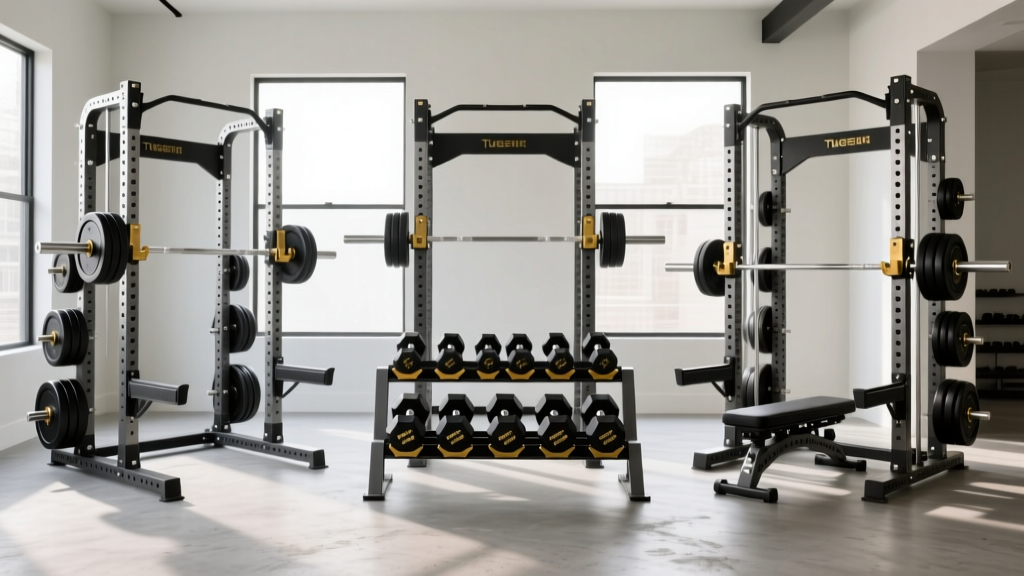
Power Rack vs Squat Rack vs Stand: Tungsten Dumbbell Setup

Bumper vs Iron Plates: Protecting Your Core Home Fitness Dumbbell

Single Arm Dumbbell Curl Form: Standard vs Olympic Plate Mistakes
The Dumbbells Acronym & Bumper vs Iron Plate Maintenance
Rogue vs Rep Barbells: Knurling, Weight & Kickbacks with Dumbbells
