
EZ Curl vs Straight Bar Maintenance & Dumbbell Crunches Grip Care
Master EZ curl vs straight bar maintenance to prevent rust and knurling wear. Plus, learn grip care tips for heavy dumbbell crunches and core training.

As we navigate the 2026 fitness equipment market, home gym setups have evolved from makeshift garage corners to highly calibrated training labs. Yet, regardless of how premium your gear is, neglecting equipment maintenance remains the fastest way to degrade your investment. When comparing the staple lifting implements in the free weights category—specifically the EZ curl bar versus the traditional straight barbell—the maintenance protocols differ significantly due to their unique geometries and metallurgical finishes. Furthermore, the way you handle ancillary equipment during core work, such as performing weighted dumbbell crunches, introduces hidden wear-and-tear variables that most lifters completely overlook.
This guide dives deep into the exact maintenance care, longevity tips, and cleaning protocols required to keep your barbells spinning smoothly and your dumbbell knurling biting effectively for years to come.
The Geometry of Grime: EZ Curl vs. Straight Bar Shafts
The most obvious difference between an EZ curl bar and a straight barbell is the shaft geometry, but this physical distinction creates entirely different maintenance headaches. A standard straight barbell, like the Rogue Ohio Power Bar (retailing around $295 with a stainless steel shaft), features a uniform, linear surface. When you finish a heavy session, running a nylon bristle brush down a straight bar takes roughly 15 seconds. The chalk and dead skin are pushed linearly out of the knurling valleys.
The EZ curl bar, however, is a maintenance trap if you are not careful. The angled bends—designed to reduce wrist and elbow supination stress during curls—create micro-pockets where chalk, sweat, and skin oils accumulate. The sweat-chalk mixture forms a mildly acidic paste that accelerates oxidation, particularly in the inner curves of the bends.
⚠️ Expert Warning: Never use a wire brush on the angled bends of an EZ curl bar, especially if it features a black oxide or zinc finish. The rigid wire bristles will catch on the knurling peaks at the apex of the bends, stripping the protective coating and exposing bare steel to humidity. Always use a stiff nylon brush or a specialized angled brass bristle brush for EZ bars.Metallurgy and Finish Longevity
Understanding your bar's finish dictates your maintenance schedule. According to BarBend's comprehensive barbell maintenance guide, the finish is your first line of defense against environmental moisture.
- Bare Steel / Black Oxide: Common on budget EZ curl bars (e.g., Titan Fitness Black Oxide EZ Curl Bar, ~$129). Requires weekly oiling and immediate post-workout wipe-downs. Highly susceptible to flash rust.
- Hard Chrome / Zinc: Offers moderate protection. Chalk can become embedded in the porous zinc layer, requiring monthly deep-cleaning with a brass brush and light 3-in-One oil.
- Stainless Steel / Cerakote: The 2026 gold standard. Stainless steel shafts require virtually no oiling and resist rust inherently. Cerakote (a ceramic-polymer coating) offers similar rust resistance but can chip if dropped on bare concrete without proper flooring.
Sleeve Spin and Bushing Care
While the shaft gets all the attention, the sleeves dictate the lifespan of your barbell's rotational mechanics. Straight bars typically utilize either bronze bushings (for powerlifting/slow lifts) or needle bearings (for Olympic weightlifting). Most EZ curl bars rely exclusively on bronze or composite bushings due to the shorter sleeve length and lower rotational velocity required for isolation movements.
The Lubrication Protocol: Do not use WD-40 on barbell sleeves. WD-40 is a solvent and water displacer, not a long-term lubricant; it will strip existing factory grease and attract abrasive metal shavings. Instead, use White Lithium Grease or a high-viscosity 3-in-One Multi-Purpose Oil. Apply exactly 3 to 5 drops at the seam where the sleeve meets the shaft, spin the sleeve for 30 seconds to work the lubricant into the bushings, and wipe away the excess. For a detailed breakdown of bushing vs. bearing wear, the Garage Gym Reviews equipment maintenance hub provides excellent visual teardowns of sleeve assemblies.
Data Matrix: Maintenance Profiles Compared
Below is a structural comparison of the maintenance demands across standard free weight implements found in a well-equipped home gym.
| Equipment Type | Primary Vulnerability | Recommended Cleaning Tool | Oiling Frequency |
|---|---|---|---|
| Straight Bar (Stainless) | Chalk buildup in linear knurling | Nylon bristle brush | Rarely (Sleeves only) |
| EZ Curl Bar (Zinc/Oxide) | Sweat pooling in angled bends | Angled brass brush, microfiber | Weekly (Shaft & Sleeves) |
| Urethane Dumbbells | Skin oils degrading handle grip | Damp microfiber, mild soap | N/A (Wipe post-use) |
| Rubber Hex Dumbbells | Rubber dry-rot and odor retention | Simple Green diluted solution | N/A (Avoid harsh chemicals) |
Core Work & Gear Stress: Maintaining Dumbbells for Dumbbell Crunches
When athletes think of barbell maintenance, they picture heavy squats and deadlifts. However, core training introduces a surprisingly corrosive element to your free weights. Executing heavy dumbbell crunches—whether holding a single dumbbell across your chest or gripping two dumbbells overhead for an extended range of motion—places the dumbbell handles in direct, prolonged contact with your core and hands during high-sweat output.
According to biomechanical directories like ExRx.net's dumbbell crunch mechanics guide, the rectus abdominis contraction requires a firm, static grip to stabilize the load. This means your palms are clamping down on the dumbbell knurling, forcing sweat, dead skin, and acidic salts deep into the handle's grooves.
The Urethane vs. Rubber Degradation Factor
If you are performing dumbbell crunches with standard rubber hex dumbbells, the sweat transfer doesn't just affect the handle. As you lower the weights to the floor or a bench between sets, the acidic residue transfers to the rubber heads. Over time, this accelerates the breakdown of the vulcanized rubber, leading to the infamous 'dry rot' flaking and pungent odors that plague poorly maintained garage gyms.
The Upgrade Path: For heavy core work and high-sweat environments, upgrading to Urethane Dumbbells (such as the REP Fitness Urethane Series, roughly $160 per pair for 25lb increments) is a superior longevity investment. Urethane is highly resistant to sweat, UV light, and abrasion. It does not absorb odors or break down from the acidic pH of human sweat, making it the undisputed champion for exercises like dumbbell crunches, goblet squats, and farmer's carries.
The Weekly 15-Minute Gym Maintenance Protocol
To maximize the lifespan of your straight bars, EZ curl bars, and dumbbells, implement this streamlined weekly protocol:
- Dry Brush (3 Minutes): Take a stiff nylon brush and scrub the knurling of your straight bar and the angled bends of your EZ curl bar. Dislodge all visible white chalk and skin flakes.
- Wipe Down (4 Minutes): Use a microfiber towel lightly dampened with a 50/50 mix of water and white vinegar (or a specialized gym wipe) to wipe down the shafts of your barbells and the handles of your dumbbells. This neutralizes the acidic sweat left behind by heavy core work and curling sessions.
- Sleeve Lubrication (3 Minutes): Apply 3 drops of 3-in-One oil to the sleeve seams of your straight bar and EZ curl bar. Spin the sleeves and wipe away the black, gritty residue that seeps out.
- Dumbbell Inspection (5 Minutes): Check the bolt heads or welded collars on your dumbbells. If you use adjustable dumbbells (like PowerBlocks or Nuos), ensure the selector pins are free of chalk dust, which can jam the internal mechanisms.
Expert Troubleshooting: Squeaks, Rust, and Chalk Ghosts
Even with meticulous care, free weights encounter edge-case failures. Here is how to troubleshoot the most common longevity issues:
- The 'Squeaky' EZ Curl Sleeve: A high-pitched squeak during bicep curls indicates metal-on-metal friction in the bushing. This usually means the factory grease has dried out or chalk dust has bypassed the sleeve seal. Remove the sleeve (if your bar allows for user disassembly via snap rings), clean the bronze bushing with a degreaser, and repack it with white lithium grease.
- Flash Rust on Black Oxide: If you notice orange dust on your hands after using a black oxide straight bar, act immediately. Use a brass wire brush and a light penetrating oil to scrub the rust spots. Once removed, coat the entire shaft in a thin layer of mineral oil and let it sit overnight before wiping it dry.
- Chalk Ghosts in Urethane: If your urethane dumbbell handles feel 'slippery' even after brushing, the chalk has bonded with your skin oils to create a hydrophobic glaze. Scrub the handles with a drop of Dawn dish soap and a nylon brush to strip the oil-chalk matrix, restoring the aggressive bite of the knurling.
"The longevity of your free weights is not determined by the price tag, but by the consistency of your post-workout wipe-downs. A $150 black oxide EZ bar will outlive a $300 stainless bar if the stainless bar is left in a humid, unventilated garage while the oxide bar is oiled and stored indoors."
By understanding the distinct maintenance profiles of your straight barbells, EZ curl bars, and the dumbbells used for core staples like dumbbell crunches, you ensure that your gear remains safe, hygienic, and mechanically flawless for every training cycle.
More gear to consider
All reviews
Beyond a Dumbbells Image: Space-Saving Loadable Gym Layouts

Beginner Guide: Dumbbell Shoulder Press with Neoprene Weights

20 lb Adjustable Dumbbell Review & Troubleshooting Guide
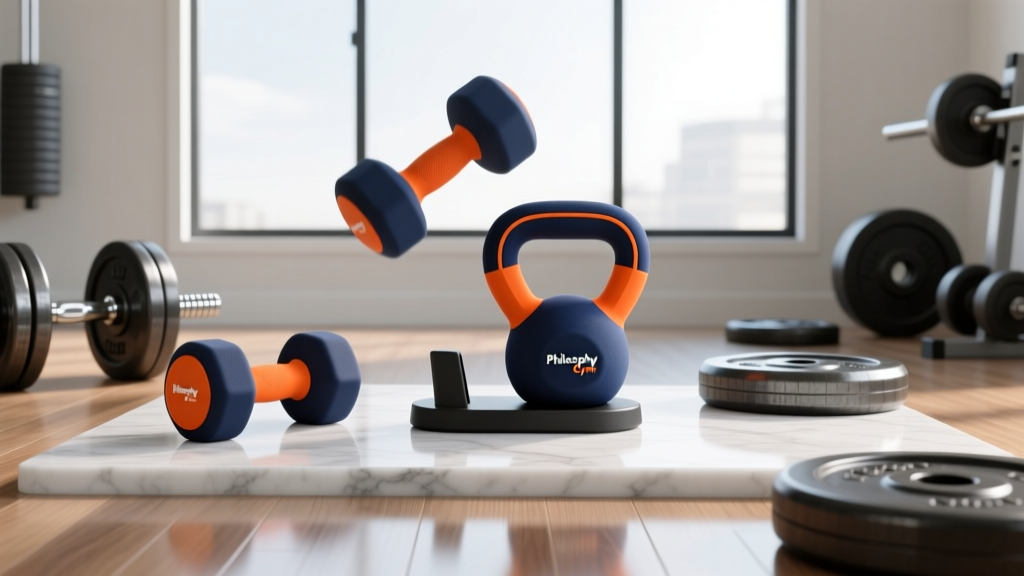
Philosophy Gym Neoprene Dumbbell Hand Weights With Stand vs Plates

Olympic Bar Setup: Knurling and the Dumbbell Straight Arm Pullback
