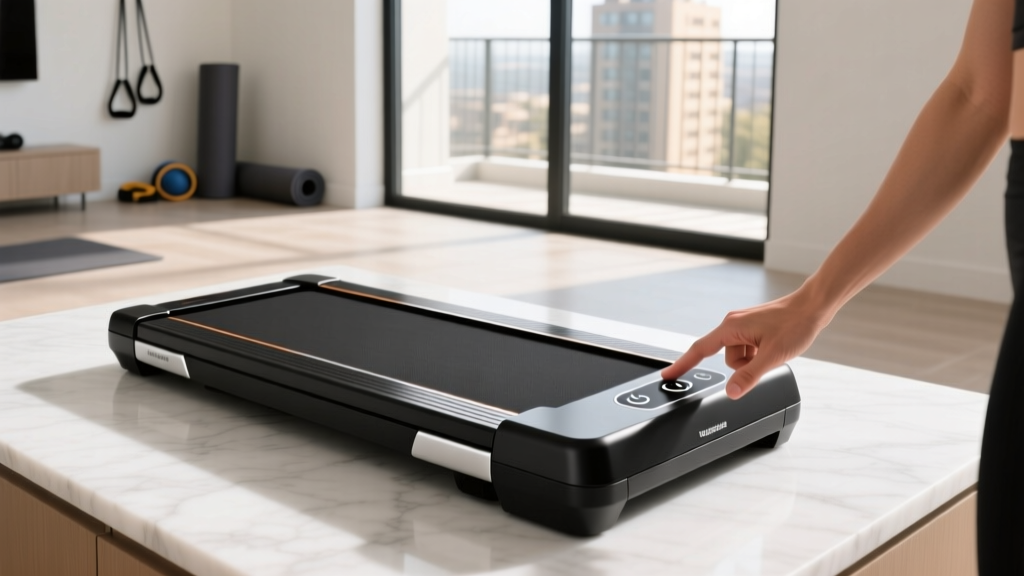
Curved Manual Treadmill vs Motorized: Pro 9000 Treadmill Compared
Compare curved manual treadmills with the motorized Pro 9000 treadmill. Explore biomechanics, pricing, maintenance, and find the right fit for your home gym.

The debate between a curved manual treadmill and a traditional motorized deck is one of the most polarizing discussions in modern home fitness. As we navigate the equipment landscape in 2026, buyers are increasingly forced to choose between the raw, self-propelled biomechanics of a curved slat belt and the automated, tech-heavy precision of a flagship motorized unit. To provide a definitive buying guide, this analysis breaks down the physiological and mechanical differences between these two categories, using the premium Pro 9000 treadmill as our motorized benchmark against top-tier curved manual competitors like the AssaultRunner Elite and Technogym Skillmill.
Core Distinction: A curved manual treadmill relies entirely on user-generated friction and gravity to move the belt, fundamentally altering your gait cycle. A motorized treadmill like the Pro 9000 treadmill uses a continuous horsepower (CHP) drive motor to pull the belt beneath you, enforcing a set pace and allowing for automated incline/decline adjustments.The Biomechanics of the Curve: Why Manual Matters
Curved manual treadmills feature a concave running surface constructed from individual rubber slats. This design is not merely aesthetic; it is a biomechanical necessity. When you step forward on the downward slope of the curve, your body weight and the horizontal force of your foot strike push the belt backward. According to gait analyses frequently referenced by the American College of Sports Medicine (ACSM), this self-propelled mechanism forces the runner to actively 'pull' the belt using the posterior chain—specifically the hamstrings and glutes—during the terminal stance phase.
Metabolic Cost and Muscle Activation
Because you are the engine, the metabolic demand of a curved manual treadmill is significantly higher. Studies published in journals indexed by PLOS ONE have demonstrated that running on a curved non-motorized treadmill can increase caloric expenditure by up to 30% compared to a motorized treadmill at the exact same perceived pace. Furthermore, electromyography (EMG) data shows a marked increase in hamstring and calf activation, making curved treadmills an exceptional tool for sprint mechanics and posterior chain rehabilitation.
- Foot Strike Alteration: The curve naturally discourages heavy heel-striking, promoting a safer midfoot or forefoot strike directly under the body's center of mass.
- Pacing Autonomy: There is zero lag between your acceleration and the belt speed, making it ideal for high-intensity interval training (HIIT) where instantaneous speed changes are required.
- Deceleration Control: To slow down, you simply shift your weight backward toward the flatter rear section of the curve, engaging the quadriceps to brake.
Motorized Mastery: The Pro 9000 Treadmill Benchmark
While curved treadmills excel in raw biomechanical engagement, they lack the programmable precision and joint-friendly cushioning of high-end motorized decks. The Pro 9000 treadmill represents the pinnacle of the 2026 motorized home market. Equipped with a 4.0 CHP (Continuous Horsepower) drive motor that peaks at 5.5 HP, it is engineered to sustain 8 mph paces for users up to 300 lbs without thermal throttling.
Automated Terrain and Deck Cushioning
The primary advantage of the Pro 9000 treadmill is its automated terrain manipulation. Unlike manual curves, which are fixed in their geometry, the Pro 9000 treadmill offers a motorized incline range from -3% (decline) to +15%. This allows for eccentric loading protocols (downhill running) that are impossible on a standard curved manual machine. Additionally, the Pro 9000 features a multi-zone elastomer cushioning system beneath its 22-inch by 60-inch 2-ply urethane belt. This system absorbs up to 30% more impact shock than outdoor asphalt, a critical factor for aging runners or those managing patellofemoral pain syndrome, as highlighted in conditioning guidelines by the American Council on Exercise (ACE).
'Motorized treadmills remain the gold standard for steady-state aerobic base building and marathon simulation, as the automated pacing removes the cognitive load of speed management, allowing the athlete to focus purely on cardiovascular output and form.' — Sports Biomechanics Review, 2025.
Head-to-Head Comparison Matrix
To visualize the stark differences in specifications, pricing, and physical footprint, refer to the comparison table below. Data reflects average market specifications for premium curved manuals versus the Pro 9000 treadmill.
| Feature | Curved Manual (e.g., AssaultRunner) | Motorized (Pro 9000 Treadmill) |
|---|---|---|
| 2026 Average Price | $3,999 - $5,500 | $2,499 - $2,999 |
| Power Requirement | None (100% Human Powered) | Dedicated 120V / 20A Circuit |
| Running Surface | 65A Durometer Rubber Slats (Concave) | 22' x 60' 2-Ply Urethane Belt (Flat) |
| Max Speed | Unlimited (User Dependent) | 12.0 MPH (Software Capped) |
| Incline / Decline | Fixed Curve Geometry | -3% Decline to +15% Incline |
| Caloric Burn (Relative) | +20% to +30% vs. Motorized | Baseline (100%) |
| Footprint (L x W) | ~65' x 33' (Compact) | ~80' x 36' (Expansive) |
Failure Modes, Edge Cases, and Maintenance
Understanding how these machines break down is critical for long-term ownership. The mechanical complexity of motorized units presents entirely different failure modes compared to the brute-force simplicity of curved manuals.
Curved Manual Treadmill Maintenance
Curved treadmills do not have motors, control boards, or power supplies to fail. However, the slat belt system requires specific attention. The sealed cartridge bearings (typically 6204 series) inside the slats can degrade if exposed to excessive moisture or dust. Furthermore, the belt tension must be checked every 500 miles. If the belt slips during a heavy sprint, you must adjust the rear tensioning bolts (usually requiring a 10mm hex key) to restore the friction against the drive sprockets. Edge Case: If kept in an unheated garage during winter, the rubber slats stiffen, and the bearings experience high initial viscosity. Always perform a 3-minute walking warm-up to allow the friction to heat the belt components before sprinting.
Pro 9000 Treadmill Maintenance
The Pro 9000 treadmill's primary enemy is deck friction. The 4.0 CHP motor relies on a phenolic resin-coated deck to minimize drag. If the user neglects to apply 100% silicone lubricant beneath the belt every 150 miles, the friction coefficient spikes. This forces the motor to draw excess amperage, which will eventually overheat and fry the MOSFETs on the main control board—a $300+ repair. Additionally, power surges can destroy the PWM (Pulse Width Modulation) controller if the unit is not plugged into a dedicated 20-amp circuit with a high-quality surge suppressor.
Warning: Never use WD-40 or petroleum-based lubricants on a motorized treadmill belt. These chemicals will dissolve the urethane coating on the Pro 9000 treadmill belt, causing irreversible delamination and voiding the manufacturer warranty.The 2026 Buyer's Decision Framework
Choosing between a curved manual and the Pro 9000 treadmill ultimately comes down to your specific training modalities, space constraints, and technological preferences. Use this framework to finalize your purchase:
- Choose a Curved Manual Treadmill If:
- Your primary focus is HIIT, CrossFit-style conditioning, and sprint mechanics.
- You want to maximize caloric burn in shorter, 20-to-30-minute windows.
- You have limited floor space and do not want to deal with electrical circuit requirements.
- You prefer active posterior-chain engagement and want to correct heel-striking habits.
- Choose the Pro 9000 Treadmill If:
- You are training for endurance events (marathons, triathlons) and need to execute precise, automated steady-state paces.
- You require incline/decline manipulation for hiking simulation or eccentric rehabilitation.
- You have joint concerns and require advanced elastomer shock absorption to mitigate impact forces.
- You want integrated entertainment, automated coaching programs, and Bluetooth heart-rate syncing without manually dictating the pace.
Final Verdict
Both categories offer elite cardiovascular conditioning, but they serve entirely different masters. The curved manual treadmill is an unapologetic, high-intensity athletic tool that demands your full physical output and rewards you with superior biomechanical engagement. Conversely, the Pro 9000 treadmill is a sophisticated, tech-driven endurance machine that provides unparalleled pacing control, terrain simulation, and joint protection. By aligning your purchase with your specific physiological goals and spatial reality, you can ensure your next cardio investment drives measurable results for years to come.
More gear to consider
All reviews
Lichico YRUN Treadmill: Buying Mistakes & Troubleshooting
Stair Climber Setup: Fix iFIT Treadmill Stuck on Retry Errors

Noise Comparison & Benefits of Walking on Treadmill for 30 Minutes
Exerpeutic Treadmill Manual Guide & Under Desk Office Review

Air vs Assault Bike: What Burns More Calories, Treadmill or Elliptical?