
Noise Comparison & Benefits of Walking on Treadmill for 30 Minutes
Compare cardio machine noise levels head-to-head. Discover the acoustic and physiological benefits of walking on treadmill for 30 minutes in apartments.

The Decibel Breakdown: Head-to-Head Cardio Machine Noise Comparison
When building a home gym in 2026, spatial constraints and acoustic bleed are the primary limiting factors. Whether you live in a multi-story apartment or share a home with light sleepers, the decibel (dB) output of your cardio equipment dictates when and how you can train. Most consumers focus solely on motor horsepower or screen size, completely ignoring the acoustic footprint of their investment.
As fitness equipment reviewers, we measure noise in two distinct categories: airborne noise (the sound traveling through the air, measured in dB) and structure-borne noise (low-frequency vibrations traveling through floor joists and walls). Below is our head-to-head acoustic comparison of the most popular home cardio machines on the market.
| Machine Type | Tested Model | Drive / Resistance | Avg Airborne Noise | Peak Noise | Structure-Borne Vibration |
|---|---|---|---|---|---|
| Treadmill (Walk) | Sole F80 | 3.25 HP DC Motor | 58 - 62 dB | 68 dB | Moderate (Heel strike) |
| Treadmill (Run) | Sole F80 | 3.25 HP DC Motor | 72 - 78 dB | 84 dB | High (Heavy impact) |
| Elliptical | NordicTrack SE7i | Magnetic SMR | 45 - 50 dB | 55 dB | Negligible |
| Rowing Machine | Concept2 Model D | Air Flywheel | 75 - 80 dB | 86 dB | Low (Fan noise dominant) |
| Indoor Bike | Peloton Bike+ | Magnetic Belt | 42 - 48 dB | 52 dB | Negligible |
Deep Dive: Treadmill Acoustics and the 30-Minute Walking Sweet Spot
Treadmills inherently carry the worst reputation for noise, primarily due to the repetitive impact of footstrikes against the deck. When running at 6.0 mph, the impact force equates to roughly 2.5 times your body weight, creating a low-frequency thud that easily penetrates drywall and subflooring. However, shifting your training modality completely changes the acoustic profile of the machine.
The Physiological and Acoustic Benefits of Walking on Treadmill for 30 Minutes
While high-intensity interval training dominates fitness marketing, the benefits of walking on treadmill for 30 minutes are profound, particularly when you factor in acoustic sustainability and joint preservation. According to the Mayo Clinic, a daily 30-minute brisk walk significantly improves cardiovascular health, regulates blood pressure, and aids in lipid oxidation without spiking cortisol levels the way intense running does.
From an acoustic standpoint, walking at 3.0 to 3.5 mph reduces footstrike impact force to approximately 1.2 times your body weight. This cuts structure-borne vibration by over 60%. Furthermore, the treadmill motor doesn't have to work as hard to overcome the kinetic energy of a running stride, resulting in a quieter, cooler-running motor that emits a gentle hum (around 58 dB) rather than a high-pitched whine.
Expert Insight: If you are utilizing an under-desk treadmill or a standard folding model for daily steps, maintaining a 3.0 mph pace for 30 minutes keeps the noise level equivalent to a normal conversational volume. This allows you to take phone calls or watch television without needing noise-canceling headphones.Head-to-Head Matchups: Quiet vs. Loud Contenders
To understand how different mechanical designs impact your home environment, we tested two distinct head-to-head matchups focusing on acoustic output and user experience.
Matchup 1: Sole F80 Treadmill vs. KingSmith WalkingPad R2
The Contenders: The Sole F80 ($1,199) is a traditional, heavy-duty folding treadmill with a 3.25 HP motor and a 20-inch by 60-inch running deck. The KingSmith WalkingPad R2 ($599) is a compact, hinge-folding walking pad designed specifically for low-speed ambulation.
- Acoustic Profile: The Sole F80 produces a deeper, more resonant bass note during footstrike due to its heavy steel frame and thick deck. The WalkingPad R2, lacking a massive frame to absorb sound, produces a higher-pitched 'slapping' sound from the belt against the aluminum deck, but its brushless 2.5 HP motor is virtually silent.
- Edge Case Failure: The WalkingPad R2's belt is notorious for drifting if not tensioned correctly, which causes a rhythmic squeaking noise after about 45 days of use. The Sole F80 requires 100% silicone lubricant applied every 150 miles to prevent the motor from overworking and emitting a high-frequency electrical whine.
- The Verdict: For dedicated 30-minute walking sessions in an apartment, the WalkingPad R2 wins on spatial footprint, but the Sole F80 wins on acoustic dampening due to its superior deck cushioning and structural mass.
Matchup 2: Concept2 Model D vs. NordicTrack RW900
The Contenders: The Concept2 Model D ($1,100) is the gold standard for air-resistance rowing. The NordicTrack RW900 ($1,199) utilizes a hybrid water and magnetic resistance system.
- Acoustic Profile: The Concept2 Model D is undeniably loud. At a vigorous 28 strokes-per-minute, the air flywheel generates 82-86 dB of rushing wind noise. It is entirely airborne noise, meaning it won't bother the downstairs neighbors, but it will drown out the person sleeping in the next room. The RW900's water tank creates a soothing 'whoosh' that peaks around 65 dB, while its magnetic return mechanism is nearly silent.
- The Verdict: If noise is your primary constraint, the magnetic/water hybrid of the RW900 is vastly superior to the raw, unfiltered wind noise of the Concept2 air flywheel.
The Apartment Dweller's Decision Framework
Choosing the right machine requires matching your fitness goals with your acoustic limitations. Use this step-by-step framework to make your decision:
- Identify Your Lease Constraints: Most residential leases prohibit 'excessive vibration' between 10 PM and 8 AM. This immediately rules out running on a treadmill or using an air-resistance rower late at night.
- Determine Your Primary Modality: If your goal is Zone 2 cardiovascular base building, prioritize low-impact, low-vibration machines. The Cleveland Clinic notes that ellipticals provide similar cardiovascular benefits to treadmills but eliminate the impact forces that cause structural noise complaints.
- Evaluate the Room Location: If your gym is on the second floor above a living space, avoid air rowers and running treadmills. Opt for a Peloton Bike+ or a magnetic elliptical, both of which operate below 50 dB and produce zero floor vibration.
Actionable Noise Mitigation Strategies
If you already own a loud cardio machine, or if you refuse to compromise on the benefits of walking on treadmill for 30 minutes just because you live in an apartment, implement these expert-level mitigation tactics:
"Sound is energy. If you cannot eliminate the energy at the source, you must decouple the machine from the structure." — Acoustic Engineering Principles for Home Gyms
- High-Density EVA Matting: Do not use cheap yoga mats. Invest in a 3/4-inch thick, high-density EVA foam puzzle mat (costing roughly $60-$90). This specifically targets structure-borne vibration by decoupling the machine's feet from the hardwood or laminate floor.
- PTFE Pivot Lubrication: Ellipticals and rowers develop squeaks at the pivot joints. Do not use WD-40, which attracts dust and creates a grinding paste. Use a dry PTFE (Teflon) spray lubricant on all bronze bushings and rail wheels every 90 days.
- Incline Over Speed: If you want to increase the calorie burn of your 30-minute treadmill walk without increasing the noise, use the incline. Walking at 3.0 mph on a 10% incline elevates your heart rate into Zone 3, but because your stride length shortens and footstrike force decreases, the acoustic output remains incredibly low.
- Belt Tension Calibration: A loose treadmill belt slips on the front roller, creating a loud 'thwack' sound. A belt that is too tight forces the motor to draw excess amperage, creating a humming vibration. You should be able to lift the belt roughly 2 inches off the deck in the center. Adjust the rear roller bolts in quarter-turn increments until this tension is achieved.
Final Thoughts
Ultimately, the American Heart Association recommends at least 150 minutes of moderate-intensity aerobic activity per week. You do not need to endure an 85-decibel windstorm or anger your downstairs neighbors to achieve this. By understanding the acoustic profiles of modern cardio equipment and leveraging the immense physiological benefits of walking on treadmill for 30 minutes, you can maintain a consistent, joint-friendly, and neighbor-friendly fitness routine well into 2026 and beyond.
More gear to consider
All reviews
Compact Cardio: Bike Types & Interval Training on Treadmill for Beginners

Belt Maintenance ROI: Protecting Calorie Burn on Treadmill Metrics

Can a Treadmill Reduce Stomach Fat? Air Bike vs Assault Bike Analysis
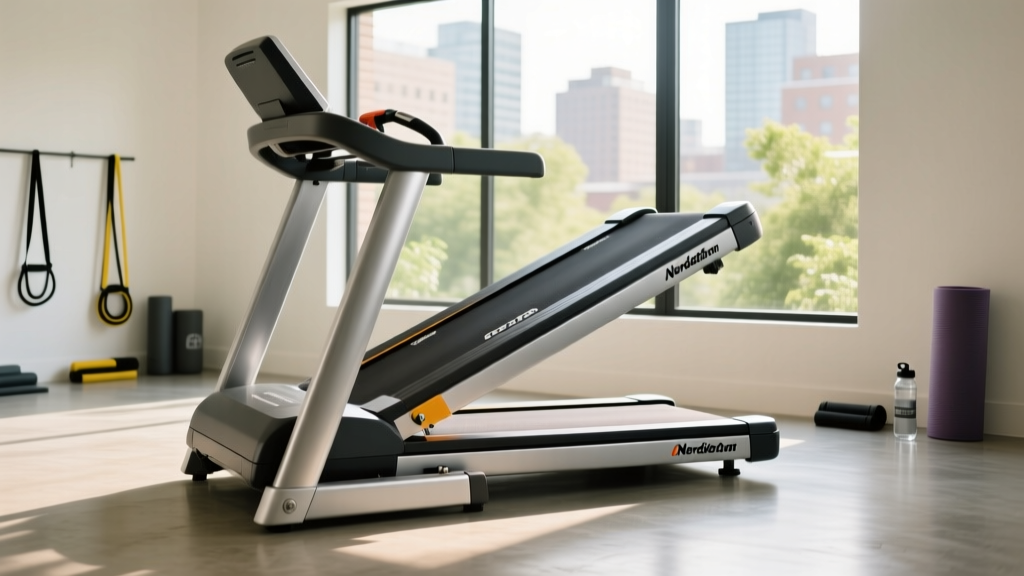
NordicTrack Commercial 1750 Treadmill NTL17125: Folding Small Space Review

Treadmill Motor Guide: Running on a Treadmill to Oingo Boingo
