
Gym Layouts: Iron vs Bumper Plates & Overhead Dumbbell Triceps Extension
Optimize your home gym layout by comparing bumper vs iron plate footprints and calculating ceiling clearance for the overhead dumbbell triceps extension.

The Spatial Footprint: Bumper vs. Iron Plates in Compact Gyms
As urban real estate premiums continue to climb in 2026, the modern home gym is rarely a sprawling four-car garage. Most dedicated lifters are carving out highly optimized training spaces in 10x10 spare bedrooms, basement corners, or single-bay carports. When designing a high-density training layout, the fundamental choice between bumper plates and traditional cast iron plates extends far beyond aesthetics or dropping mechanics—it directly dictates your spatial footprint, storage architecture, and even your vertical clearance requirements.
To understand the spatial implications, we must look at the strict manufacturing standards of Olympic plates. According to Rogue Fitness, standard bumper plates adhere to a strict 450mm (17.7-inch) diameter, regardless of whether you are loading a 10-pound technique plate or a 45-pound competition plate. This uniformity is excellent for barbell clearance off the floor during deadlifts, but it creates a massive, rigid footprint on storage racks. Conversely, traditional machined iron plates feature variable diameters. A 45lb iron plate typically measures around 14.5 inches in diameter, while a 10lb plate shrinks down to roughly 9 inches.
Layout Insight: The 450mm ConstraintBecause all bumper plates share the same 17.7-inch diameter, storing a full set of bumpers (e.g., two 45s, two 35s, two 25s, two 15s, and two 10s) on a standard vertical A-frame tree requires a base footprint of at least 30x30 inches to prevent the plates from binding against the vertical supports. Iron plates, with their cascading diameters, can be stored on compact, wall-mounted peg systems that consume zero floor space and project only 8 inches off the drywall.
Storage Layout Matrix: Maximizing Square Footage
When mapping out your gym's floor plan, every square inch of usable lifting space matters. Below is a comparative matrix detailing how different plate types interact with common storage solutions in a compact environment.
| Storage Solution | Bumper Plate Compatibility | Iron Plate Compatibility | Floor Footprint (Sq. In.) |
|---|---|---|---|
| Vertical A-Frame Tree | Excellent (Requires wide base to prevent tipping) | Good (Smaller plates fit on shorter top pegs) | ~900 sq in (30x30) |
| Wall-Mounted Peg Rack | Poor (450mm diameter causes wall-scraping & overlap) | Excellent (Cascading sizes fit flush against wall) | 0 sq in (Wall space only) |
| Plate Holder on Power Rack | Good (Consumes rear rack depth, adds 18" to rack length) | Good (Adds 12" to rack length) | Integrated into rack footprint |
| Horizontal Floor Stack | Fair (Uniform size stacks neatly but consumes length) | Poor (Variable sizes create unstable, wobbly stacks) | ~450 sq in (24x18) |
For a space-optimized layout, if you choose iron plates, investing in a heavy-duty wall-mounted storage system (like the Titan Fitness 6-Peg Wall Mount) is the ultimate space-saver, entirely freeing up your floor for movement. If your programming requires bumper plates for Olympic lifts or CrossFit-style metcons, you must allocate a dedicated 3x3 foot corner for a reinforced tree rack, or integrate rear plate storage directly into your power rack's uprights to consolidate the footprint.
Vertical Clearance & The Overhead Dumbbell Triceps Extension Test
Space optimization is not just about the X and Y axes of your floor plan; the Z-axis (vertical clearance) is equally critical, especially in basements or converted attics. The ultimate stress test for your gym's vertical layout is the overhead dumbbell triceps extension. This movement requires full shoulder flexion and elbow extension, demanding maximum ceiling clearance and dictating where you can safely position your adjustable bench or dumbbell rack.
Biomechanically, the overhead dumbbell triceps extension places the long head of the triceps brachii under a deep, loaded stretch. To execute this safely without striking the ceiling, drywall, or overhead lighting fixtures, you must calculate your peak reach envelope.
Calculating Your Peak Reach Envelope
Many lifters blindly assume an 8-foot (96-inch) ceiling is sufficient for a home gym. However, when performing the overhead dumbbell triceps extension, the math tells a different story. Here is the exact formula to map your vertical clearance zone:
- User Standing Height: e.g., 72 inches (6'0").
- Overhead Arm Reach: Add approximately 30 inches from the shoulder joint to the top of the clenched fist.
- Dumbbell Profile Length: This varies wildly by brand. A 50lb PowerBlock Pro EXP measures roughly 14 inches in length, while a 50lb Nuobell adjustable dumbbell is more compact at 12 inches.
- Elbow Flexion Clearance: When lowering the weight behind your head for the triceps stretch, the dumbbell travels backward, requiring clearance from rear walls or rack uprights.
The 8-Foot Ceiling Failure Mode: A 6-foot-tall lifter using 14-inch block-style adjustable dumbbells will reach a peak height of roughly 116 inches (9'8") during the lockout phase of the overhead dumbbell triceps extension. In a room with standard 96-inch ceilings, standing execution is physically impossible. Layout Fix: You must designate a specific 'seated zone' in your floor plan, utilizing a 90-degree adjustable bench to reduce your peak vertical reach by roughly 20 inches, keeping the movement safely within your spatial constraints.
Acoustic Mapping & Subfloor Layouts
Layout design in shared residential spaces must also account for acoustic footprints. The choice between bumper and iron plates fundamentally alters your subfloor requirements, which in turn affects the usable height and layout of your training zone.
Bumper plates are engineered to be dropped. A high-density rubber bumper plate dissipates kinetic energy radially, allowing you to utilize a standard 3/4-inch thick vulcanized rubber mat layout directly over concrete or plywood. Iron plates, however, concentrate impact force into a much smaller surface area. Dropping a 45lb machined iron plate generates high-frequency acoustic shockwaves that easily penetrate floor joists and drywall.
If your layout requires iron plates but you are training on a second-floor bedroom or above a finished basement, your floor plan must incorporate a dedicated 'drop zone' featuring layered soundproofing. This typically requires a 2-inch thick EVA foam base layer topped with a 3/4-inch horse stall mat. This added 2.75 inches of floor height slightly reduces your overall ceiling clearance, further reinforcing the need to map out your overhead dumbbell triceps extension envelope before finalizing your subfloor build.
The 10x10 Compact Blueprint: Bringing It Together
To synthesize these spatial, vertical, and acoustic variables, consider this optimized blueprint for a standard 10x10 foot (100 sq. ft.) room in 2026:
- The Perimeter (Wall-Mounted): Utilize machined iron plates stored on flush-mounted wall pegs on the rear wall. This recovers the 9 square feet that a traditional bumper plate tree rack would consume.
- The Drop Zone (Center-Left): Position a 4x6 foot, 3/4-inch rubber mat directly in front of a wall-mounted squat rack. Because you are using iron plates, attach silent crash pads to the rack's safety straps to mitigate acoustic transfer.
- The Overhead Clearance Zone (Center-Right): Keep this 4x4 foot area entirely free of overhead obstructions. Place a low-profile, 17-inch adjustable utility bench here. This dedicated zone ensures you have the exact spatial geometry required to perform the overhead dumbbell triceps extension from a seated position without your elbows clipping the wall or the dumbbells striking the ceiling.
- The Dumbbell Rack (Front Corner): Store compact, cylindrical adjustable dumbbells (like the Nuobell or Bowflex SelectTech) on a staggered 3-tier rack to minimize the horizontal footprint while keeping the weights accessible for isolation movements.
By treating your equipment not just as tools, but as three-dimensional geometric objects with specific acoustic and kinetic properties, you can transform a cramped spare room into a highly functional, professional-grade training facility. Whether you choose the uniform footprint of bumpers or the space-saving versatility of iron, your layout must adapt to the biomechanical realities of your programming.
More gear to consider
All reviews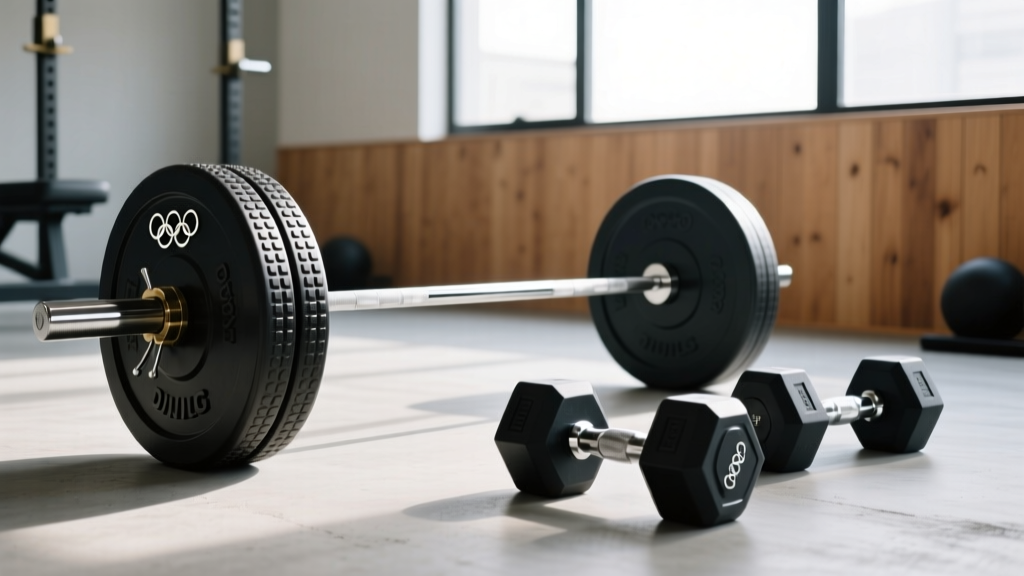
Olympic Barbell Knurling Guide: Bench vs. Incline Pec Fly Dumbbell

Beyond the 30 Minute Full Body Dumbbell Workout: Barbell Buying Guide

EZ vs Straight Bar Care for Overhead Cable Dumbbell Extensions

Bumper vs Iron Plates: Heavy Lifts & Bicep Workouts With One Dumbbell

Back and Bicep Dumbbell Workout Female: Cast Iron vs Competition Bells
