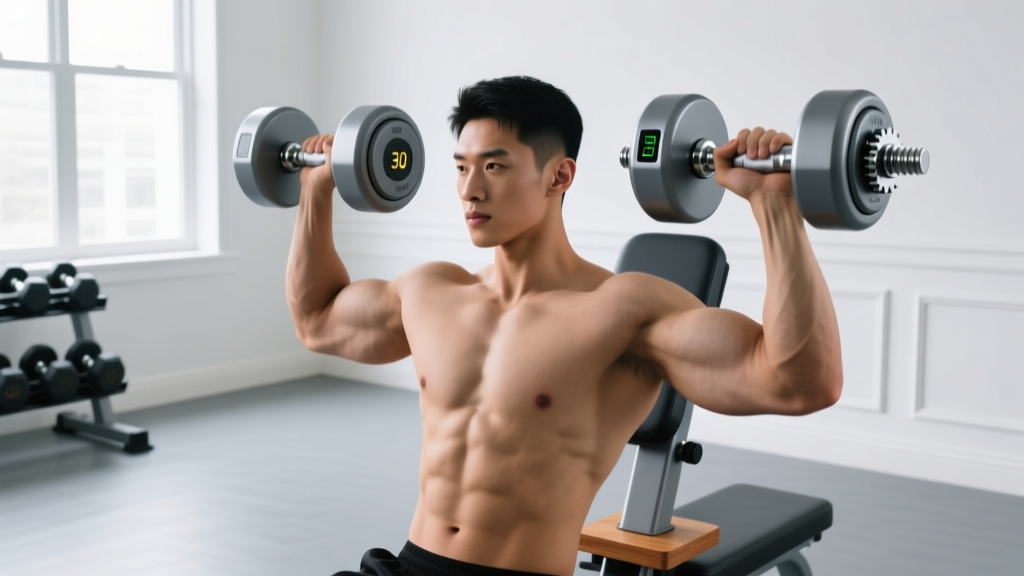
Barbell Guide: Weight, Knurling & Biceps Dumbbell Workout Fixes
Troubleshoot grip pain and bar whip. Our Olympic barbell buying guide covers weight ratings, knurling, and fixes for your biceps dumbbell workout.

The Biomechanical Clash: Barbells vs. Your Biceps Dumbbell Workout
Transitioning from a strict biceps dumbbell workout to heavy barbell isolation or compound lifts is a common progression in strength training. However, it is also a frequent source of plateauing, grip failure, and connective tissue pain. When lifters make this switch, they rarely consider how the physical properties of the barbell—specifically its tensile strength (weight rating) and knurling profile—interact with the biomechanics of arm isolation.
Unlike a biceps dumbbell workout where the wrist can freely supinate and rotate to accommodate your individual anatomical carrying angle, a straight Olympic barbell locks the wrists into a fixed, fully supinated position. According to biomechanical analyses of wrist strain during locked-supination curls via ExRx.net, this fixed position places immense torque on the medial epicondyle and the radioulnar joints. If your barbell's knurl is too aggressive, or the shaft diameter is too thick, the resulting grip fatigue and wrist pain will force you to abandon the movement long before your biceps reach mechanical failure.
This 2026 troubleshooting guide dissects the most common mistakes lifters make when buying an Olympic barbell for mixed-use training, offering concrete solutions to bridge the gap between dumbbell mechanics and barbell load capacity.
Mistake 1: Choosing the Wrong Knurl Pattern for Accessory Work
The most frequent error lifters make is purchasing a dedicated powerlifting barbell for a home gym where they also perform high-rep accessory work. Power bars feature deep, sharp knurling designed to bite into the skin during heavy deadlifts and low-bar squats. Using this same bar for strict curls or rows will tear your calluses and cause micro-lacerations that sideline your training.
Decoding Knurl Profiles: Volcano vs. Mountain vs. Hill
- Mountain Knurl: Sharp, pointed peaks. Found on cheap, entry-level bars ($150-$200) or aggressive power bars. Verdict: Avoid for arm isolation.
- Hill Knurl: Rounded, smooth peaks. Found on Olympic weightlifting bars. Provides minimal grip security for heavy, sweaty pulls. Verdict: Too passive for heavy mixed use.
- Volcano Knurl: The gold standard for 2026 multipurpose bars. The machining process cuts the top off the 'mountain', leaving a ring of sharp edges around a small crater. It provides exceptional grip without tearing the skin during high-rep sets.
Mistake 2: Ignoring Tensile Strength and Barbell 'Whip'
When evaluating an Olympic barbell buying guide, weight tolerances are often misunderstood. 'Weight capacity' is a marketing term; Tensile Strength (measured in PSI) is the engineering reality. Tensile strength dictates how much force the steel can take before permanently bending or snapping. It also directly correlates to the bar's 'whip' (flexibility).
| Tensile Strength (PSI) | Bar Type | Whip / Stiffness | Impact on Arm & Accessory Work |
|---|---|---|---|
| 150k - 165k | Budget / Entry-Level | High Whip (Bends easily) | Wobbles during strict curls; poor energy transfer. |
| 190k - 195k | Multipurpose (Ideal) | Moderate Whip | Perfect balance. Stable for curls, slight flex for cleans. |
| 205k - 215k+ | Powerlifting / Stiff | Zero Whip (Rigid) | Highly stable for heavy rows, but transmits more shock to wrists. |
If you are performing heavy barbell curls or skull crushers, a bar with less than 190,000 PSI will exhibit 'whip' at the sleeves. This oscillating vibration forces your stabilizer muscles and wrist tendons to work overtime to control the load, mimicking the instability of a biceps dumbbell workout but in a locked, supinated position that compromises the joint.
Troubleshooting Matrix: Fixing Grip, Wrist, and Elbow Pain
Use this diagnostic matrix to identify the root cause of your isolation lift failures and determine if your equipment is the bottleneck.
- Symptom: Medial elbow pain (Golfer's Elbow) during barbell curls.
Cause: 29mm shaft diameter locking the wrist in extreme supination.
Solution: Switch to a 28mm or 28.5mm Olympic bar, or revert to an EZ-curl bar / dumbbells to allow natural wrist tracking. - Symptom: Grip gives out before the biceps on heavy eccentric sets.
Cause: Passive 'hill' knurl or oxidized/bare steel lacking grip texture.
Solution: Upgrade to a stainless steel or hard chrome bar with a volcano knurl pattern. Avoid painted shafts. - Symptom: Barbell feels 'wobbly' at the top of the concentric curl.
Cause: Low tensile strength (under 180k PSI) causing excessive sleeve and shaft whip.
Solution: Invest in a 190k+ PSI multipurpose bar with high-quality bushings or needle bearings.
Top 2026 Barbell Recommendations for Mixed Training
Based on current market pricing, metallurgy standards, and knurling consistency, these are the top-tier solutions for lifters who need a bar that handles both heavy compounds and high-rep isolation work.
1. Rogue Fitness Ohio Bar (Stainless Steel)
- Specs: 190k PSI, 28.5mm diameter, Volcano Knurl.
- Price: ~$325.00
- Why it works: As highlighted in the Garage Gym Reviews best barbell roundup, the Ohio Bar remains the undisputed king of multipurpose training. The 28.5mm shaft is thick enough to provide rigidity during heavy rows, but the refined stainless steel knurl is gentle enough on the hands for high-volume arm days.
2. Kabuki Strength Transformer Bar
- Specs: 200k+ PSI, 28.5mm diameter, Machined Knurl.
- Price: ~$450.00
- Why it works: Kabuki's proprietary knurling process leaves a highly consistent, burr-free texture. It offers exceptional grip security without the sharp bite that plagues traditional power bars, making it ideal for lifters with sensitive hands or those recovering from callus tears.
3. Eleiko Sport Training Bar
- Specs: 215k PSI, 28mm diameter, Light/Passive Knurl.
- Price: ~$895.00
- Why it works: If your primary focus is Olympic weightlifting and you only do arm isolation as a secondary accessory, the 28mm shaft of the Eleiko provides a highly ergonomic grip for smaller hands. However, be warned: the light knurl may require chalk during heavy, sweaty pulling movements.
"The transition from dumbbells to barbells shouldn't be a compromise on joint health. Understanding the exact knurl depth and shaft diameter of your barbell is just as critical as the weight plates you load onto it." — FitGearPulse Equipment Testing Lab, 2026.
Final Verdict: Bridging the Gap
A well-programmed biceps dumbbell workout is irreplaceable for addressing muscle imbalances and allowing natural joint rotation. However, when it is time to overload the biceps and central nervous system with a barbell, your equipment must support the biomechanical demands of the lift. Stop buying dedicated powerlifting bars for general hypertrophy work. Target a 190k to 195k PSI multipurpose bar with a 28.5mm shaft and a volcano knurl pattern. For a deeper dive into how knurling is manufactured and measured, consult BarBend's comprehensive knurling guide to ensure your next purchase aligns perfectly with your training goals.
More gear to consider
All reviews
2026 Plate Trends: Bumper vs Iron & The Dumbbells Rows Exercise

Best Adjustable Dumbbells for Barbell and Dumbbell Curls (2026)
Best Adjustable Dumbbells for Skull Crushers: 2026 Review

Bumper vs Iron Plates: Care for Dumbbell Calf Raises & Heavy Drops

Best Adjustable Dumbbells for Wide Dumbbell Curls: 2026 Setup Guide