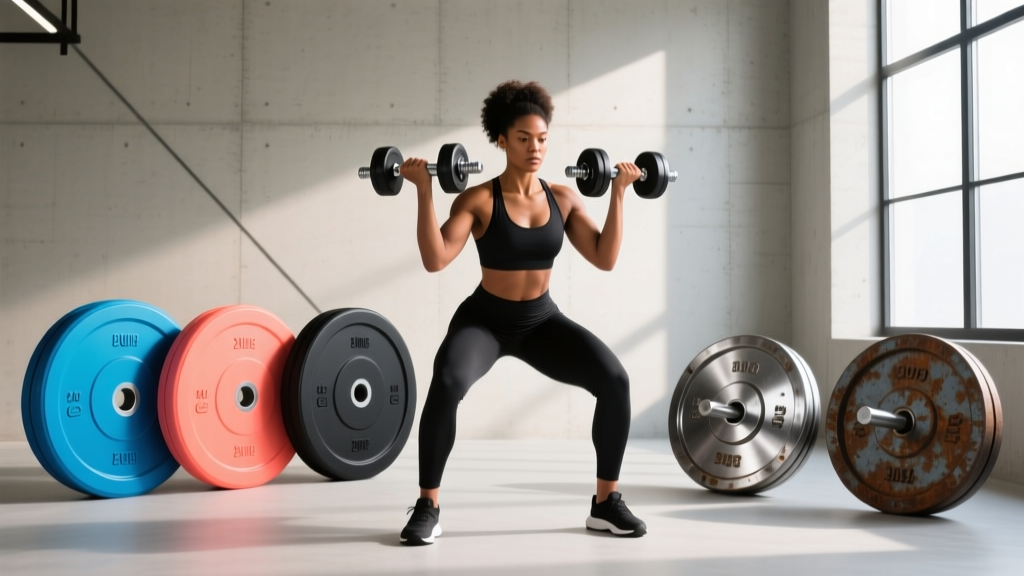
Barbell Collar Types Compared: Squats to Dumbbell Quad Exercises
Compare barbell collar and clamp types for heavy squats and adjustable dumbbell quad exercises. A beginner's step-by-step safety guide for 2026.

The Hidden Physics of Leg Day: Why Collars Matter
Welcome to leg day. Whether you are loading up an Olympic barbell for heavy back squats or assembling adjustable dumbbells for targeted dumbbell quad exercises like Bulgarian split squats, securing your weight plates is the most critical safety step you will take in the gym. In 2026, modern gym equipment is more advanced than ever, yet the fundamental physics of rotational inertia and bar whip remain unchanged. When a plate shifts mid-lift, the asymmetrical load can instantly compromise your spinal alignment or cause a catastrophic drop.
As a beginner, you might assume that gravity alone keeps plates in place. However, dynamic movements—especially the eccentric deceleration phase of a walking lunge or the explosive hip drive of a heavy squat—generate lateral forces that actively push plates outward. This step-by-step guide breaks down the exact collar and clamp types you need to secure both barbells and adjustable dumbbells, ensuring your leg day is both productive and safe.
⚠️ Beginner Safety Warning: Never rely on the lip of a barbell sleeve or the threading of a cheap spinlock dumbbell to hold plates during dynamic quad exercises. According to biomechanical data from ExRx.net, the sudden deceleration at the bottom of a dumbbell lunge exerts up to 3G of lateral force on the implement, which is more than enough to slide an unsecured 10lb plate off a standard sleeve.The 3 Primary Collar and Clamp Types (2026 Comparison)
Not all collars are created equal. The market is currently dominated by three distinct mechanisms, each suited for specific types of lifting and equipment.
1. Traditional Spring Clips
The ubiquitous spring clip is the cheapest option on the market, usually priced between $8 and $15 per pair. They operate via a simple steel coil tension mechanism. While they are perfectly adequate for static movements like the bench press or deadlift where the bar remains relatively level, they are a major liability for heavy squats or dynamic dumbbell quad exercises. Under heavy bar whip (when a loaded Olympic bar bends and snaps back), the vibration easily overcomes the 15-20 lbs of clamping force a spring clip provides, causing it to inch off the sleeve.
2. Quick-Release Clamp Collars (e.g., Rogue HG 2.0)
Clamp collars use a mechanical lever and a high-density rubber or polyurethane gasket to bite into the steel sleeve. The Rogue HG 2.0 Aluminum Collars (retailing around $45.00) are the gold standard for Olympic lifting. They deliver over 100 lbs of radial clamping force. The internal rubber gasket compresses against the sleeve, creating immense friction that completely nullifies lateral plate shift, even during the most violent barbell cleans or heavy squat walkouts.
3. Spinlock Nuts & Selectorized Pins (For Dumbbells)
When performing dumbbell quad exercises, you are likely using either adjustable spinlock dumbbells or selectorized models. Spinlock dumbbells use a threaded steel handle and a heavy metal nut. While secure, the rotational torque of your wrist during a goblet squat can slowly unscrew the nut over a 12-week training block. Conversely, modern selectorized dumbbells (like the PowerBlock Elite series) use internal magnetic or mechanical pin locks, entirely eliminating the need for external collars and making weight changes for drop-sets instantaneous.
Feature Comparison Matrix
| Collar Type | Mechanism | Avg Price (2026) | Clamping Force | Best Application |
|---|---|---|---|---|
| Spring Clips | Steel Coil Tension | $10 - $15 | Low (~15 lbs) | Static lifts, warm-ups |
| Clamp Collars (Rogue HG) | Lever + Rubber Gasket | $40 - $50 | High (~100+ lbs) | Heavy squats, Olympic lifts |
| Lock-Jaw Pro | Nylon Ratchet Clamp | $30 - $35 | Medium (~60 lbs) | CrossFit, overhead pressing |
| Spinlock / Selectorized | Threading / Internal Pin | $15 (Nut) / $300+ (Set) | N/A (Mechanical Lock) | Dumbbell quad exercises, isolation |
Step-by-Step: Securing an Olympic Barbell for Squats
Proper application of a clamp collar is just as important as the collar itself. Follow this exact sequence to guarantee zero plate migration during heavy squats.
- Wipe the Sleeve: Use a microfiber cloth to remove chalk dust and oil from the barbell sleeve. Chalk acts as a dry lubricant and will reduce the friction of your rubber gasket by up to 40%.
- Load Symmetrically: Always load the heaviest plates first, closest to the collar of the bar, working outward to the lightest plates. This minimizes the lever arm effect of the weight.
- Position the Clamp: Slide the Rogue HG 2.0 or equivalent clamp onto the sleeve until the inner rubber lip makes firm contact with the outermost weight plate.
- Engage the Lever: Pull the locking lever outward, then press it flush against the collar body. You should hear a distinct click and feel the rubber gasket compress. If the lever closes too easily, the collar is too loose; if it won't close, it is too tight. Adjust the micro-tension screw on the hinge until you achieve a firm, snapping lock.
Step-by-Step: Securing Adjustable Dumbbells for Quad Work
Dumbbell quad exercises—such as the Dumbbell Front Squat, Goblet Squat, and Walking Lunges—require immense grip endurance and wrist stability. Here is how to secure your implements based on your equipment type.
Scenario A: Using Threaded Spinlock Dumbbells
- Step 1: Load your plates, ensuring the inner and outer collars are perfectly symmetrical to maintain the dumbbell's center of gravity.
- Step 2: Thread the spinlock nut on by hand until it touches the plate.
- Step 3: Use a specialized spinlock wrench (or a standard adjustable wrench) to tighten the nut an additional quarter-turn. Never rely on hand-tightening alone for lunges.
- Step 4: Perform a 'shake test' over a rubber mat. If you hear the plates clicking against each other, the nut is too loose.
Scenario B: Using Selectorized Dumbbells (e.g., PowerBlock, Bowflex)
- Step 1: Ensure the selector pin or dial is fully engaged in the weight plate groove. A partially inserted pin is the number one cause of plate detachment during the eccentric phase of a split squat.
- Step 2: Lift the dumbbell vertically before moving it laterally. Selectorized mechanisms rely on gravity and internal sears; lifting at an extreme angle before the lock is fully seated can cause the weight stack to disengage.
Pro-Tip for Home Gym Owners: If you are doing high-rep dumbbell quad exercises like sissy squats or step-ups in a garage gym, temperature fluctuations can cause metal spinlock nuts to contract and loosen. Keep a wrench on your bench and check your tightness every 3rd set.
Expert Troubleshooting & Common Failure Modes
Even the best equipment fails if misused. Here are the most common edge cases and how to avoid them in 2026:
- Gasket Compression Set: The rubber inside clamp collars degrades over time, especially if left clamped onto the barbell in the gym's storage rack. Always remove clamp collars after your workout to let the rubber expand back to its original shape. A compressed gasket will lose up to 30% of its clamping force.
- Plastic Clamp Shatter: Nylon ratchet collars (like the Lock-Jaw) are fantastic for grip, but they become brittle in cold environments. If you train in an unheated garage gym during winter, avoid dropping nylon collars on concrete, as they can micro-fracture and snap under heavy barbell whip.
- Oversized Sleeves: Some cheaper imported barbells have sleeves that measure 50.5mm instead of the standard 50.0mm. This half-millimeter variance will prevent high-end aluminum collars from sliding onto the bar. Always measure your sleeve diameter with digital calipers before investing in premium clamps.
Final Thoughts on Leg Day Safety
Whether you are chasing a new 1RM on the back squat or grinding through high-volume dumbbell quad exercises to build teardrop quads, your focus should be on muscle contraction, not equipment failure. Investing $45 in a pair of high-quality clamp collars and taking 10 extra seconds to properly secure your adjustable dumbbells is the ultimate insurance policy for your joints and your floor. Train hard, but train smart.
More gear to consider
All reviews
Dumbbell Front Raise for Shoulder: Rubber vs Urethane Care

Beyond Bowflex SelectTech 552 Dumbbells: Barbell Knurling Guide
Olympic Barbell Setup & Plank Dumbbell Drag Muscles Worked Guide
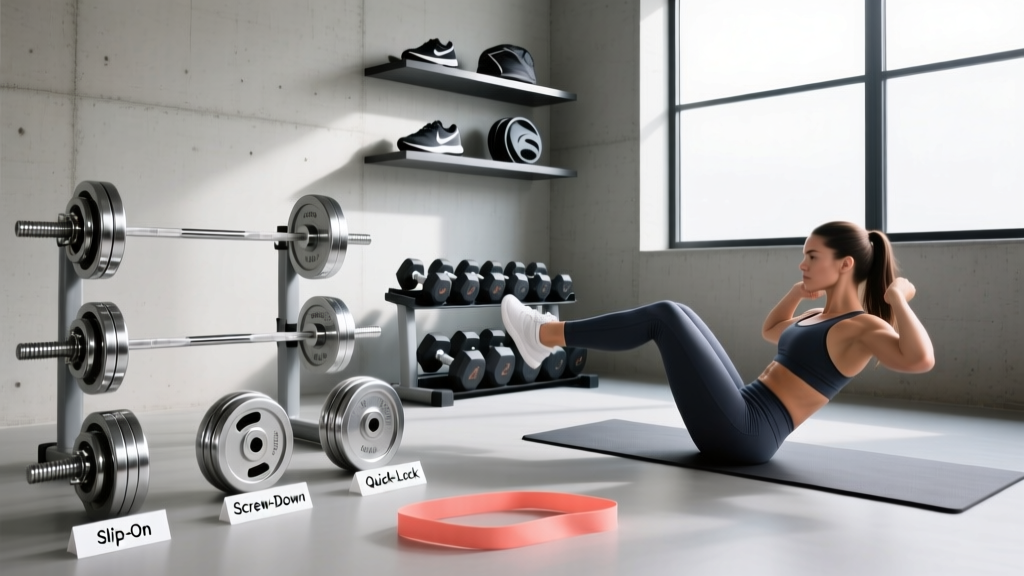
Barbell Collar Types Comparison & Lower Ab Workout with Dumbbells
Cast Iron vs Competition Kettlebells: Dumbbell Squat to Shoulder Press