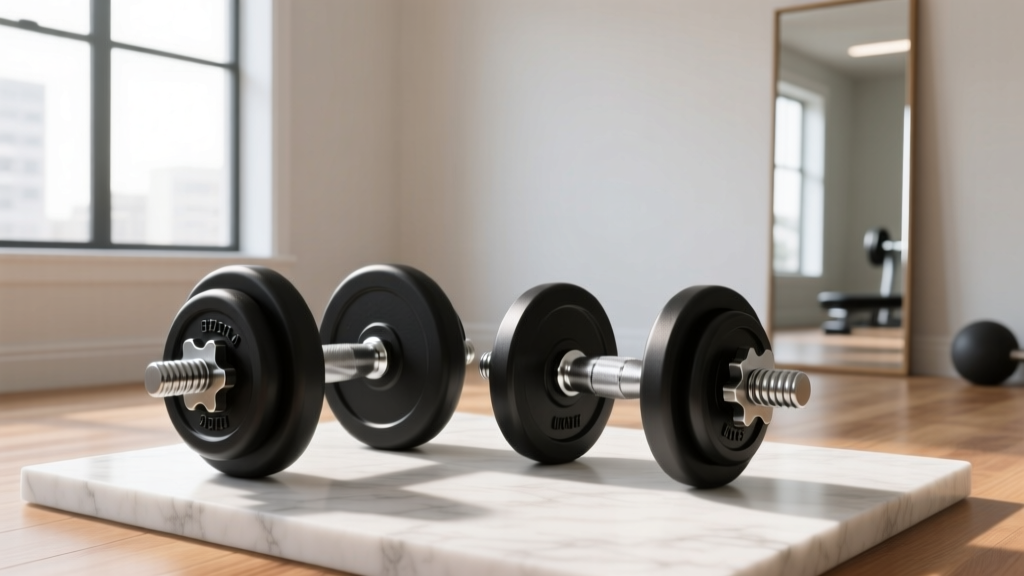
Bumper Plate vs Iron Plate for a Beginner Dumbbell Program
Bumper plate vs iron plate comparison for your home gym. Discover which weight plates best support a beginner dumbbell program and barbell routine.

The Home Gym Dilemma: Upgrading for a Beginner Dumbbell Program
When you first commit to a structured beginner dumbbell program, fixed hex dumbbells or entry-level adjustable sets usually get the job done. However, as your strength adapts and progressive overload demands heavier weights, most lifters quickly outgrow their starter gear. The natural next step is investing in Olympic loadable dumbbell handles or a standard barbell setup. This transition forces a critical purchasing decision: should you buy bumper plates or traditional cast iron plates?
As of 2026, the fitness equipment market has seen a massive influx of hybrid home gyms, making the bumper plate vs iron plate comparison more relevant than ever. While bumpers are the undisputed kings of Olympic weightlifting and CrossFit, cast iron remains the gold standard for bodybuilding and powerlifting. In this hands-on review, we break down the exact specifications, failure modes, and real-world applications of both plate types to help you build the ultimate weight arsenal for your home gym.
Bumper Plates vs. Cast Iron Plates: The Core Differences
Before diving into specific brand reviews, it is essential to understand the material science and physical dimensions that separate these two plate categories. According to equipment testing by Garage Gym Reviews, the primary differentiator is the density of the material and its intended drop tolerance.
| Feature | Bumper Plates (Rubber/Urethane) | Cast Iron Plates |
|---|---|---|
| Primary Material | Virgin or Crumb Rubber, Urethane | Cast Iron, Machined Steel |
| Shore A Durometer | 80-90 (High bounce resistance) | N/A (Solid metal) |
| Drop Rating | High (Designed for overhead drops) | Low (Will crack concrete or plates) |
| Noise Level | Low (Thud) | High (Metallic clang) |
| Average Cost (2026) | $2.50 - $3.50 per lb | $1.50 - $2.20 per lb |
| Thickness (10lb Plate) | ~1.05 inches (Full 450mm diameter) | ~0.75 inches (Smaller diameter) |
The Adjustable Dumbbell Sleeve Problem (Crucial for Dumbbell Programs)
Here is a non-obvious edge case that catches many home gym owners off guard. If your beginner dumbbell program relies on standard 15-inch Olympic loadable dumbbell handles (like the Rogue Loadable Dumbbell Handles), you only have about 5.5 inches of usable sleeve space per side.
Because bumper plates are exceptionally thick to maintain a uniform 450mm diameter across all weights, you might only fit two or three 10-pound bumpers on a dumbbell sleeve before running out of room. Cast iron plates, conversely, are much denser and thinner. You can easily load 100+ pounds of iron onto a single dumbbell handle. If your program requires heavy dumbbell presses or farmer's walks, iron plates offer vastly superior weight density.
Hands-On Review: Top Bumper Plates for Home Gyms
If your training involves Olympic lifts, or if your garage gym lacks heavy-duty rubber flooring, bumpers are mandatory. We tested the top models on the market to see which offers the best dead bounce and durability.
1. Rogue Echo Bumper Plates
The Rogue Echo series remains the benchmark for home gym bumpers. Featuring a durometer rating of 85, these plates offer a highly controlled 'dead bounce,' meaning they won't ricochet back at your shins when dropped from overhead. The stainless steel insert is deeply hooked, preventing the common failure mode where the metal hub pulls through the rubber after repeated drops. Priced around $2.90 per pound, they are an investment, but their longevity is unmatched.
2. Rep Fitness Black Bumper Plates
For a slightly more budget-friendly option, Rep Fitness offers virgin rubber bumpers that rival Rogue in performance. We appreciate the matte finish, which resists dust accumulation better than glossy competitors. However, we did note that the 10-pound Rep bumpers are slightly more prone to 'taco-ing' (folding in on themselves) if dropped repeatedly on their edge without proper flooring, a known vulnerability for thin 10lb bumpers across all brands.
Hands-On Review: Top Cast Iron Plates for Beginners
For strict hypertrophy, powerlifting, and heavy dumbbell work, cast iron is superior. As noted in comparative analyses by BarBend, iron plates allow for micro-loading and maximize sleeve real estate.
1. York Legacy Cast Iron Plates
York Legacy plates are the closest thing to commercial gym perfection for home use. They feature machined edges, meaning the flat surfaces are ground down for a precise fit against the barbell collar. This eliminates the annoying 'clanking' and shifting that occurs with cheap, uneven cast iron. At roughly $1.80 per pound, they are the ultimate choice for lifters running a heavy dumbbell or barbell program where space on the sleeve is at a premium.
2. Titan Fitness Classic Cast Iron
Titan offers a rugged, traditional painted iron plate. While the finish is slightly rougher than York's machined options, the price point (often dipping below $1.50 per pound during sales) makes it the undisputed king of budget home gyms. We recommend wiping them down with a light coat of mineral oil upon arrival to prevent surface oxidation, especially if your gym is in a humid garage or basement.
⚠️ Expert Warning: Dropping Iron Plates
Never drop cast iron plates from shoulder height or overhead onto bare concrete. The kinetic energy will shatter the plate, bend your barbell sleeve, and permanently crack your foundation. If you buy iron, you must practice controlled eccentrics or invest in 3/4-inch thick horse stall mats to absorb low-level impacts from deadlifts.
Failure Modes: How Plates Actually Break
Understanding how equipment fails helps you make a smarter purchase. Based on our long-term testing, here are the most common failure modes for both plate types:
- Bumper Hub Separation: In low-quality crumb rubber bumpers, the steel center insert can detach from the rubber matrix after 500+ drops. Always look for 'hooked' or 'flanged' inserts that grip the rubber mechanically.
- Bumper Degradation: Cheap rubber exposed to direct UV sunlight or extreme temperature fluctuations will dry out, crack, and flake. Virgin rubber and urethane resist this far better.
- Iron Oxidation and Chipping: Painted iron plates will chip when loaded onto bars with rough knurling or sleeves. Once the paint chips, ambient humidity causes rust. Machined or zinc-plated iron solves this but costs 20-30% more.
Expert Verdict: Which Should You Buy?
Your choice ultimately depends on the specific exercises in your routine and your gym environment. Use this decision framework to finalize your cart:
- Choose Bumper Plates If: You are doing Olympic weightlifting (cleans, snatches), you have neighbors directly below or adjacent to your gym who require noise dampening, or you refuse to buy heavy-duty flooring.
- Choose Cast Iron If: You are strictly running a bodybuilding or powerlifting routine, you are using loadable dumbbell handles for heavy presses and need maximum sleeve space, or you are on a strict budget and want to maximize total weight purchased.
- The Hybrid Approach: Many advanced home gym owners buy a set of iron plates (10s, 25s, 45s) for heavy barbell and dumbbell work, and supplement with a pair of 10lb and 15lb competition bumpers for technique work and safe dropping.
Frequently Asked Questions
Can I mix bumper plates and iron plates on the same bar?
Yes, but with a caveat. You should always place the bumper plate on the sleeve first (closest to the collar), followed by the iron plates. This ensures the bumper absorbs the shock of the drop. If the iron plate is placed on the outside and hits the floor first, it will transfer the shock directly into the barbell sleeve and the concrete, potentially bending your bar.
Are urethane plates better than rubber bumpers?
Urethane is vastly superior in terms of durability, odor, and UV resistance, which is why it is the standard in high-end commercial gyms. However, urethane plates typically cost between $4.00 and $6.00 per pound, making them cost-prohibitive for most beginners outfitting a home gym. For a beginner dumbbell program and foundational barbell work, high-quality virgin rubber is more than sufficient.
For more detailed guides on outfitting your space, refer to the National Strength and Conditioning Association (NSCA) resources on home gym safety and equipment kinetics. Equipping your home gym correctly ensures your beginner dumbbell program transitions seamlessly into a lifelong lifting journey.
More gear to consider
All reviews
Best Dumbbell Back Exercises: Olympic vs Standard Plate Mistakes

EZ Curl vs Straight Bar & Rubber vs Urethane Dumbbells: 2026 Trends
Barbell Collar Comparison & Resistance Band Dumbbell Setup
Loadable Dumbbell Care for the Lying Tricep Extension with Dumbbells
Troubleshooting Grip: Dumbbell Alternate Bicep Curl & Barbell Knurling
