Collar Comparison & Short Head Bicep Exercises Dumbbell Gear
Compare barbell collar and clamp types for heavy lifts, plus securing adjustable dumbbells for strict short head bicep exercises dumbbell routines.

The Biomechanics of Weight Security: Beyond Basic Safety
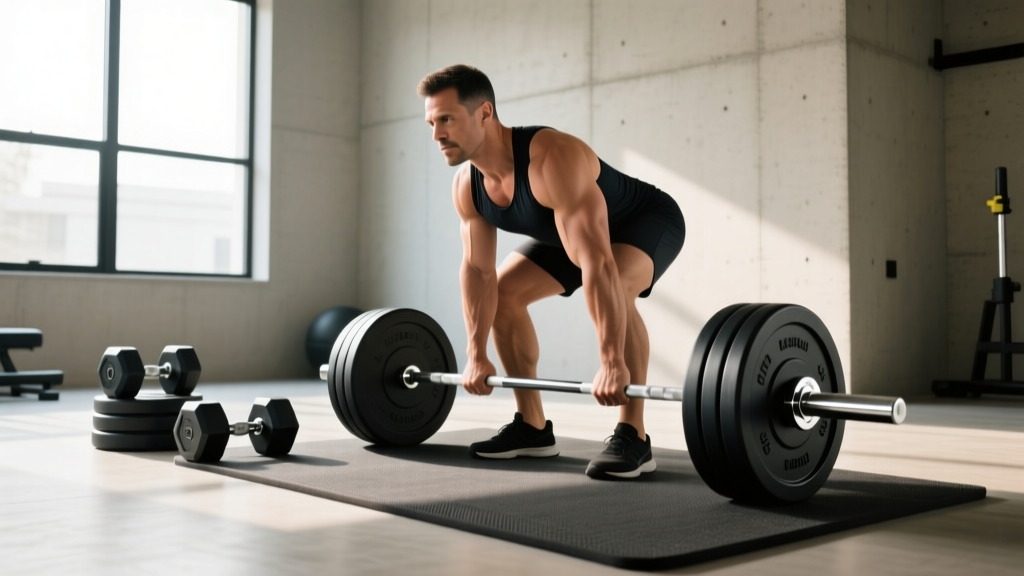
Weight security is not merely a safety precaution to prevent plates from sliding off a sleeve; it is a fundamental variable in exercise biomechanics. According to the kinesiological data archived by ExRx.net, any unintended shift in a load's center of mass alters the moment arm. This forces stabilizer muscles to compensate, reducing the target muscle's time under tension and potentially placing asymmetrical shear stress on the joints.
As of 2026, the fitness equipment market offers a highly fragmented landscape of barbell collars and dumbbell clamps. From $12 spring clips to $85 IWF-certified aluminum competition collars, selecting the right securing mechanism requires an understanding of your specific training modality. Whether you are dropping heavy cleans from the shoulder or performing strict isolation work, the collar you choose dictates the mechanical integrity of the lift.
According to the International Weightlifting Federation (IWF) Technical Rules, competition collars must weigh exactly 2.5 kg (5.5 lbs) each. This standardized weight is factored into the total lifted load, proving that collar mass is not an afterthought—it is an integral, calculated component of the barbell system.
Head-to-Head: Barbell Collar & Clamp Types Comparison
To determine which collar belongs on your barbell, we must evaluate the four dominant designs currently on the market. Below is a comprehensive comparison matrix detailing specifications, pricing, and ideal use cases.
| Collar Type | Top Model (2026) | Weight (per pair) | Avg. Price | Best Application | Primary Drawback |
|---|---|---|---|---|---|
| Spring Clip | Rogue Spring Clips | 0.2 lbs | $12 | Light accessory work, high-rep WODs | Slips on smooth sleeves; dangerous for heavy drops |
| Friction Clamp | Lock-Jaw Pro | 1.1 lbs | $35 | CrossFit, rapid barbell transitions | Nylon housing can crack if dropped on concrete from >5 ft |
| IWF Competition | Rogue HG-2 Aluminum | 11.0 lbs (5kg) | $85 | Heavy Olympic lifts, Powerlifting | Overkill for accessories; heavy to carry around the gym |
| Lever-Action | OSO Barbell Clamps | 1.5 lbs | $60 | Powerlifting, heavy bench/squat | Lever mechanism can pinch fingers if rushed during loading |
Deep Dive: Friction vs. Mechanical Lock
Friction clamps like the Lock-Jaw Pro utilize a glass-reinforced nylon body and an internal TPU (thermoplastic polyurethane) pad to grip the barbell sleeve. They are exceptionally fast to apply and remove, making them the undisputed champion of high-intensity interval training where seconds matter. However, they rely entirely on radial pressure. If the barbell sleeve is coated in a slick zinc or hard chrome finish, and the lifter performs a violent overhead drop, the kinetic energy can overcome the friction coefficient, causing the clamp to slide outward.
Conversely, mechanical lock collars (like the OSO or traditional spinlocks) use a physical barrier or threaded mechanism to completely eliminate lateral movement. While slower to apply, they offer a 100% guarantee against plate shift, which is non-negotiable for heavy eccentric loading.
Dumbbell Security: Short Head Bicep Exercises Dumbbell Protocols
While barbell collars dominate the conversation, dumbbell security is equally critical for advanced isolation work. Many lifters overlook sleeve security when performing short head bicep exercises dumbbell variations, such as wide-grip supinated preacher curls, spider curls, or cross-body hammer curls.
The Anatomy of the Short Head and Torque Curves
The biceps brachii consists of the long head (outer) and the short head (inner). The short head originates at the coracoid process of the scapula and is maximally recruited when the elbows are positioned in front of the torso or when a wider, supinated grip is utilized. When programming short head bicep exercises dumbbell routines, the lifter is typically chasing a very specific torque curve and peak contraction.
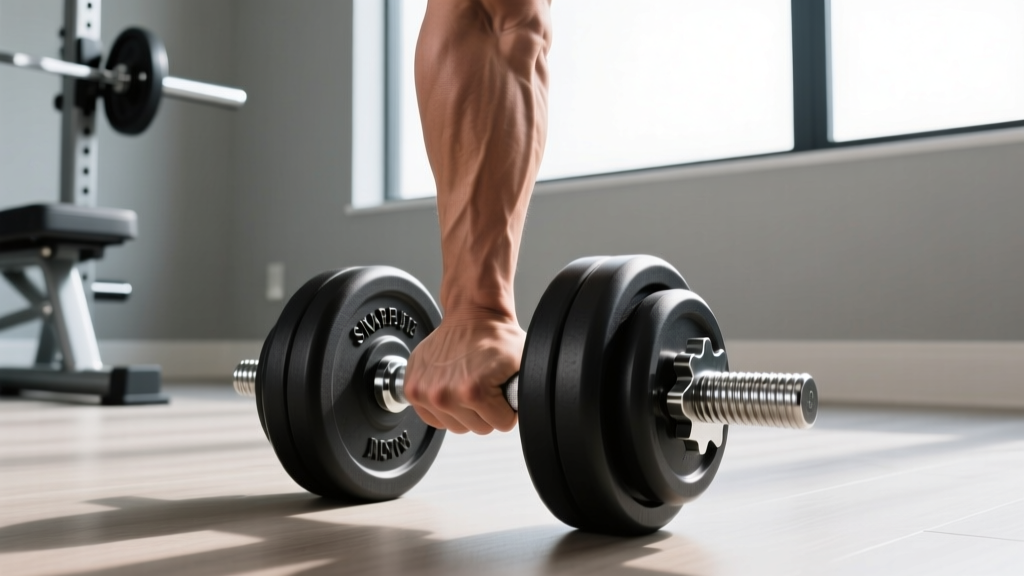
If you are using loadable dumbbell handles (such as the Rogue Loadable Dumbbell Handles or Titan Fitness Hex Handles) rather than fixed-weight dumbbells, plate rattle is a major issue. During a strict preacher curl, the eccentric phase requires immense neuromuscular control. If a 2.5 lb plate slides even half an inch on the short 6.5-inch sleeve of a loadable dumbbell, the center of mass shifts. This micro-shift forces the brachioradialis and anterior deltoid to stabilize the load, instantly robbing the short head of the biceps of its targeted isolation.
Pro Tip for Dumbbell Sleeves: Standard spring clips take up nearly 1.5 inches of sleeve space. On a loadable dumbbell, this eats into your grip clearance and often fails to grip the smooth stainless steel coating securely. For dumbbell isolation work, invest in specialized low-profile micro-clamps or precision-machined spinlock handles to ensure zero lateral play.Real-World Failure Modes & Edge Cases
Through years of testing in commercial and garage gym environments, we have documented specific failure modes that manufacturers rarely disclose in their marketing materials.
- The Knurled Sleeve Problem: Many modern power bars feature aggressive end-knurling on the sleeves to help keep collars in place during heavy squats. However, this knurling acts like a cheese grater on the internal TPU pads of friction clamps. If you use nylon clamps on a knurled sleeve, expect to replace the internal pads every 6 to 8 months.
- Temperature-Dependent Elasticity: Spring clips rely on the tensile strength of spring steel. In unheated garage gyms during winter months (below 40°F / 4°C), the metal becomes more brittle, and the tension profile changes, leading to a weaker grip on the sleeve. Always store spring clips indoors if you train in extreme cold.
- Diameter Tolerances: Not all Olympic sleeves are exactly 50mm. Budget barbells often measure 48.5mm to 49mm. Competition collars like the Rogue HG-2 are machined to exact 50mm IWF tolerances. If used on an undersized budget barbell, the HG-2 will rattle and fail to lock securely, creating a hazardous situation during overhead presses.
The FitGearPulse Buying Framework
To finalize your purchasing decision, apply this simple framework based on your primary training style:
- The Olympic Weightlifter: You have no choice. You need IWF-certified 2.5kg aluminum collars. The Rogue HG-2 is the gold standard for 2026, offering flawless machining and a reliable latch mechanism that withstands thousands of drops from the overhead position.
- The CrossFit Athlete / Group Class Coach: Speed is your priority. Stock your gym with Lock-Jaw Pro friction clamps. They are color-coded, easy for beginners to understand, and allow for rapid barbell transitions during complex WODs. Just instruct athletes not to drop the barbell directly onto the clamps from overhead.
- The Bodybuilder / Isolation Specialist: If your routine heavily features strict isolation movements—including the aforementioned short head bicep exercises dumbbell protocols—abandon spring clips entirely. Invest in low-profile lever clamps or high-quality spinlock dumbbell handles to guarantee absolute mechanical silence and zero plate shift during peak contractions.
Ultimately, treating your collars and clamps as vital pieces of precision equipment rather than cheap afterthoughts will yield immediate improvements in both lifting safety and target muscle recruitment.
More gear to consider
All reviews
Power Rack vs Squat Rack vs Stand: 20 lb Dumbbell Workout Rigs

Power Rack vs Squat Rack vs Stand Setup & Water Bottle Dumbbells

Maximize Your Biceps Workout by Dumbbells: 2026 Adjustable Guide

Beyond the Dumbbell Chest Press at Home: EZ vs Straight Bar Trends
Cast Iron vs Competition Kettlebells: Dumbbell Overhead Triceps Zones