Olympic vs Standard Plates: Full Body Circuit with Dumbbells
Compare Olympic vs standard plates for your 2026 home gym. Learn how plate selection impacts heavy lifts and a full body circuit with dumbbells.

The Home Gym Foundation: Choosing Your Iron
Building a comprehensive home gym in 2026 requires more than just buying whatever is on sale; it demands a strategic approach to equipment interoperability. One of the most common crossroads for lifters is the debate between standard and Olympic weight plates. While this decision primarily dictates your barbell setup, it has a massive, often overlooked downstream effect on your ability to execute a high-intensity full body circuit with dumbbells. If you choose the wrong foundational plate system, you may find yourself bottlenecked by inefficient equipment transitions, ultimately sabotaging your conditioning work.
In this head-to-head comparison, we will dissect the metallurgical, dimensional, and functional differences between 1-inch standard plates and 2-inch Olympic plates. More importantly, we will explore how your plate selection influences your dumbbell training, providing a definitive gear guide for athletes who want to move heavy barbells and crush rapid-fire dumbbell circuits in the same garage.
The Tale of the Tape: Standard vs. Olympic Specifications
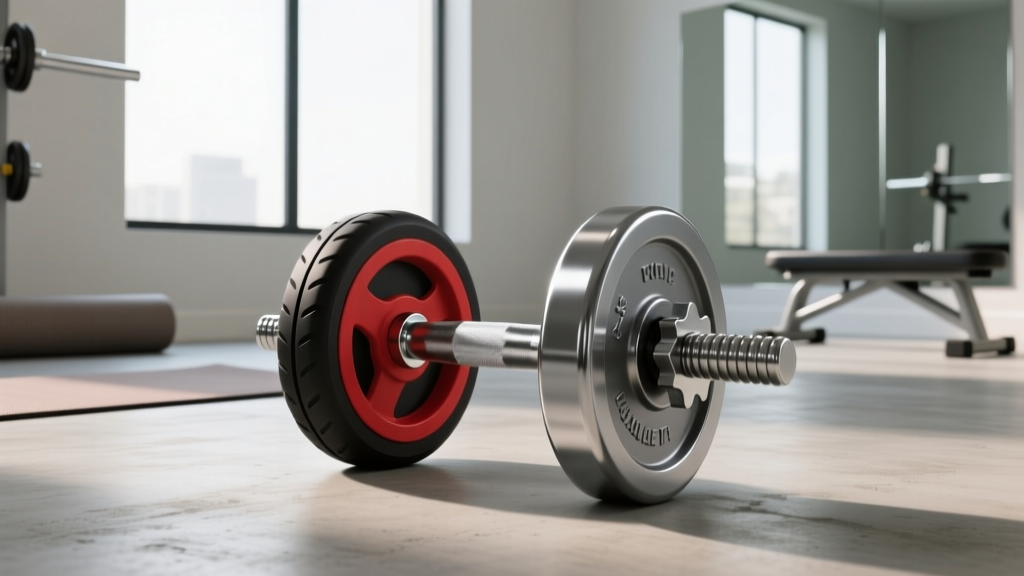
Before diving into programming and circuit mechanics, we must establish the physical differences between these two plate categories. The primary distinction lies in the center hole diameter and the corresponding sleeve size on the barbells and dumbbell handles.
| Feature | Standard Plates (1-Inch) | Olympic Plates (2-Inch) |
|---|---|---|
| Center Hole Diameter | 1 inch (25.4 mm) | 2 inches (50.8 mm) |
| Max Load Capacity | Typically 200 - 300 lbs | Typically 500 - 1,000+ lbs |
| Common Materials | Cast Iron, Cement/Vinyl | Cast Iron, Steel-Hub Rubber, Urethane |
| 2026 Avg Cost Per Pound | $1.20 - $1.80 / lb | $1.80 - $3.50 / lb |
| Dumbbell Handle Type | Threaded Spin-Lock | N/A (Requires dedicated adjustable DBs) |
Standard plates are often the entry point for beginners due to their lower cost and widespread availability at big-box sporting goods stores. Olympic plates, characterized by their 2-inch center hole, are the undisputed standard in commercial gyms, powerlifting federations, and serious home garages.
Barbell Foundations: Where Olympic Plates Dominate
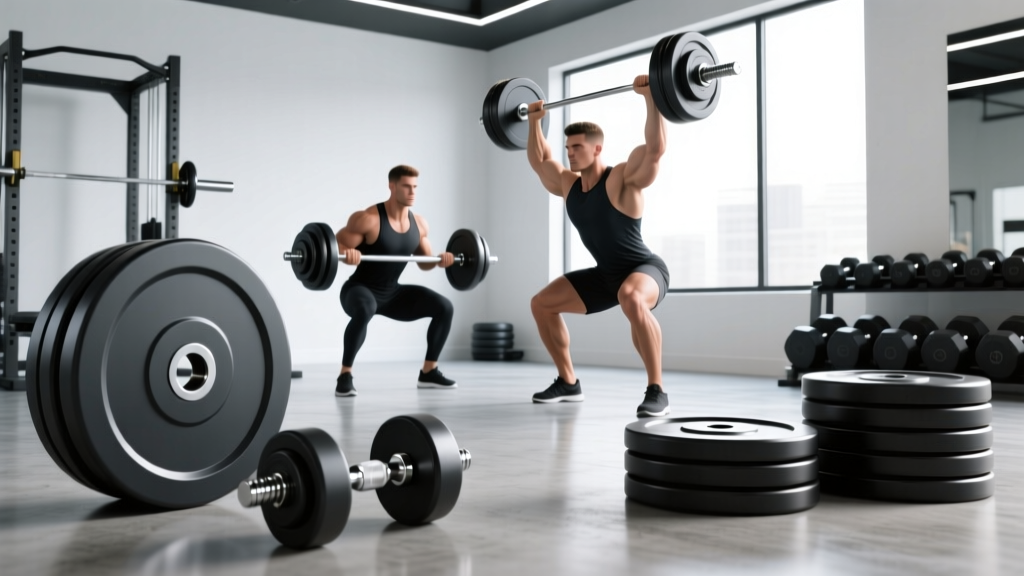
If your training involves heavy compound movements like deadlifts, squats, or Olympic lifts, the 2-inch Olympic system is non-negotiable. The 2-inch steel hubs found on high-quality Olympic plates—such as the Rogue Echo Bumper Plates V2—distribute force evenly across the barbell sleeve, reducing wear and tear and preventing the plates from warping under heavy loads.
Furthermore, Olympic plates offer superior dimensional consistency. A 45-pound cast-iron Olympic plate has a standardized diameter of 450mm (approx. 17.7 inches), ensuring that when you set up for a floor-based movement like a barbell glute bridge or a Pendlay row, the starting height is always biomechanically correct. Standard 1-inch cast iron plates vary wildly in diameter depending on the manufacturer, which can throw off your pulling mechanics and increase the risk of lower back strain.
The Standard Plate Trap: Cement-Filled Vinyl
Many budget-conscious lifters opt for cement-filled vinyl standard plates. While cheap (often under $1.00/lb), these plates are notoriously bulky. A 25-pound cement plate can be as thick as a 45-pound cast-iron Olympic plate. This excessive thickness limits how much weight you can load onto a standard 1-inch dumbbell handle, severely capping your progressive overload potential.
The Dumbbell Dilemma: Why Standard Plates Ruin Circuits
Here is where the intersection of plate selection and conditioning becomes critical. Many lifters assume that buying standard plates will save them money because they can slide those same 1-inch plates onto a pair of threaded spin-lock dumbbell handles. On paper, this seems like a cost-effective 2-in-1 solution. In practice, it is a recipe for ruined workouts.
When programming a full body circuit with dumbbells, the transitional speed between exercises is paramount. The goal of a high-intensity circuit is to keep your heart rate elevated, targeting both muscular endurance and cardiovascular output. According to the American Council on Exercise (ACE), minimizing rest intervals between resistance exercises is key to maximizing the metabolic demand of circuit training.
The Transition Tax of Spin-Lock Handles
If you are using 1-inch standard plates on spin-lock dumbbell handles, changing the weight requires unscrewing the collars, sliding off the plates, adding new ones, and screwing the collars back in. This process takes 45 to 90 seconds per dumbbell. In a circuit where you need to drop from 50lb goblet squats to 20lb lateral raises in under 10 seconds, spin-lock handles are entirely useless. Your heart rate will crash, and the metabolic stimulus of the circuit will be lost.
The 2026 Hybrid Solution: Olympic Plates + Adjustable Dumbbells
To build a home gym that supports both heavy barbell lifting and rapid-fire dumbbell circuits, you must decouple your barbell plates from your dumbbells. The most efficient, space-saving, and time-efficient setup in 2026 involves purchasing Olympic plates for your barbell and investing in a high-quality adjustable dumbbell system for your circuits.
- The Barbell Setup: Invest in a 2-inch Olympic barbell and a set of cast-iron or rubber-grip Olympic plates. Store them on a vertical plate tree attached to a robust rig like the Titan T-3 Series Power Rack.
- The Dumbbell Setup: Purchase a pair of dial-adjustable or selectorized dumbbells (such as the Nuobell 80lb Adjustable Dumbbells or PowerBlock Pro EXPs). These allow you to change weights in literally 1.5 seconds with a simple twist of the wrist or pull of a pin.
This hybrid approach costs more upfront than buying a cheap 1-inch standard plate kit, but it completely unlocks your ability to train like an athlete. You can perform heavy 5x5 barbell back squats, rack the bar, and immediately transition into a brutal full body circuit with dumbbells without missing a beat.
Sample Peripheral Heart Action (PHA) Circuit
To illustrate the necessity of rapid weight transitions, here is a sample Peripheral Heart Action (PHA) circuit. PHA training alternates between upper and lower body movements to force blood to constantly circulate from your extremities to your core and back, creating a massive cardiovascular demand. Note: This requires adjustable dumbbells, not standard plate-loaded spin-lock handles.
- Dumbbell Goblet Squats (Heavy: 50-70 lbs) - 12 Reps
- Transition: Drop DBs, grab lighter pair in 5 seconds.
- Dumbbell Push Press (Moderate: 25-35 lbs) - 10 Reps
- Transition: Drop DBs, grab heavier pair in 5 seconds.
- Dumbbell Reverse Lunges (Moderate/Heavy: 35-50 lbs) - 10 Reps per leg
- Transition: Drop DBs, grab lighter pair in 5 seconds.
- Dumbbell Bent-Over Rows (Moderate: 30-40 lbs) - 12 Reps
- Rest 90 seconds. Repeat for 4 total rounds.
Attempting this circuit with 1-inch standard plates and spin-lock collars would turn a highly effective 20-minute metabolic conditioning session into a frustrating, hour-long chore of unscrewing metal nuts.
Frequently Asked Questions
Can I use Olympic plates on standard dumbbell handles?
No. Olympic plates have a 2-inch center hole, while standard dumbbell handles have a 1-inch diameter sleeve. They are physically incompatible. You must use dedicated adjustable dumbbells or specialized 2-inch dumbbell handles (like plate-loadable Olympic dumbbell handles, which are cumbersome for fast circuits).
Are standard cast-iron plates worth it for a beginner?
Standard cast-iron plates are acceptable if you are strictly on a budget and only plan to do slow, traditional bodybuilding splits where rest periods are 2-3 minutes long. However, if your goal includes high-intensity interval training, CrossFit-style metcons, or a fast-paced full body circuit with dumbbells, the 1-inch system will quickly become a hindrance.
How much floor space does a hybrid Olympic/Adjustable DB setup require?
Surprisingly little. A standard power rack with a plate storage tree takes up about 4x4 feet. A single adjustable dumbbell set replaces an entire 500-pound rack of fixed rubber dumbbells, fitting neatly on a 2-foot shelf or the floor inside your rack. This makes the hybrid setup the ultimate space-saver for modern home gyms.
More gear to consider
All reviews
Olympic Barbell Buying Guide & Dumbbell Zottman Curl Setup

Olympic Barbell Buying Guide: Knurling vs Lat Pulldown Smith Machine
Barbell Curl with Dumbbells? Biomechanics & Neoprene Weight Guide

2026 Bumper vs Iron Plate Budget & One Arm Dumbbell Row GIF Guide

EZ Curl Bar vs Straight Bar Care & Dumbbell vs Resistance Band Life