Optimizing Gym Space for Different Dumbbell Curls: Hex vs Urethane
Discover how rubber hex vs urethane dumbbells impact home gym layouts, rack footprints, and clearance when performing different dumbbell curls.

The Spatial Challenge of Arm Training in Compact Gyms
As home gym footprints continue to shrink in 2026—with many lifters converting 5x5 apartment nooks or cramped garage corners into dedicated training zones—spatial optimization is no longer optional. When your programming prioritizes arm hypertrophy, executing different dumbbell curls in a confined area introduces unique geometric and logistical challenges. It is not just about having the correct weight; it is about the physical volume of the implement, the rack footprint, and the 'drop zone' required for safe training to failure.
This brings us to a critical equipment debate for space-constrained lifters: rubber hex dumbbells versus urethane dumbbells. While both serve the same fundamental purpose, their material density, shape, and storage requirements drastically alter how you design your layout and perform specific curl variations. Below, we break down the exact spatial metrics, clearance issues, and layout frameworks you need to choose the right implement for your environment.
The Geometry of the Bell: Density and Exercise Clearance
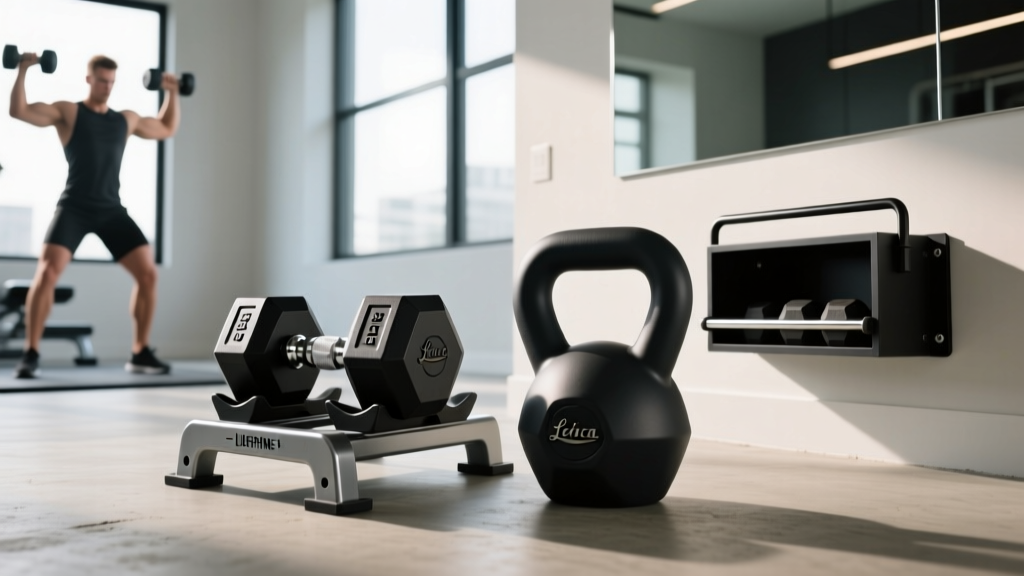
The most significant spatial difference between rubber hex and urethane dumbbells lies in material density. High-durometer polyurethane (urethane) is roughly 15% to 20% denser than standard vulcanized rubber. This means a urethane dumbbell packs the same mass into a noticeably smaller physical volume.
Real-World Dimensional Comparison (50 lb Dumbbell)
- Rep Fitness Rubber Hex: Head width spans approximately 6.2 inches across the flats.
- Rogue Fitness Urethane: Head diameter measures roughly 4.8 inches.
Why does a 1.4-inch difference matter? When performing different dumbbell curls from the ExRx Exercise Directory, such as cross-body hammer curls or tight supinating Zottman curls, spatial clearance is paramount. In a cramped layout where your adjustable bench (like the popular Rep AB-3100 2.0) is pushed near a wall, the bulky 6.2-inch heads of rubber hex dumbbells can easily collide with the bench frame, your own torso, or a nearby wall during the eccentric phase of an incline curl. The compact 4.8-inch profile of urethane allows for an unobstructed range of motion, even when your bench is positioned just 18 inches from a drywall partition.
Rack Footprint and Storage Layouts
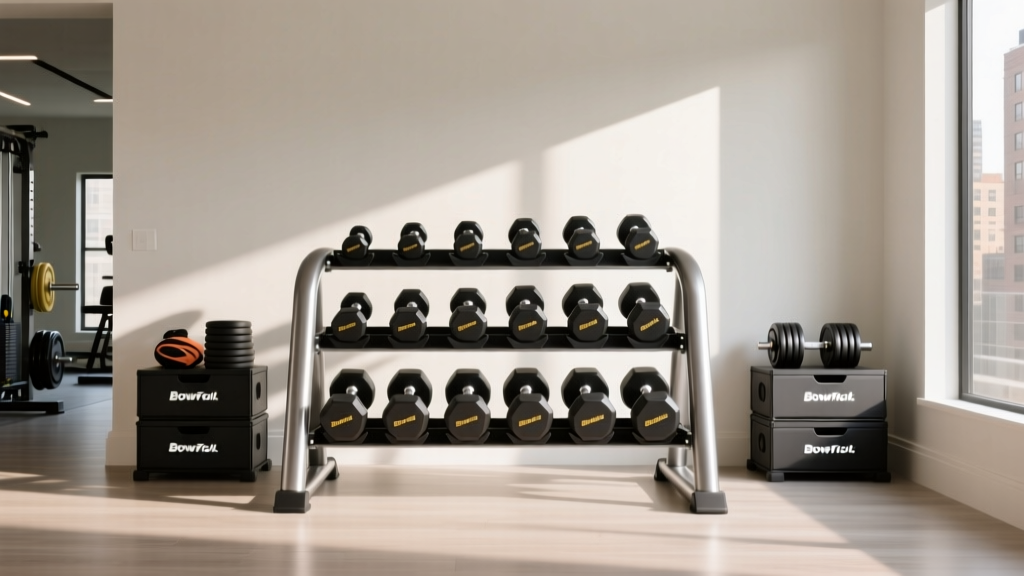
Your storage footprint dictates your usable floor space. Rubber hex dumbbells and round urethane dumbbells require entirely different racking solutions, which impacts the square footage of your gym layout.
| Feature | Rubber Hex Dumbbells (5-50 lb Set) | Urethane Round Dumbbells (5-50 lb Set) |
|---|---|---|
| Optimal Rack Type | 3-Tier Horizontal A-Frame | Vertical Saddle Rack or Compact Tray |
| Rack Dimensions (W x D x H) | 48' x 28' x 30' | 36' x 20' x 42' |
| Total Floor Footprint | 9.3 sq. ft. | 5.0 sq. ft. |
| Wall Clearance Needed | 32' (for user access) | 24' (for vertical lifting) |
By opting for urethane and a vertical saddle rack, you reclaim over 4 square feet of floor space. In a micro-gym, this reclaimed space is exactly what you need to safely execute wide-stance movements or set up a dedicated drop-zone for heavy alternating curls.
Floor Space and 'Drop Zone' Dynamics
When pushing to mechanical failure on heavy sets of different dumbbell curls, you must eventually drop the weights. The shape of the dumbbell head dictates your floor layout requirements.
The Hex Advantage: Anti-Roll Security
Rubber hex dumbbells are the undisputed kings of tight, multi-purpose spaces. Because they do not roll, you can drop them directly beside your bench or even in a narrow hallway gym without fear of them rolling into a mirror, a doorframe, or your own ankle. If your layout forces you to train within 2 feet of fragile equipment or walls, hex is the mandatory choice.
The Urethane Challenge: Managing the Roll
Round urethane dumbbells will roll upon impact. To safely perform heavy dumbbell curls in a home gym with urethane, your layout must include a designated, buffered drop zone. This requires laying down interlocking 3/4-inch horse stall mats and ensuring a 3-foot radius around your bench is completely clear of walls and obstacles.
Expert Layout Tip: If you choose urethane for its space-saving rack profile but lack the floor space for a wide drop zone, position your bench parallel to a wall and place a heavy-duty folding mat against the baseboard. This creates a 'soft catch' barrier that stops rolling dumbbells without requiring a massive floor buffer.
Acoustic Dampening and Off-Gassing in Enclosed Spaces
Space optimization is not just about physical dimensions; it is also about environmental quality. Many compact home gyms are located in spare bedrooms, basements, or attached garages with poor ventilation.
- Rubber Hex Odor: Budget and mid-tier rubber hex dumbbells (typically priced between $1.50 and $2.00 per lb) are notorious for off-gassing volatile organic compounds (VOCs). In a small, unventilated 5x5 room, this smell can become overwhelming and cause headaches during high-exertion sets like strict preacher curls.
- Urethane Acoustics & Air Quality: Premium urethane dumbbells (priced between $3.50 and $5.00+ per lb) are virtually odorless once cured. Furthermore, high-density urethane absorbs acoustic shock better than hard rubber. When you drop a 40 lb urethane dumbbell after a grueling set of hammer curls, the decibel output is noticeably lower, making it the superior choice for apartment dwellers with downstairs neighbors.
The 2026 Space-Premium Decision Framework
Use this matrix to finalize your purchase based on your specific spatial constraints:
- Choose Rubber Hex IF: Your budget is under $2.00/lb, your gym is in a well-ventilated garage, and you have less than 2 feet of clearance between your bench and the walls (requiring anti-roll drop zones).
- Choose Urethane IF: You are training in an indoor spare room or apartment, you need to minimize rack depth to under 20 inches, and you require a compact bell profile to avoid bench-frame collisions during cross-body and incline curls.
Step-by-Step Layout for a 6x6 Arm Training Zone
If you are dedicating a small 6x6 foot corner specifically for upper-body isolation and different dumbbell curls, follow this optimized layout sequence:
- The Anchor: Place a vertical urethane saddle rack (e.g., Rogue 3-Tier Dumbbell Rack) in the back corner. This utilizes dead vertical space and keeps the floor open.
- The Bench: Position an adjustable FID bench at a 45-degree angle to the rack. This allows you to grab the weights and immediately sit, pivoting into an incline curl without needing to walk backward in a tight space.
- The Drop Zone: Lay a single 4x6 foot, 3/4-inch rubber stall mat directly under the bench. Because you are using compact urethane, the mat is wide enough to catch any rolling bells before they escape the training zone.
- The Mirror: Mount a shatterproof acrylic mirror on the wall directly facing the bench. In a 6x6 space, a mirror creates the psychological illusion of depth and allows you to check elbow tracking during strict supinating curls without needing a spotter.
Final Verdict on Spatial Efficiency
When designing a home gym layout centered around high-volume arm training, the choice between rubber hex and urethane extends far beyond mere aesthetics. Rubber hex dumbbells offer a budget-friendly, anti-roll safety net for garages and tight wall-clearances. However, for the modern lifter optimizing a small indoor space in 2026, urethane dumbbells provide unmatched spatial efficiency. Their superior density reduces rack footprints by nearly 50%, eliminates off-gassing in unventilated rooms, and provides the physical clearance necessary to perform complex curl variations without striking your equipment or walls.
More gear to consider
All reviews
Dumbbell Pullover vs Skull Crusher: Neoprene Dumbbell Mistakes

Barbell Knurling Mistakes & Dumbbell Push Ups Benefits Explained

Home Gym Setup: Standing Abs with Dumbbells Using Neoprene Weights

EZ Bar vs Straight Bar: Upgrading Your Lying Dumbbell Extension
Fixing Dumbbell Exercises for Arms at Home: Barbell Knurl Guide