Beyond Functional Dumbbell Exercises: Kettlebell Budget Guide
Compare cast iron vs competition kettlebells to upgrade your functional dumbbell exercises. Expert budget breakdown, pricing, and value analysis inside.

The Biomechanical Shift: Upgrading from Functional Dumbbell Exercises
When athletes master foundational functional dumbbell exercises—such as goblet squats, renegade rows, and Turkish get-ups—they inevitably hit a biomechanical ceiling. Dumbbells offer a symmetrical, balanced load that is exceptional for isolated hypertrophy and traditional strength building. However, they lack the offset center of mass required for high-velocity, ballistic movements. Transitioning to kettlebell training is the natural evolution for home gym owners looking to develop explosive power, grip endurance, and dynamic core stability.
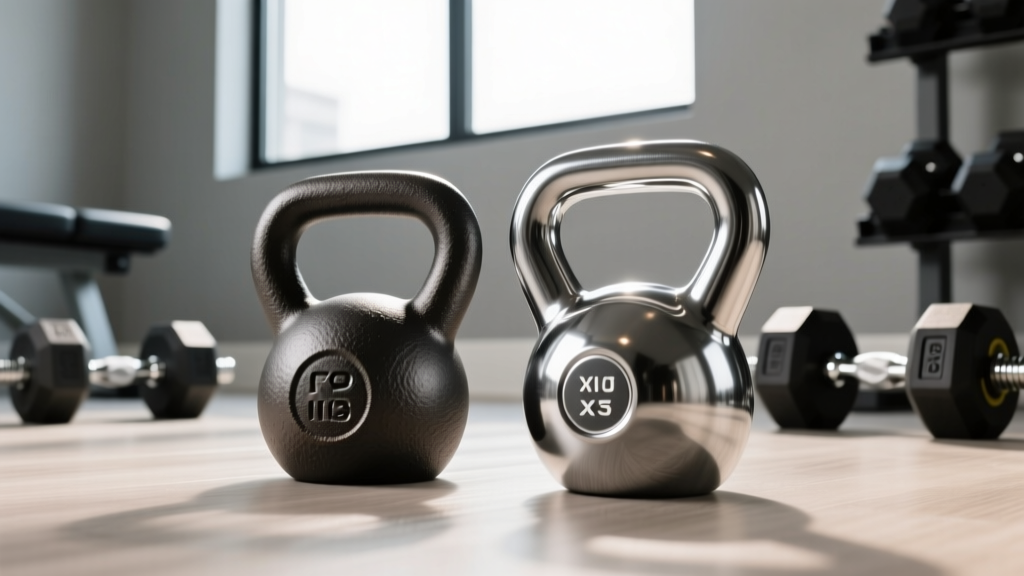
But as you look to supplement or replace your functional dumbbell exercises with kettlebell variations, you are immediately faced with a critical purchasing decision: Cast Iron vs. Competition Kettlebells. The price disparity between the two can be jarring, with competition bells often costing more than double per pound. This guide provides a comprehensive 2026 budget breakdown and value analysis to help you allocate your equipment funds efficiently, ensuring you buy the right tool for your specific training adaptations.
Cast Iron Kettlebells: The Budget-Friendly Workhorse
Cast iron kettlebells are the traditional, teardrop-shaped bells found in most commercial gyms and home setups. They are manufactured by pouring molten gray iron into a mold, resulting in a dense, cost-effective tool. According to current 2026 market data from major suppliers like Rogue Fitness and Rep Fitness, cast iron bells typically range from $1.50 to $2.50 per pound.
The Pros and Cons of Cast Iron
- Pro: Cost Efficiency. You can build a highly functional 3-bell set (16kg, 20kg, 24kg) for under $250, making it the undisputed king of budget home gyms.
- Pro: Handle Clearance. The teardrop shape and wider horn (the side pillars of the handle) provide ample space for two-handed swings and high pulls, which is crucial when adapting functional dumbbell exercises to ballistic kettlebell movements.
- Con: Inconsistent Dimensions. A 12kg cast iron bell is physically much smaller than a 32kg bell. The handle diameter might jump from 30mm to 35mm, and the horn width changes drastically. This forces your grip and rack position to adapt every time you change weights.
- Con: Coating Failures. Cheaper cast iron bells use enamel paint, which chips upon impact, exposing the raw iron to humidity and leading to rapid oxidation (rust). Always opt for powder-coated or e-coated cast iron to mitigate this failure mode.
While powder coating prevents rust, budget manufacturers often leave a rough, textured finish on the handle. If you are performing high-rep snatches—a movement rarely done with dumbbells—this rough texture will shred your calluses within a single session. Always check user reviews for 'handle smoothness' or be prepared to spend 20 minutes sanding the handle with 120-grit sandpaper upon arrival.
Competition Kettlebells: The Premium Standard
Competition kettlebells are engineered for the sport of kettlebell lifting (Girevoy Sport) and high-level tactical conditioning. Unlike cast iron, they are constructed from hollow steel alloys. The defining feature of a competition bell is its universal dimensions: regardless of whether the bell weighs 8kg or 48kg, the handle diameter is exactly 35mm, the height is 210mm, and the horn width is uniform.
This standardization comes at a premium. In 2026, expect to pay between $3.50 and $5.50 per pound for high-quality steel competition bells from brands like Kettlebell Kings or Onnit.
Why Pay the Premium?
- Unbroken Muscle Memory: When transitioning from functional dumbbell exercises to complex kettlebell flows (e.g., Clean to Squat to Press), the consistent rack position means your wrist and forearm alignment never changes, drastically reducing the risk of bruising and tendon strain.
- Superior Steel Durability: Steel is vastly more resilient than brittle cast iron. Dropping a cast iron bell on concrete can crack the bell or shatter the base flat. Steel competition bells will dent, but they will not shatter.
- Chalk Retention: High-end competition bells feature a specialized matte steel finish that absorbs chalk perfectly, providing a secure grip without the abrasive tear of rough powder coat.
'The uniform geometry of competition kettlebells is not just a sport requirement; it is a neurological advantage. Your central nervous system maps the exact spatial dimensions of the tool. Changing dimensions mid-workout forces micro-adjustments that bleed energy and compromise form.' — Adapted from StrongFirst instructional principles.
Value Analysis: Cast Iron vs. Competition Matrix
To visualize the return on investment, refer to the comparison matrix below. This framework helps determine which bell type aligns with your specific training modalities.
| Feature | Cast Iron (Powder Coated) | Competition (Steel Alloy) |
|---|---|---|
| Average Cost per Lb | $1.50 - $2.50 | $3.50 - $5.50 |
| Handle Diameter | Varies (30mm - 35mm+) | Strict 35mm Standard |
| Dimension Consistency | Low (Scales with weight) | Absolute (Uniform across all weights) |
| Best Movement Type | Grinds (Squats, Presses, Rows) | Ballistics (Snatches, Cleans, Jerks) |
| Durability / Drop Risk | Moderate (Can crack or chip) | High (Dents, but maintains integrity) |
| Floor Impact | High (Small base concentrates force) | Extreme (Hard steel requires mats) |
2026 Budget Breakdown Scenarios
How should you allocate your capital? Here are three distinct purchasing frameworks based on real-world 2026 pricing, designed to maximize your training value without overspending on unnecessary premium features.
Scenario A: The Minimalist Hybrid ($180 Budget)
The Strategy: Use cast iron for heavy, slow 'grind' movements (replacing heavy functional dumbbell exercises like front squats and floor presses) where dimension consistency matters less, and save money.
- 16kg (35 lbs) Cast Iron: ~$65 (For warm-ups, high-rep presses, and rows)
- 24kg (53 lbs) Cast Iron: ~$95 (For heavy goblet squats and swings)
- Shipping Buffer: ~$20
Verdict: Maximum strength stimulus per dollar. Ideal for general fitness enthusiasts who do not plan to compete in kettlebell sport or perform high-rep snatches.
Scenario B: The Tactical Athlete ($350 Budget)
The Strategy: Invest in a competition bell for your primary ballistic weight, and cast iron for your heavy grinds. This targets the specific failure modes of each bell type.
- 16kg Competition Bell: ~$140 (Dedicated exclusively to snatches, cleans, and long-cycle sets where handle consistency prevents forearm bruising).
- 24kg Cast Iron Bell: ~$95 (Used for heavy swings, squats, and get-ups).
- 32kg Cast Iron Bell: ~$130 (Used for max-effort deadlifts and heavy rack presses).
Verdict: The smartest allocation of funds for serious home gym owners. You get the premium feel where it biomechanically matters (the 16kg ballistic work) and budget savings where it doesn't (heavy grinds).
Scenario C: The Purist Sport Setup ($700+ Budget)
The Strategy: A full set of 12kg, 16kg, 20kg, and 24kg Competition bells.
Verdict: Only recommended if you are strictly following exercise biomechanics protocols for Girevoy Sport, or if you run a premium boutique studio where uniform aesthetics and exact 35mm handle sizing are non-negotiable for client safety and progression tracking.
Hidden Costs and Edge Cases to Anticipate
When budgeting for kettlebells, the sticker price is rarely the final cost. Failing to account for these edge cases will disrupt your home gym setup in 2026.
💡 Pro-Tip: The Freight Shipping ThresholdKettlebells are incredibly dense. Most carriers (UPS/FedEx) impose severe surcharges or reject packages over 150 lbs. If you are buying a Scenario C setup, your order will likely ship via LTL Freight. This requires a liftgate delivery fee (often $50-$100 extra) and means the bells will be dropped on your driveway on a pallet, not carried into your garage. Always check the shipping policy for heavy freight before checkout.
Floor Protection Requirements:
Competition kettlebells are made of hardened steel with a relatively small, flat base. Dropping a 24kg steel bell from shoulder height onto a standard garage epoxy floor or laminate wood will cause catastrophic structural damage to the floor. If you invest in competition bells, you must budget an additional $60 to $90 for a 3/4-inch thick horse stall mat to absorb the kinetic energy of missed reps or dropped cleans.
The Rust Factor in Unclimate-Controlled Spaces:
If your gym is in a humid, unclimate-controlled garage, bare steel competition bells will develop surface rust within weeks if not maintained. You must budget for a can of 3-in-One oil or a specialized rust-inhibitor spray and commit to wiping down the bells monthly. Cast iron bells with high-quality powder coating are virtually maintenance-free in these environments.
Final Verdict: Where Should Your Money Go?
Moving beyond standard functional dumbbell exercises into the realm of kettlebell training is a highly effective way to build resilient, explosive, and functional strength. However, your budget should be dictated by your movement diet. If your programming consists primarily of heavy squats, presses, and rows, high-quality powder-coated cast iron offers unbeatable value and durability. If your training revolves around high-rep snatches, cleans, and complex flows where handle geometry and rack position consistency are paramount, the premium for competition steel is a mandatory investment in your joint health and technical progression. Evaluate your programming, calculate your cost-per-use, and buy the tool that matches your biomechanical demands.
More gear to consider
All reviews
EZ Curl vs Straight Bar: Space Layouts & Dumbbell Pullovers for Chest
Cast Iron vs Competition Kettlebells & Incline Dumbbell Bench Press

Incline Dumbbell Kickback: Urethane vs Rubber Hex 2026 Market Trends

Rubber vs Urethane Care & Chin-Up Alternative with Dumbbells

Optimizing Dumbbell Rack Storage for Tricep Pushdowns with Dumbbells
