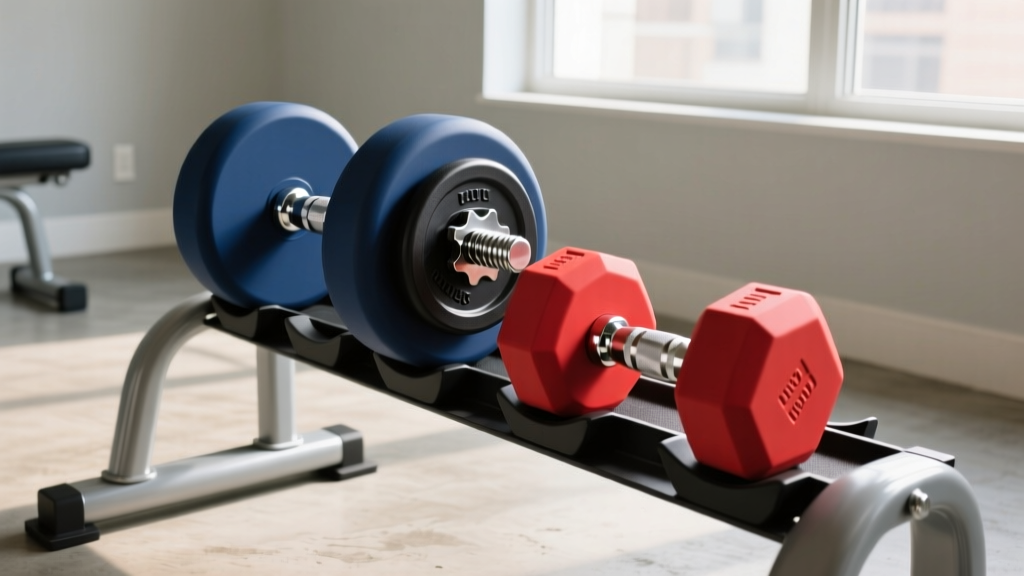
Racking & Maintaining the Best Chest Workout Dumbbells
Learn how to properly store, rack, and maintain the best chest workout dumbbells to prevent rust, urethane cracking, and internal core bending.

The Hidden Biomechanical Stress of Heavy Chest Pressing
When building a home or commercial gym, lifters obsess over purchasing the best chest workout dumbbells for heavy incline presses, flat flyes, and floor presses. However, the actual mechanics of a heavy chest set subject these premium tools to extreme, asymmetric impact forces. Think about the conclusion of a heavy 80-pound incline press: the 'kick-down' phase involves dropping the dumbbells from a height of 3 to 4 feet, often at an awkward angle, directly onto the floor or rack saddle.
Over time, this repetitive shock loading causes micro-fractures in urethane coatings, bends internal steel cores, and loosens bolted heads. According to facility maintenance guidelines outlined by the National Strength and Conditioning Association (NSCA), improper storage and dropping are the leading causes of premature free-weight failure in high-performance facilities. If you have invested $300 to $800 in a premium set of hex or round dumbbells for your chest days, your racking architecture and maintenance protocols must match that investment.
Selecting the Right Rack Architecture for Heavy Loads
Storing heavy dumbbells (50 lbs and above) requires a rack that mitigates roll-off risks and distributes weight evenly to prevent frame warping. In 2026, the market has standardized around three primary rack designs, each with distinct load-bearing characteristics.
| Rack Type | Best Application | Footprint | Max Capacity | Failure Risk Profile |
|---|---|---|---|---|
| 3-Tier Horizontal (Slanted) | Heavy Hex & Urethane (5-100+ lbs) | ~48" x 24" | 1,200 - 2,500 lbs | Low (backward slant prevents roll-offs) |
| A-Frame Vertical | Light Neoprene / Rehab (5-25 lbs) | ~24" x 24" | 400 - 600 lbs | High (severe drop/crush risk with heavy weights) |
| Wall-Mounted Saddle Pegs | Space-Constrained Studios | Varies | ~300 lbs per pair | Medium (drywall/stud tearing if improperly anchored) |
The 3-Tier Horizontal Standard
For anyone routinely pressing heavy dumbbells, a 3-tier horizontal rack with a 3-degree to 5-degree backward slant is non-negotiable. Models like the Rogue 3-Tier Dumbbell Rack (priced around $395) or the REP Fitness 3-Tier Rack ($299) utilize 11-gauge steel and UHMW plastic-lined saddles. The plastic lining is a critical information gain: it prevents the steel core of the dumbbell from grinding against the steel rack, which creates metallic dust and accelerates oxidation on the dumbbell handles.
Material-Specific Longevity Protocols
The material of your dumbbell heads dictates your environmental and cleaning protocols. The Environmental Protection Agency (EPA) notes that certain rubber compounds can off-gas volatile organic compounds (VOCs) when exposed to heat and UV light, which degrades the material and your indoor air quality.
- Virgin Rubber: Prone to dry rot and UV degradation. Keep away from direct sunlight and garage windows. Clean only with pH-neutral soap; harsh degreasers strip the natural oils, causing the rubber to crack and flake.
- Polyurethane (Urethane): Rated typically at a Shore A durometer of 85-90. Urethane is highly resistant to UV and sweat but can be sliced by sharp edges on metal racks. Inspect your rack saddles for burrs annually.
- Neoprene/Coated: Strictly for light isolation work. The internal cast iron will rust and expand if the neoprene coating is nicked, eventually splitting the coating from the inside out.
Never store adjustable dumbbells (such as Nuobell, PowerBlock, or Bowflex 552) on vertical A-Frame racks or standard saddle pegs. The internal selector pins, dials, and polycarbonate housings are engineered for vertical, flat-surface stacking only. Lateral gravitational loads on a rack peg will warp the internal mechanisms, leading to catastrophic weight-plate drop-outs during a chest press and instantly voiding the manufacturer warranty.
Step-by-Step Knurling and Core Maintenance
The handle is the most vulnerable part of any dumbbell. Sweat is highly acidic and corrosive; leaving it on chrome or carbon steel knurling will cause pitting and rust within 48 hours. Follow this exact maintenance loop recommended by equipment specialists at the American Council on Exercise (ACE) for high-use free weights:
- Immediate Post-Workout Wipe: Use a microfiber cloth dampened with a 50/50 mix of distilled water and white vinegar to neutralize the acidic pH of your sweat. Do not use bleach-based wipes, as they accelerate chrome peeling.
- Weekly Deep Brush: Use a stiff nylon brush (never a wire brush on chrome, as it will strip the finish) to scrub out dead skin, chalk, and sebum trapped in the knurling valleys.
- Monthly Oiling: Apply 3 to 4 drops of mineral oil or specialized 3-in-One equipment oil to a rag and wipe down the shaft. Avoid standard WD-40; it is a solvent that attracts dust and creates an abrasive paste inside the knurling.
Troubleshooting Common Storage Failures
Problem: Dumbbells Rolling Off the Rack
Diagnosis: Your rack lacks a backward slant, or the floor beneath the rack is uneven. Heavy hex dumbbells (like those used for floor presses or heavy chest work) have a high center of gravity. If the rack's front lip is less than 1.5 inches high, vibrations from dropping nearby weights can cause a 'walking' effect, leading to dangerous roll-offs. Shim the front feet of your rack with rubber horse-stall mats to induce a manual backward pitch.
Problem: Rattling or Loose Heads on Hex Dumbbells
Diagnosis: The internal friction weld or bolted assembly has failed due to repeated shock loading (dropping after a chest set). If you own bolt-together dumbbells, use a torque wrench set to 60-80 ft-lbs (check manufacturer specs) to re-tighten the hex bolts. Apply a drop of blue Loctite (medium strength) to the threads to prevent future vibration loosening. If they are friction-welded and rattling, the structural integrity is compromised; retire them immediately to prevent a head from snapping off mid-press.
Frequently Asked Questions
Can I store my heavy chest dumbbells outside in a covered patio gym?
No. Even in a covered area, ambient humidity and temperature fluctuations will cause condensation on the steel handles and shafts. This leads to deep-tissue rust that compromises the tensile strength of the core. Always store premium free weights in a climate-controlled environment with humidity kept below 50%.
Does dropping dumbbells on rubber flooring damage them?
Yes. While 3/4-inch horse stall mats or commercial drop pads protect your concrete subfloor, they do not absorb enough kinetic energy to protect the dumbbell's internal steel core or the urethane-to-steel bond. Dropping 70+ lb dumbbells from chest height will eventually cause the urethane head to delaminate from the steel core. Always lower heavy dumbbells under control or use specialized dumbbell landing pads.
How should I organize my rack for optimal chest workout flow?
Organize by weight in ascending order from left to right, keeping the most frequently used pairs for your chest workouts (typically the 40 lb to 75 lb range) at waist height on the middle tier. This minimizes the biomechanical strain of bending down to pick up heavy weights and reduces the risk of lower back tweaks before you even get to the bench.
More gear to consider
All reviews
How Dumbbell Circles Impact Rubber Hex vs Urethane Longevity

The Ultimate Home Setup for Seated Bicep Curls with Dumbbells

Hex vs Round Dumbbells: Rubber vs Urethane (2026 Review)

Barbell Collar and Clamp Types Comparison: Fixing Arm Dumbbell Mistakes

Prepping for a 100 lb Dumbbell Curl: Loadable Dumbbell Care
