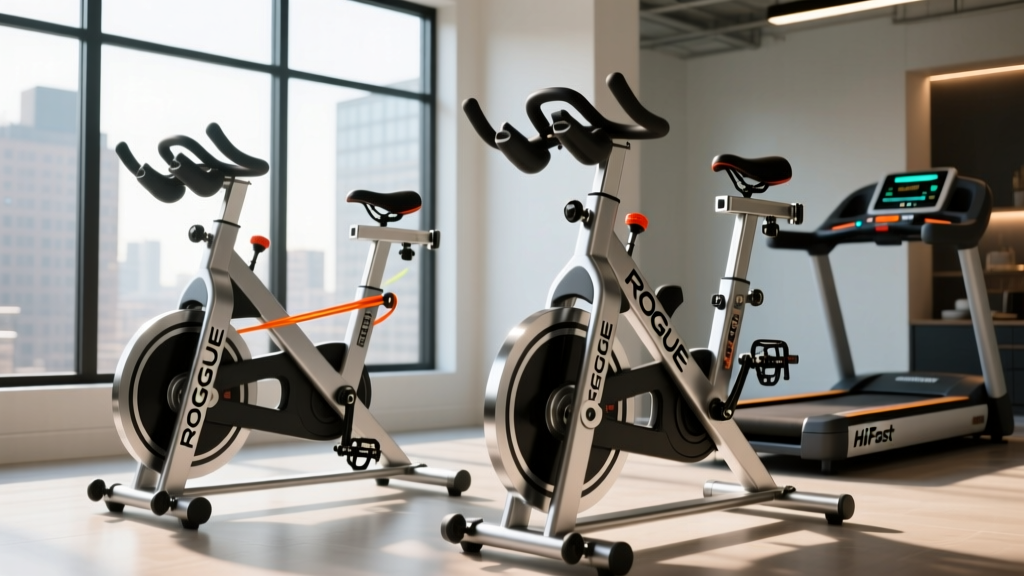
Air Bike vs Assault Bike Maintenance: Longevity Tips & HiFast Treadmill Care
Compare Rogue Echo and AssaultBike Elite maintenance routines. Learn longevity tips, drive-system care, and how upkeep differs from a HiFast treadmill.

When investing in high-intensity cardio equipment, the initial purchase price is only half the equation. The true cost of ownership reveals itself in the maintenance bay. In 2026, the air bike market remains dominated by two distinct engineering philosophies: the chain-driven AssaultBike Elite and the belt-driven Rogue Echo Bike. While both deliver brutal metabolic conditioning, their longevity profiles and maintenance requirements are vastly different.
Furthermore, understanding how these rotational flywheel machines degrade over time requires a baseline comparison to linear friction machines, such as the popular HiFast treadmill series. This comprehensive guide breaks down the exact failure modes, maintenance schedules, and real-world longevity tips for your garage gym's most abused cardio assets.
The Drive System Divide: Chain vs. Belt vs. Motor
The core difference in air bike longevity comes down to how power is transferred from the pedals to the fan. Below is a structural comparison of the primary drive systems, including how they contrast with motorized treadmill belts.
| Equipment Type | Drive Mechanism | Primary Maintenance Need | Expected Lifespan (Pre-Rebuild) |
|---|---|---|---|
| AssaultBike Elite | 1/8" Steel Chain | Lubrication & Tensioning | 3-5 Years (Heavy Use) |
| Rogue Echo Bike | Kevlar-Reinforced Belt | Eccentric Tension Adjustment | 7-10 Years |
| HiFast Treadmill | Motorized PVC Belt | Silicone Lubrication & Deck Care | 4-6 Years (Belt/Deck) |
AssaultBike Elite: Managing Chain Stretch and Plastic Fatigue
The Assault Fitness AssaultBike Elite is a staple in CrossFit affiliates and home gyms due to its familiar, bicycle-like feel. However, its chain drive is its most significant longevity bottleneck. Under the extreme torque of sprint intervals (often exceeding 800 watts), standard bicycle chains experience 'chain stretch'—technically the wearing of the internal link pins.
Critical Maintenance Steps for the AssaultBike
- Lubrication Schedule: Apply a PTFE or ceramic-based wet chain lube every 4 to 6 weeks. Avoid standard WD-40, which acts as a solvent and will strip the chain of its internal factory grease, accelerating wear.
- Tensioning the Chain: When the chain develops more than 1/2 inch of vertical slack, you must loosen the rear axle nuts and slide the wheel backward in the dropouts to re-tension the chain. Failure to do so will result in the chain skipping teeth on the rear cog during high-resistance standing starts.
- Fan Shroud Inspection: Earlier iterations of the AssaultBike utilized plastic fan blades that became brittle in cold, unheated garage gyms. Inspect the plastic fan housing and blades quarterly for micro-fractures caused by UV exposure and temperature fluctuations.
The AssaultBike uses a standard square-taper bottom bracket. If you hear a rhythmic clicking during the downstroke, do not immediately assume the pedals are loose. In 60% of cases, the bottom bracket cartridge has backed out of the frame threads. Use a splined bottom bracket tool to tighten it to 35-40 Nm of torque.
Rogue Echo Bike: Belt Tension and Bearing Realities
The Rogue Echo Bike was engineered specifically to address the maintenance complaints of the chain-driven AssaultBike. By utilizing a belt drive, Rogue eliminated the need for liquid lubricants, keeping garage floors clean and reducing particulate buildup.
Step-by-Step Belt Tensioning
While belts do not 'stretch' like steel chains, the tensioner mechanism can settle over time. A slipping belt manifests as a high-pitched squeak during rapid acceleration.
- Remove the belt guard on the left side of the bike using a 4mm Allen key.
- Locate the eccentric bottom bracket tensioner.
- Loosen the locking collar bolt just enough to allow rotation.
- Rotate the eccentric bracket downward to increase tension on the belt. You should be able to press the belt inward about 1/4 inch with moderate thumb pressure.
- Retighten the locking collar to 25 Nm and spin the cranks to ensure the belt tracks centrally on the pulleys.
Bearing Corrosion in Sweat-Heavy Environments
The Echo Bike's sealed bearings are robust, but they are not impervious to the highly corrosive nature of human sweat. If you do not use a sweat guard or wipe down the frame and bottom bracket area after use, the salt will eventually penetrate the bearing seals, leading to a grinding sensation. Replacing the bottom bracket and pedal bearings every 3 to 4 years is a standard part of Echo Bike ownership.
Linear vs. Rotational: The HiFast Treadmill Comparison
To fully grasp cardio machine longevity, it is valuable to compare the rotational inertia of air bikes to the linear friction of motorized treadmills. The HiFast treadmill lineup, known for its budget-friendly folding models and 3.0 HP peak motors, requires an entirely different maintenance paradigm.
'While an air bike degrades through mechanical tension and bearing friction, a treadmill degrades through surface friction and thermal overload. Neglecting a treadmill belt doesn't just wear out the belt; it fries the motor controller.'
The Amp Draw Danger Zone
When you run on a HiFast treadmill, the friction between your feet, the belt, and the wooden deck creates immense drag. If the belt is not lubricated with 100% silicone every 45 miles (or roughly every 3 months), the motor must work harder to maintain speed.
A properly lubricated HiFast treadmill motor will draw between 3 to 5 amps under a 180 lb user. An unlubricated belt can cause the amp draw to spike to 12+ amps. This thermal overload will eventually trip the internal breaker or permanently damage the motor control board—a $150 to $250 replacement part that is entirely avoidable with a $10 bottle of silicone lubricant.
2026 Replacement Cost & Upkeep Matrix
Budgeting for long-term cardio equipment care requires knowing the exact cost of wear-and-tear parts. Below is the current 2026 pricing matrix for standard replacement components across these three machine categories.
| Machine | Component | Replacement Frequency | Estimated Cost (2026) |
|---|---|---|---|
| AssaultBike Elite | 1/8" Drive Chain | Every 2-3 Years | $25 - $35 |
| AssaultBike Elite | Bottom Bracket Cartridge | Every 4-5 Years | $40 - $60 |
| Rogue Echo Bike | Drive Belt | Every 7-10 Years | $85 - $110 |
| Rogue Echo Bike | Pedal Bearings / Pedals | Every 3-4 Years | $50 - $90 |
| HiFast Treadmill | Replacement Belt & Deck | Every 4-6 Years | $120 - $180 |
| HiFast Treadmill | Silicone Lubricant (3oz) | Every 3 Months | $10 - $15 |
Environmental Factors: Protecting Your Investment
Where you place your equipment dictates its lifespan. Garage gyms subject machines to extreme temperature swings and high humidity.
- Powder Coat vs. Paint: The Rogue Echo features a heavy-duty powder coat that resists sweat corrosion far better than standard wet paint. However, the steel mounting bolts on both the Echo and AssaultBike will rust if exposed to ambient humidity. Swap out standard zinc bolts for stainless steel hardware during your first year of ownership.
- Dust Ingestion: Air bikes act as massive vacuums, pulling dust, pet hair, and debris into the generator and fan housing. Every 6 months, use a leaf blower or compressed air to purge the fan cage. Accumulated dust on the Echo Bike's internal generator can cause the electronic console to flicker or fail.
- Treadmill Deck Warping: For HiFast treadmill owners storing the unit in a garage, ensure the folding mechanism is locked and the deck is kept parallel to the floor when not in use. Storing a folding treadmill vertically for months can cause the belt to track improperly and warp the MDF deck core due to uneven gravitational stress.
Frequently Asked Maintenance Questions
- Can I use a pressure washer to clean my air bike?
Never use a pressure washer or hose down an air bike. High-pressure water will bypass the sealed bearings and force moisture into the bottom bracket and pedal threads, leading to rapid internal rust. Use a damp microfiber cloth and a mild degreaser. - Why does my HiFast treadmill belt slip when I sprint?
Belt slip on a treadmill is rarely caused by a lack of lubrication; it is usually caused by the rear roller losing tension. Use the hex key provided with the machine to turn both rear tension bolts clockwise by exactly one-quarter turn until the slip ceases. - Do belt-driven air bikes require any chain-specific tools?
No. The Rogue Echo Bike requires only standard metric Allen keys and a bottom bracket spanner for belt tensioning, making it significantly more user-friendly for home mechanics compared to the chain-breaking tools occasionally needed for the AssaultBike.
Ultimately, choosing between an AssaultBike, a Rogue Echo, or incorporating a HiFast treadmill into your routine depends on your willingness to perform routine maintenance. If you prefer a raw, mechanical feel and don't mind a 10-minute monthly chain-lubing ritual, the AssaultBike remains a legendary choice. If you demand a 'set-it-and-forget-it' rotational machine, the Echo's belt drive is unmatched. And if you are adding linear running to your regimen, respecting the silicone lubrication schedule of your HiFast treadmill will save you hundreds of dollars in avoided motor replacements.
More gear to consider
All reviews
A1 Treadmill Belt Maintenance: The Ultimate Lubrication Guide

ProForm Pro 2000 Treadmill Review & Walking Pad Guide 2026
Can Treadmills Go on Carpet? 2026 Buying Guide & Feature Comparison

NordicTrack T 5 S Treadmill Belt Care: Maintenance Cost Breakdown

Stationary Bike Types, Layouts & ProForm Treadmill Manual PDF Tips
