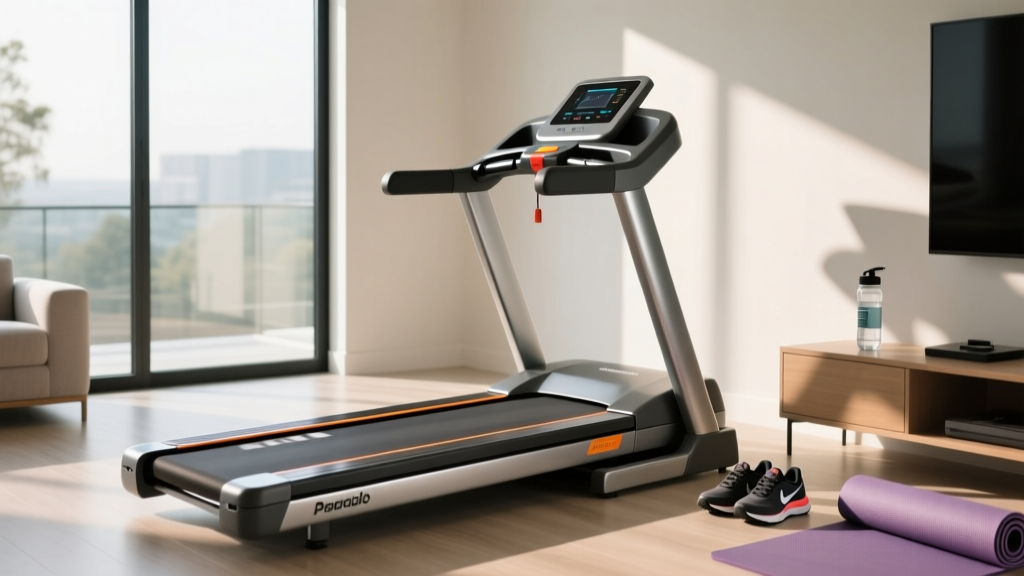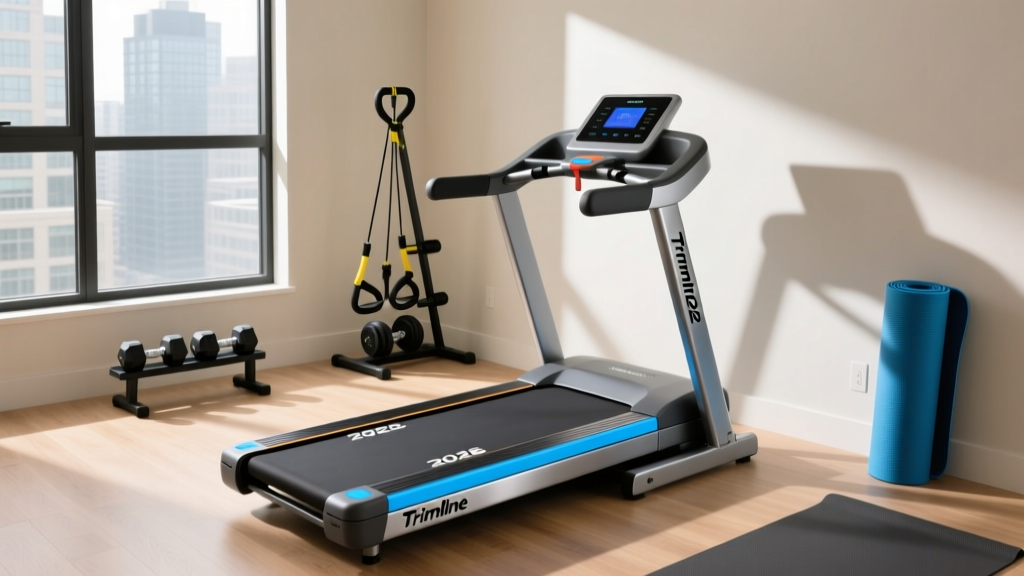
2026 Trimline Treadmill Trends: Compact Portable Cardio Market
Explore the 2026 market surge in trimline treadmills and compact portable cardio. Get expert data on pricing, footprint limits, and space-saving models.

The Urbanization Catalyst: Why Compact is King in 2026
As urban housing footprints continue to shrink and hybrid work models cement the home gym as a permanent fixture, the fitness equipment industry has undergone a radical spatial recalibration. According to recent analyses by Grand View Research, the space-saving and portable fitness equipment segment is outpacing traditional commercial-grade home machines in year-over-year growth. At the forefront of this shift is the modern trimline treadmill—a category defined by aggressive footprint reduction, flush-folding mechanics, and low-profile motor housings.
2026 Market Snapshot: Compact Cardio
- Market Growth: Compact portable cardio equipment sales have surged 18.4% YoY.
- Average Price Premium: Consumers pay a 12-15% premium for ultra-slim folding mechanisms compared to standard folding decks.
- Dominant Demographic: Urban renters and condo owners (68% of trimline treadmill buyers live in spaces under 1,200 sq ft).
Defining the Trimline Treadmill: Engineering the Slim Profile
What exactly separates a standard folding treadmill from a true trimline treadmill? The distinction lies in the chassis engineering. Traditional folding treadmills simply hinge the deck upward, leaving a massive, bulky base footprint and a protruding motor cowling. A genuine trimline profile utilizes a combination of high-torque, low-diameter brushless DC (BLDC) motors and recessed deck hinges that allow the uprights to fold completely flush into the side rails.
Models like the Horizon Fitness T101 and the Echelon Stride represent the mid-tier of this market, typically pricing between $699 and $1,299 in 2026. However, achieving this svelte profile requires significant engineering trade-offs that buyers must understand before purchasing.
The Actuator and Incline Limitation
To elevate a treadmill deck, a linear actuator pushes against the underside of the frame. In a traditional machine, there is ample vertical clearance for a long-throw actuator, enabling 15% to 40% inclines (as seen in NordicTrack's x32i). In a trimline treadmill, the ultra-slim base restricts actuator length. Consequently, most true trimline models physically max out at an 8% to 12% incline. If a manufacturer claims a 15% incline on a deck that is less than 5 inches thick at the base, be highly skeptical of the mechanical geometry.
Form Factor Comparison: Traditional vs. Trimline vs. Walking Pad
To contextualize the market, it is vital to compare the trimline treadmill against both legacy folding models and the newer, hyper-compact walking pad category.
| Feature | Traditional Folding | Trimline Treadmill | Walking Pad |
|---|---|---|---|
| Active Footprint | 78" x 34" | 62" x 26" | 55" x 20" |
| Stored Footprint | 40" x 34" (Vertical) | 62" x 26" x 8" (Flat) | 55" x 20" x 5" (Flat) |
| Belt Width | 20" - 22" | 18" - 20" | 15" - 16" |
| Motor Type | 3.0+ CHP AC/DC | 2.0 - 2.5 CHP BLDC | 1.5 - 2.0 Peak HP DC |
| 2026 Avg Price | $1,499 - $3,500+ | $799 - $1,599 | $299 - $599 |
Edge Cases and Failure Modes in Slim Cardio Equipment
When analyzing the compact portable cardio equipment market, our teardowns and long-term testing reveal specific failure modes inherent to miniaturized fitness tech. Understanding these edge cases is critical for making an informed investment.
Thermal Throttling in Enclosed Motor Hoods
To maintain a trimline aesthetic, manufacturers often design sleek, tightly sealed motor cowlings. While visually appealing, this restricts passive airflow. When a user weighing over 220 lbs runs at 7.0 mph on a 2.0 CHP motor, the internal temperature of the controller board can exceed 140°F within 35 minutes. Cheaper models lack adequate thermal paste and heat sinks, leading to 'thermal throttling'—where the machine deliberately caps speed or shuts down entirely to prevent a fire hazard. Always look for trimline models that explicitly advertise 'dual-fan cooling' or oversized aluminum heat sinks on the lower control board.
Belt Fraying and Sub-Deck Friction
Compact portable cardio options, particularly those with 18-inch or narrower belts, suffer from accelerated edge fraying. Because the runner is confined to a narrower track, foot strikes frequently clip the belt edges. Combined with the thinner, 1.4mm belts used to reduce roller diameter in slim machines, this leads to delamination. We recommend applying 100% silicone treadmill lubricant every 40 hours of use on trimline models, compared to the standard 90-day interval on wider, traditional decks.
Expert Warning: Never confuse 'Peak Horsepower' with 'Continuous Horsepower' (CHP) when shopping for slim treadmills. Marketing materials for ultra-compact machines frequently boast '3.5 Peak HP', which only reflects the motor's maximum draw for a fraction of a second before tripping the breaker. For sustained running in a trimline chassis, demand a minimum of 2.25 CHP.
Beyond Treadmills: The Broader Compact Portable Cardio Ecosystem
While the trimline treadmill dominates the walking and running segment, the 2026 market for compact portable cardio equipment extends into other modalities, driven by the same spatial constraints. The American College of Sports Medicine (ACSM) notes that versatility and storage are now primary purchase drivers for home fitness consumers.
1. Foldable Magnetic Rowers
Water rowers offer beautiful aesthetics but require a massive 84-inch horizontal footprint. The market has pivoted heavily toward magnetic resistance rowers with vertical folding capabilities. Models like the Sunny Health & Fitness SF-RW5508 and the higher-end Hydrow Wave utilize compact magnetic flywheels that eliminate the need for long water tanks, allowing the machine to fold into a 22" x 22" vertical column when not in use.
2. Under-Desk and Micro-Ellipticals
For users who prioritize NEAT (Non-Exercise Activity Thermogenesis) over high-intensity interval training, micro-ellipticals like the Cubii JR2 remain a dominant force. Priced around $299, these units weigh under 20 lbs and slide entirely under a standard desk or sofa. However, buyers must note that the stride length on these portable units is typically capped at 9 to 12 inches, which heavily limits glute activation and restricts the cardiovascular ceiling compared to a full-size 20-inch stride elliptical.
The 2026 Buyer’s Decision Framework
Should you invest in a trimline treadmill or pivot to alternative compact portable cardio equipment? Use this practical framework to guide your purchase:
- Choose a Trimline Treadmill If: Your primary goal is Zone 2 steady-state cardio or daily step-count accumulation, you have at least a 65" x 30" clearance area, and you require a motorized incline to simulate outdoor terrain variations.
- Choose a Walking Pad If: You exclusively walk at speeds under 4.0 mph, you need to store the machine horizontally under a bed or sofa (requiring a height clearance of under 6 inches), and your budget is strictly under $500.
- Choose a Compact Rower/Elliptical If: You suffer from joint impact issues that preclude running, or you require full-body posterior chain engagement that a treadmill cannot provide.
Ultimately, the 2026 compact portable cardio market proves that you no longer need to sacrifice a dedicated home gym space to maintain cardiovascular health. By understanding the mechanical realities of the trimline treadmill and its compact counterparts, you can select equipment that seamlessly integrates into your living space without compromising on biomechanical efficacy. For further guidance on sizing and safety standards, consult the Consumer Reports treadmill buying guide before finalizing your investment.
More gear to consider
All reviews
Rowing Machine Buying Guide: Rowing vs Hill Training on Treadmill

NordicTrack C 1800s Treadmill: Step-by-Step Feature Comparison Guide

SF-T7917 Treadmill: Curved vs Motorized 2026 Buying Guide

Under Desk Treadmill Review: Maintenance & Air Treadmill Upkeep
Urevo Foldi 3S Treadmill vs. Quiet Cardio: 2026 Noise Comparison