Is Sole a Good Treadmill? Walking Pad Comparison & Buyer Mistakes
Is Sole a good treadmill compared to a walking pad? Discover common buyer mistakes, troubleshooting tips, and a detailed Sole vs. walking pad review.

Is Sole a Good Treadmill? The Walking Pad Dilemma in 2026
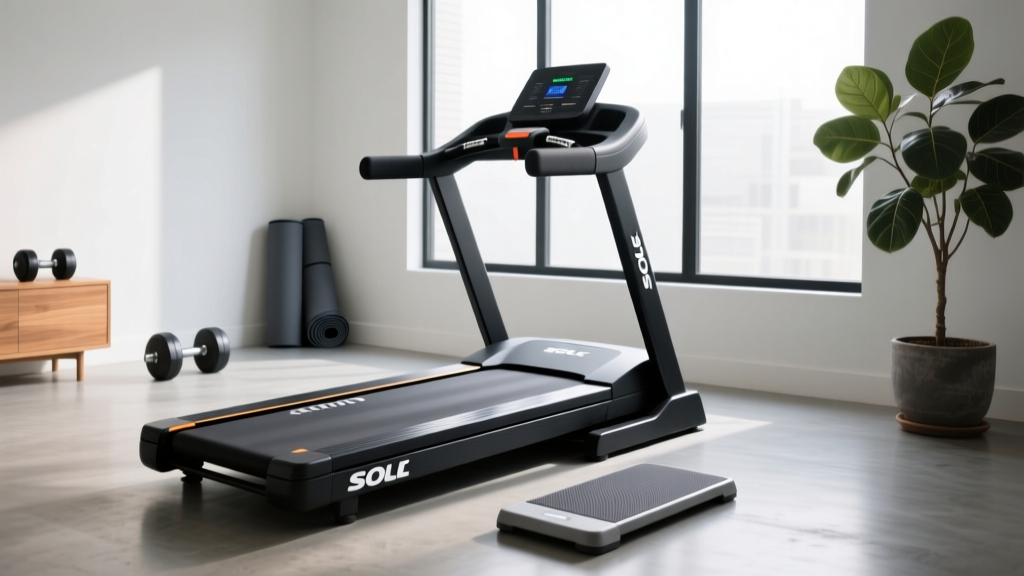
When outfitting a home gym, the debate often narrows down to space-saving walking pads versus traditional heavy-duty machines. A frequent question we receive at FitGearPulse is, 'Is Sole a good treadmill compared to the viral walking pads on social media?' The answer requires looking past marketing hype and examining biomechanics, motor durability, and long-term maintenance. While walking pads offer unmatched convenience for low-intensity steady-state (LISS) cardio, traditional Sole treadmills provide the structural integrity required for serious running and incline training.
In this comprehensive comparison and troubleshooting guide, we break down the critical mistakes buyers make when choosing between these two cardio categories and provide expert-level troubleshooting steps to keep your machine running smoothly.
💡 The Horsepower Illusion: Walking pads often advertise '2.5 Peak HP', while Sole treadmills advertise '3.25 CHP'. Continuous Horsepower (CHP) measures the motor's ability to sustain output under load without overheating. Peak HP is merely the maximum burst the motor can handle for a few seconds. Always compare CHP to CHP when evaluating cardio equipment.4 Common Mistakes When Choosing Between a Walking Pad and Sole
Upgrading your home cardio setup is a significant financial commitment. Avoid these frequent pitfalls that lead to buyer's remorse and premature equipment failure.
Mistake 1: Ignoring Belt Length and User Height
Walking pads typically feature belts measuring 15 inches wide by 43 inches long. If you are over 5'8", this restricted stride length forces you to alter your natural gait. A biomechanical analysis published in the National Institutes of Health (NIH) highlights that restricted treadmill belt lengths significantly alter stride kinematics, increasing the risk of hip flexor strain and lower back pain. In contrast, the Sole F80 offers a 20" x 60" belt, accommodating full running strides for users up to 6'4".
Mistake 2: Overestimating Weight Capacity Limits
Many budget walking pads claim a 250 lb weight capacity. However, the dynamic impact force of walking or jogging can exceed 2.5 times your body weight. A 200 lb user jogging on a walking pad exerts over 500 lbs of instantaneous force on a lightweight aluminum frame, leading to deck warping. Sole treadmills utilize a heavy-duty steel frame and their proprietary Cushion Flex Whisper Deck, which the Mayo Clinic notes is vital for reducing joint impact during repetitive cardiovascular exercise.
Mistake 3: Assuming 'Folding' Means 'Easy to Move'
A Sole F63 folds vertically to save floor space, but it still weighs 250 lbs. Moving it requires two people and a clear path. Walking pads, weighing around 60-80 lbs, can be slid under a bed. If your primary constraint is moving the machine daily, a walking pad wins. If you plan to fold it once and leave it in the corner, the Sole's stability is vastly superior.
Mistake 4: Neglecting Incline Capabilities
Walking pads are strictly flat (0% incline). Sole treadmills offer up to 15% motorized incline. Incline walking at 10-15% recruits the glutes and hamstrings far more effectively than flat walking, increasing caloric expenditure by up to 40% without the high-impact forces of running. Furthermore, walking pads lack the structural rigidity to support an incline mechanism. Attempting to prop up a walking pad with risers voids the warranty and creates a severe tipping hazard. Sole's motorized incline system uses a dedicated lift motor, ensuring smooth transitions even while running at 8 MPH.
Troubleshooting Guide: Fixing Common Walking Pad & Sole Issues
Regardless of whether you choose a compact walking pad or a robust Sole treadmill, mechanical issues will eventually arise. Here is how to troubleshoot the most common problems without immediately calling a technician.
Walking Pad Belt Drift and Slipping
The Problem: The belt drifts to the left or right, or slips when you step on it.
The Fix:
- Locate the adjustment bolts at the rear of the walking pad (usually requires a 5mm or 6mm Allen wrench).
- If the belt drifts left, turn the left rear bolt clockwise exactly one-quarter turn.
- Run the machine at 2.0 mph and observe. Repeat if necessary. Never turn the bolt more than a half-turn at a time, or you risk over-tensioning and snapping the belt.
Sole Treadmill Console Error Codes (E1 and E2)
The Problem: Your Sole F63 or F80 suddenly stops and displays an E1 or E2 error code.
The Fix:
- E1 (Speed Sensor Failure): Unplug the machine. Remove the motor hood (usually 6 Phillips screws). Locate the optic speed sensor near the motor flywheel. Ensure it is aligned perfectly with the magnet on the flywheel and that no dust is blocking the sensor eye. Clean with compressed air.
- E2 (Incline Motor Error): This indicates the console is not receiving feedback from the incline motor. Check the wiring harness connecting the incline motor to the lower control board. If the wires are intact, the incline motor's internal potentiometer may need replacement (Part #SOL-INC-POT, typically $45).
Excessive Noise and Vibration
The Problem: A rhythmic thumping or high-pitched whining during use.
The Fix: For walking pads, a thumping noise usually means the belt is too tight or the deck lacks lubrication. Apply 100% silicone treadmill lubricant (approx. 15ml) directly under the belt, spreading it evenly by running the machine at 3 mph for 3 minutes. For Sole treadmills, a whining noise often points to a worn drive belt. Remove the motor hood and check the ribbed drive belt for fraying or glazing. Replacing a Sole drive belt costs about $35 and takes 20 minutes.
Preventative Maintenance Schedule for Longevity
To avoid the troubleshooting steps above, adhere to this strict maintenance cadence:
- Weekly: Wipe down the console and handrails with a non-abrasive, non-ammonia cleaner. Ammonia degrades the rubberized grips and plastic console overlays over time.
- Monthly: Inspect the belt tension. You should be able to lift the belt approximately 2 to 3 inches off the deck at the midpoint. If it's tighter, adjust the rear rollers.
- Quarterly: Lubricate the deck. Sole treadmills require 100% silicone lubricant. Apply 15ml in a zig-zag pattern under the belt. Never use WD-40 or petroleum-based products, as these will destroy the PVC belt backing and void your warranty.
- Annually: Vacuum under the motor hood. Dust accumulation on the motor's internal fan and lower control board heat sink is the leading cause of premature electronic failure in home treadmills.
Head-to-Head Matrix: Sole F80 vs. Premium Walking Pads
To visualize the trade-offs, we compared the flagship Sole F80 against two top-selling 2026 walking pads: the UREVO Strol 2E and the KingSmith WalkingPad R2.
| Feature | Sole F80 Treadmill | UREVO Strol 2E | KingSmith WalkingPad R2 |
|---|---|---|---|
| Motor | 3.5 CHP | 2.25 Peak HP | 2.5 Peak HP |
| Belt Dimensions | 20" x 60" | 16.5" x 44.5" | 17.3" x 47.2" |
| Max Speed | 12 MPH | 7.6 MPH | 7.5 MPH |
| Incline | 0% - 15% Motorized | None (Flat) | None (Flat) |
| Weight Capacity | 375 lbs | 265 lbs | 240 lbs |
| Footprint (Stored) | 35" x 83" (Folded) | 57" x 22" (Under bed) | 60" x 22" (Folded flat) |
| Approx. Price (2026) | $1,999 | $399 | $499 |
Expert Verdict: Is Sole a Good Treadmill for Your Home?
So, is Sole a good treadmill when stacked against the convenience of modern walking pads? The verdict depends entirely on your fitness objectives and spatial constraints.
The Bottom Line: If your goal is to increase daily step counts while working at a standing desk, a walking pad like the UREVO Strol 2E is a cost-effective, space-saving solution. However, if you are training for a 10K, require high-intensity interval training (HIIT), or need joint-friendly shock absorption for daily running, the Sole F80 is unequivocally the superior investment.
Walking pads are supplementary tools for non-exercise activity thermogenesis (NEAT). Sole treadmills are dedicated fitness machines engineered for progressive overload and long-term cardiovascular adaptation. By understanding the mechanical differences and knowing how to troubleshoot basic maintenance issues, you can ensure your chosen cardio machine delivers reliable performance for years to come.
More gear to consider
All reviews
Echelon Stride 6 Folding Treadmill vs Assault Bike Maintenance

Stationary Bike Types & Sunny Treadmill SF-T4400 Manual Guide
Air Bike vs Assault Bike: Trading Treadmill Time for Better Value
Rowing Machine Buying Guide & Technique vs Canine Treadmill Training
Beyond NordicTrack Treadmill Disassembly: Compact Cardio Swaps
