
Best Adjustable Dumbbells for the Prone Incline Dumbbell Row
Master the prone incline dumbbell row with our beginner guide and adjustable dumbbell review to find the perfect grip, clearance, and weight increments.

The Biomechanics of the Prone Incline Dumbbell Row
The prone incline dumbbell row—often referred to as the chest-supported row—is a staple for building a thick, muscular back without placing shear stress on the lumbar spine. By lying face down on an inclined bench, you entirely eliminate the ability to use momentum or "cheat" the weight up, forcing the latissimus dorsi, rhomboids, and rear deltoids to do 100% of the work. According to kinesiology data cataloged by ExRx.net, the chest-supported variation significantly reduces erector spinae activation compared to the traditional bent-over barbell row, making it an ideal movement for beginners or those managing lower back fatigue.
However, executing this movement flawlessly requires the right equipment. While traditional hex dumbbells work fine, adjustable dumbbells have become the standard for home gyms in 2026. But not all adjustable dumbbells are created equal when it comes to the prone row. The physical length of the dumbbell, the handle knurling, and the weight increment jumps can make or break your range of motion and muscle activation.
💡 The Clearance Problem
A standard adjustable weight bench sits about 17 to 19 inches off the ground. If your adjustable dumbbell is excessively long (over 15 inches), the weights will physically strike the floor or the bench legs at the bottom of the movement. This prematurely stops your range of motion, robbing you of the deep lat stretch required for maximum hypertrophy.
Step-by-Step Beginner Guide: Execution & Form
Before diving into the gear, you must master the movement. The Mayo Clinic emphasizes that proper form in strength training is paramount for joint longevity and muscle isolation. Follow these steps to perfect your prone row.
Step 1: Bench Angle and Setup
- Incline Angle: Set your adjustable bench to a 30-degree or 45-degree incline. A 30-degree angle biases the lower lats, while a 45-degree angle shifts more tension to the upper back, rhomboids, and rear delts.
- Chest Placement: Lie face down with your upper chest resting on the top pad. Your chin should clear the top of the bench so your cervical spine remains neutral.
- Footing: Plant your feet firmly on the ground, slightly wider than shoulder-width, to stabilize your pelvis and prevent your lower back from arching off the pad.
Step 2: The Scapular Glide and Pull
- The Dead Hang: Let the dumbbells hang straight down with a slight bend in the elbows. Allow your shoulder blades to protract (stretch forward) at the bottom. This is where a compact adjustable dumbbell is vital to avoid hitting the floor.
- Initiate with the Scapula: Before bending your elbows, pull your shoulder blades back and together (retraction).
- The Elbow Path: Drive your elbows up and back toward your hip pockets. Do not flare your elbows out 90 degrees from your torso; keep them tucked at roughly a 45-degree angle to maximize lat engagement.
- The Squeeze: Hold the peak contraction for one full second at the top, squeezing your shoulder blades together, then lower the weight under strict control for a 2-second eccentric phase.
2026 Adjustable Dumbbell Comparison Matrix
To help you choose the right tool for this specific exercise, we tested the top adjustable dumbbells on the market, grading them specifically on their suitability for the prone incline row based on dimensions, grip, and increment jumps.
| Model | Max Weight | Total Length | Handle Grip | Row Suitability | Est. Price (2026) |
|---|---|---|---|---|---|
| Nuobell 80lb | 80 lbs | 13.5 inches | Knurled Steel | ⭐⭐⭐⭐⭐ (Excellent) | $429 |
| PowerBlock Elite USA | 50-90 lbs | 12.0 inches | Smooth Steel / Caged | ⭐⭐⭐⭐ (Great Clearance) | $349 |
| Bowflex SelectTech 552 | 52.5 lbs | 15.75 inches | Molded Plastic | ⭐⭐ (Poor Clearance) | $349 |
| Ironmaster Quick-Lock | 45-75 lbs | 14.5 inches | Knurled Steel | ⭐⭐⭐ (Good, but bulky) | $399 |
Deep-Dive Reviews: Top Picks for Prone Rows
Nuobell 80lb Adjustable Dumbbells (Best Overall for Rows)
The Nuobell 80lb is the undisputed champion for chest-supported rows. At just 13.5 inches in length, it mimics the footprint of a standard commercial hex dumbbell. This means even on a low-profile 17-inch bench, you can achieve a full, unobstructed stretch at the bottom of the movement without the weights scraping the floor. Furthermore, the handle features genuine steel knurling. When your forearms begin to pump with lactic acid during a 12-rep set of rows, the aggressive knurling prevents the dumbbell from slipping out of your pronated grip. The twisting dial mechanism also allows for 5lb jumps, which is crucial since the rear delts and rhomboids fatigue quickly and require micro-loading.
PowerBlock Elite USA (Best for Compact Clearance)
If your bench is exceptionally low to the ground, the PowerBlock Elite is your safest bet. Measuring only 12 inches long, its blocky, cage-like design offers unparalleled floor clearance. The weight distribution is also incredibly dense and centered directly over the wrist, reducing the lever-arm torque that can strain beginner wrists during heavy rows. The Caveat: The caged handle can feel restrictive. If you have large hands or prefer to use lifting straps for heavy lat rows, threading your hand and the strap through the PowerBlock cage can be a frustrating, fumbling process.
Bowflex SelectTech 552 (The Bulky Budget Option)
The Bowflex 552 is arguably the most famous adjustable dumbbell on the market, but it is poorly suited for the prone incline row. At 15.75 inches long, the plastic housing extends far past the handle. For most beginners using standard home benches, the Bowflex will physically hit the floor or the bench's rear leg before your lats reach a full stretch. Additionally, the smooth, molded plastic handle lacks knurling, forcing you to squeeze much harder to maintain grip, which leads to premature forearm failure before your back muscles are fully stimulated.
Safety Protocols: Racking and Failure Modes
Adjustable dumbbells are precision instruments, not solid blocks of iron. The most common failure mode for home gym owners is dropping the dumbbells at the end of a fatiguing set. Never drop adjustable dumbbells from a prone position. The internal locking pins and plastic dials will shatter upon impact with a hard floor.
⚠️ Safe Racking Technique
When you reach failure on the incline row, do not simply let go of the weights. Tuck your elbows, curl the dumbbells up to your shoulders, use your core to sit up on the bench, and then lean forward to place the dumbbells gently on the floor or a dedicated rack.
Frequently Asked Questions
What weight should a beginner start with on the prone row?
Because the prone row isolates the back without the assistance of the lower body or momentum, you will be significantly weaker here than on a bent-over row. Beginners should start with 10 to 15 lbs per hand to master the scapular retraction and mind-muscle connection before progressing to heavier loads. The American Council on Exercise (ACE) recommends prioritizing a full range of motion over sheer load for all horizontal pulling movements.
Can I use lifting straps for the prone incline dumbbell row?
Yes. If you find your grip failing before your lats do, lifting straps are highly recommended. They allow you to bypass forearm fatigue and truly overload the back musculature. Just be mindful that threading straps through caged adjustable dumbbells (like PowerBlocks) takes extra time between sets.
Is a 45-degree or 30-degree bench angle better?
Both are effective but target slightly different areas. A 30-degree angle aligns the pull more closely with the lower latissimus dorsi fibers. A 45-degree angle shifts the biomechanical advantage slightly upward, engaging more of the mid-traps, rhomboids, and posterior deltoids. For a complete back development, alternate the angles across different training cycles.
More gear to consider
All reviews
Rear Delt Flyes With Dumbbells: 2026 Loadable Market Trends
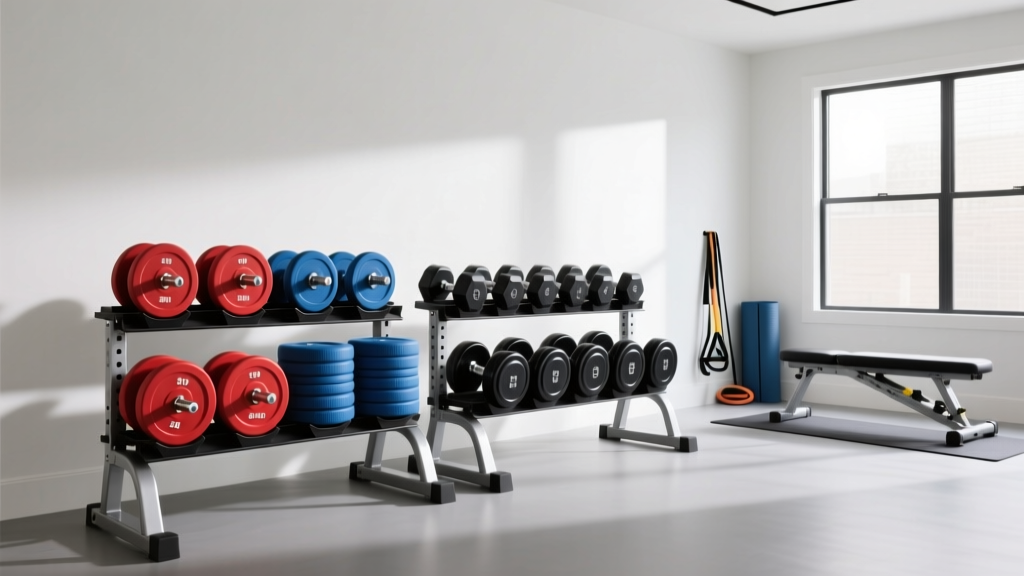
Bumper vs Iron Plates: Space Layouts for a 30 Day Dumbbell Workout

2026 Rack Trends: Enhancing Your Workout for Deltoids with Dumbbells
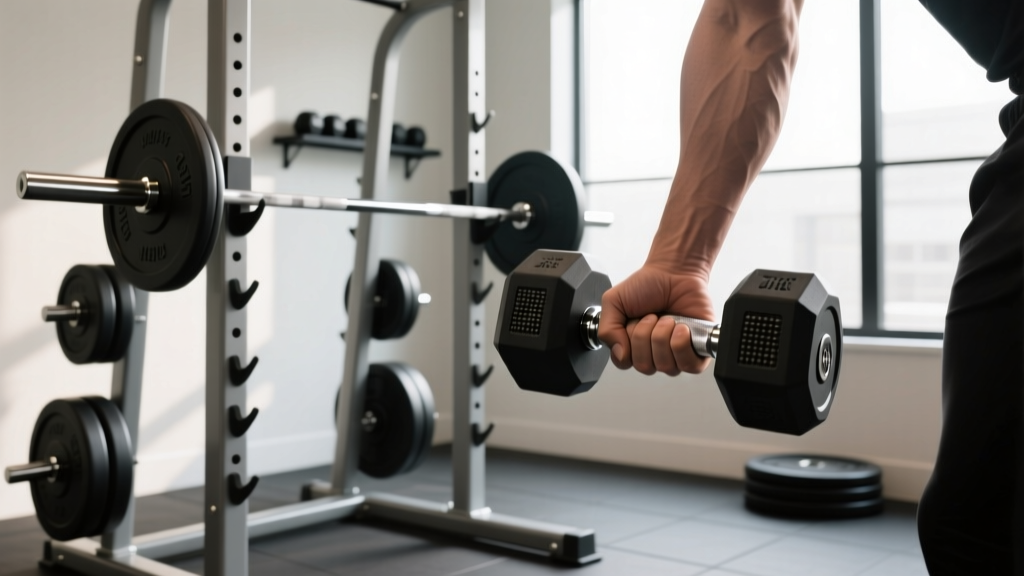
Single Arm Dumbbell to Barbell: Weight & Knurling Setup
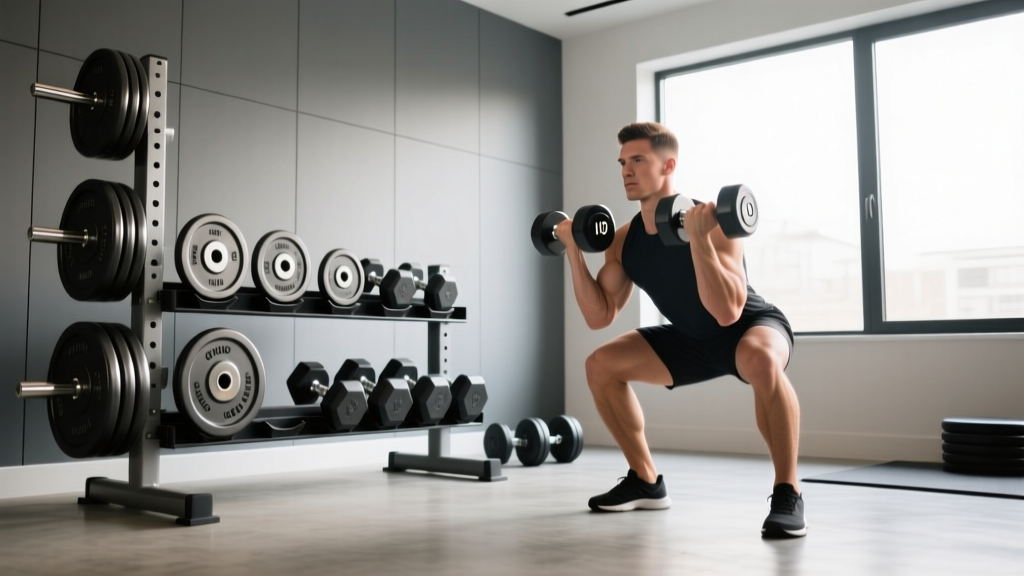
Home Gym Setup: Plate Types and Dumbbell Exercises for Beginners
