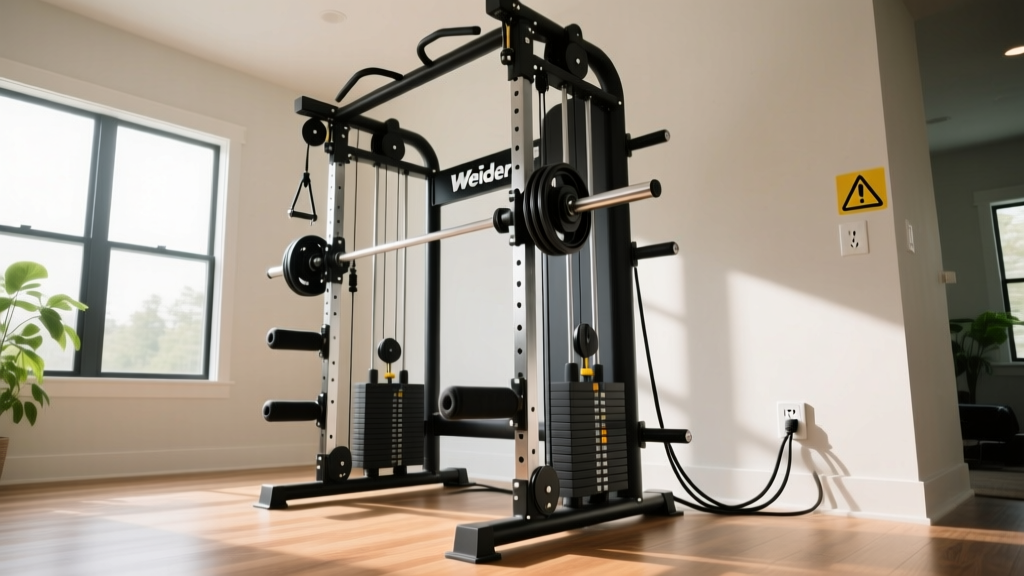
Weider Pro 9635 Home Gym Safety & Electrical Mistakes to Avoid
Avoid critical setup errors with our Weider Pro 9635 home gym safety and electrical troubleshooting guide. Protect your gear and prevent circuit overloads.

The Hidden Hazards of Multi-Station Home Gyms
Building a comprehensive home gym often involves pairing heavy-duty resistance equipment with modern, power-hungry cardio and smart tech. The Weider Pro 9635 home gym is a classic, robust multi-station rig featuring a 210-pound weight stack, lat pulldown, and leg developer. While it is a mechanical beast that doesn't draw electricity itself, integrating it into a modern garage or basement setup alongside treadmills, smart mirrors, and climate control creates a complex web of electrical and physical safety requirements.
As a senior equipment technician, I see homeowners make costly—and sometimes dangerous—mistakes when planning their gym's power layout and spatial safety. According to the Consumer Product Safety Commission (CPSC), thousands of home gym injuries occur annually due to improper equipment clearance, cable failures, and environmental hazards. This troubleshooting guide breaks down the most common electrical and safety mistakes when installing a Weider Pro 9635 and its accompanying tech, ensuring your setup is both code-compliant and injury-free.
Spatial Safety & Clearance Mistakes for the Weider Pro 9635
Before running a single wire, you must address the physical footprint and safety envelope of the Weider Pro 9635. This machine measures roughly 85 inches long, 65 inches wide, and 83 inches high. A common mistake is pushing the rig flush against a wall to save space.
The 18-Inch Clearance Rule
You must maintain a minimum 18-inch clearance on all sides of the machine. This is not just for user movement; it is a mechanical necessity. The aircraft-grade steel cables and nylon pulleys require space to track properly. If the machine is too close to a wall, the cable crossover and lat pulldown mechanisms can bind, leading to premature fraying or catastrophic snapping under load.
⚠️ WARNING: Weight Stack Drop ZonesNever route electrical cords or place smart fitness mats directly behind or underneath the Weider Pro 9635's weight stack guide rods. If a cable snaps or a selector pin fails, the 210-pound stack will drop violently, crushing any wiring or conduit in its path and creating an immediate fire or shock hazard.
The Electrical Load Trap: Circuit Overloads and Daisy-Chaining
While the Weider Pro 9635 is purely mechanical, the ecosystem around it is not. Home gym owners frequently plug high-draw cardio equipment, dehumidifiers, and smart displays into a single standard 15-amp bedroom or garage circuit using cheap power strips. This violates the National Electrical Code (NEC) guidelines for continuous loads and guarantees tripped breakers or melted wiring.
Understanding Inrush Current and the 80% Rule
Electric motors in treadmills and ellipticals require a massive surge of power to start, known as "inrush current." A 2.5 CHP treadmill might draw 12 amps while running, but can spike to 20+ amps for the first two seconds of startup. Furthermore, the NEC dictates that continuous loads (equipment running for 3 hours or more, like gym HVAC or dehumidifiers) should not exceed 80% of a circuit's rated capacity.
| Equipment Type | Running Amps (120V) | Startup / Inrush Amps | Circuit Requirement |
|---|---|---|---|
| Weider Pro 9635 (Mechanical) | 0A | 0A | N/A (Requires physical clearance) |
| Standard 2.5 HP Treadmill | 10A - 14A | 18A - 22A | Dedicated 20-Amp Circuit |
| Smart Mirror / Digital Rig | 2A - 4A | 4A - 6A | Standard 15-Amp or 20-Amp |
| Garage Dehumidifier (50 Pint) | 5A - 7A | 10A - 12A | Dedicated 15-Amp Circuit |
| Space Heater / Portable HVAC | 12A - 15A | 15A - 18A | Dedicated 20-Amp Circuit |
The Fix: Hire a licensed electrician to install dedicated 20-amp circuits (using 12-gauge wire and NEMA 5-20R receptacles) for your motorized cardio equipment. Keep your Weider Pro 9635 positioned away from these high-traffic power zones to prevent trip hazards from heavy-gauge power cords.
Garage & Basement Environments: GFCI and Moisture Hazards
Many Weider Pro 9635 setups end up in garages or unfinished basements. These environments introduce moisture, concrete dust, and temperature fluctuations that wreak havoc on both the gym's mechanical parts and its electrical infrastructure.
GFCI Nuisance Tripping vs. Genuine Protection
By code, garage and basement outlets must be protected by Ground Fault Circuit Interrupters (GFCIs). The Electrical Safety Foundation International (ESFI) emphasizes that GFCIs are critical for preventing fatal shocks in damp environments. However, treadmill motors and smart gym compressors can sometimes cause "nuisance tripping" on older or highly sensitive GFCI breakers due to minor electromagnetic interference or harmless ground leakage.
- Mistake: Replacing a GFCI outlet with a standard outlet to stop the breaker from tripping. This is a severe code violation and a lethal risk in a damp garage.
- Solution: Upgrade to a newer, commercial-grade GFCI receptacle designed to handle motorized inductive loads, or ensure your dehumidifier is actively keeping the room's relative humidity below 50% to prevent condensation inside electrical housings.
Concrete Sweat and Cable Corrosion
Placing the Weider Pro 9635 directly on bare concrete without a proper vapor barrier leads to "concrete sweat" during humid months. This ambient moisture accelerates rust on the machine's weight stack guide rods and lower pulley brackets. Always install interlocking EVA foam mats or a rubber horse-stall mat with a vapor barrier underneath to protect both the machine's base stabilizers and any floor-level electrical conduits.
Troubleshooting Common Home Gym Failures
When things go wrong, systematic troubleshooting separates the pros from the panicked. Use this diagnostic flow when encountering issues in your multi-station setup.
- Breaker Trips Immediately Upon Treadmill Startup:
- Cause: Inrush current exceeding the 15-amp circuit limit, or a shared circuit with a dehumidifier.
- Fix: Move the treadmill to a dedicated 20-amp circuit. Do not use extension cords, which increase resistance and heat.
- Weider Pro 9635 Weight Stack Feels "Sticky" or Uneven:
- Cause: Misaligned guide rods or lack of silicone lubrication, often exacerbated by garage dust sticking to the rods.
- Fix: Wipe down the guide rods with a microfiber cloth and apply 100% silicone spray (never WD-40, which attracts grit). Check the top pulley alignment to ensure the cable isn't rubbing against the metal housing.
- Flickering Smart Mirror or Display Screen:
- Cause: Voltage drop caused by a heavy load (like a space heater or air compressor) on the same circuit.
- Fix: Isolate sensitive electronics on a circuit protected by a high-quality UPS (Uninterruptible Power Supply) or a surge protector with a minimum 2,000-joule rating and voltage regulation.
Expert Safety Checklist for Multi-Station Rigs
Before your first heavy lifting session on the Weider Pro 9635, run through this non-negotiable safety audit recommended by the National Fire Protection Association (NFPA) and fitness equipment technicians:
- Cable Inspection: Run your fingers (carefully) along the entire length of the nylon-coated cables. If you feel any broken wire strands or see exposed steel, replace the cable immediately. A snapped 210-lb cable acts like a whip.
- Hardware Torque Check: Use a torque wrench to verify all structural bolts on the Weider Pro 9635. Vibration from nearby treadmills can slowly loosen structural nuts over 6 to 12 months.
- Power Strip Audit: Throw away any power strips that lack a UL certification mark or have cords that feel warm to the touch. Never daisy-chain power strips.
- Egress Pathways: Ensure there is a clear, unobstructed 3-foot walking path from the machine to the room's exit, completely free of dumbbells, kettlebells, and power cables.
Final Thoughts on Gym Integration
The Weider Pro 9635 home gym remains a phenomenal piece of analog engineering for full-body resistance training. However, its integration into a modern, tech-heavy home gym requires a disciplined approach to electrical load management and spatial safety. By respecting the 18-inch clearance rule, installing dedicated 20-amp circuits for your motorized gear, and maintaining strict humidity control, you ensure that your home gym is a sanctuary for growth—not a hazard zone. Plan your power, respect the mechanics, and train safely.
More gear to consider
All reviews
Powerline BSG10X Home Gym vs Foldable Compact Setups

Vectra 1850 Home Gym: Weight Selection & Space Layout

Outdoor Home Gym Must Haves: A Weatherproof Setup Walkthrough

How Much Weight You Need: Home Gym Equipment News & Space Guide

Budgeting Mirrors and Lighting for Home Gym Equipment for Squats
