
How Much Does It Cost to Build a Home Gym? Mirrors & Lighting Costs
Discover how much does it cost to build a home gym mirror and lighting setup. Get exact pricing, placement guides, and budget breakdowns for maximum value.

The Visual Budget: Answering 'How Much Does It Cost to Build a Home Gym?'
When fitness enthusiasts ask, how much does it cost to build a home gym, the conversation almost exclusively revolves around power racks, barbells, and cardio machines. However, the visual environment—specifically mirrors and lighting—dictates long-term adherence, form correction, and the psychological readiness to train. In 2026, upgrading your gym's visual infrastructure is no longer an afterthought; it is a critical component of the overall budget breakdown.
For a standard 400-square-foot two-car garage or basement gym, allocating funds toward high-quality reflective surfaces and optimized illumination typically consumes 10% to 15% of a mid-tier $15,000 total build budget. This guide provides a granular value analysis, exact material costs, and professional placement strategies to ensure every dollar spent on your gym's aesthetics delivers a tangible return on investment.
2026 Mirror Material Cost Breakdown & Value Analysis
The mirror market has evolved significantly, offering options that range from budget-friendly acrylics to premium shatterproof glass. Choosing the wrong material is a common failure point that leads to distorted reflections and premature replacement.
| Material Type | Avg. Cost (Per Sq. Ft.) | Pros | Cons & Failure Modes | Best Application |
|---|---|---|---|---|
| 1/4" Annealed Glass | $8 - $12 | True reflection, durable, easy to clean. | Heavy, shatters into sharp shards if impacted by dropped weights. | Climate-controlled dedicated rooms. |
| Acrylic (Plexiglass) | $5 - $8 | Lightweight, shatterproof, cheap. | Distorts ('funhouse' effect), scratches easily, bows between mounts. | Temporary setups, low-budget apartments. |
| Tempered / Shatterproof Glass | $16 - $25 | High impact resistance, breaks into dull cubes, true reflection. | High upfront cost, cannot be cut after tempering. | Heavy lifting zones, garage gyms. |
The Mastic Failure Mode: Why Mounting Hardware Matters
A hidden cost in mirror installation is the mounting system. Many DIYers use mirror mastic (adhesive) combined with J-channel. While mastic is cheap ($15 per tube), it is highly susceptible to humidity and temperature fluctuations. In an unclimate-controlled garage gym, mastic can degrade within 24 months, causing the mirror to detach. According to Angi's 2026 home improvement cost guide, professional installation using mechanical fasteners adds about $4 to $7 per square foot but guarantees longevity.
⚠️ Warning: The Z-Bar (French Cleat) StandardFor gym environments, always specify a Z-bar or French cleat mounting system for large glass panels. This mechanical interlock distributes the weight (approx. 3.5 lbs per sq. ft. for 1/4" glass) across the wall studs, completely eliminating the risk of adhesive failure caused by garage humidity or vibrations from dropped deadlifts.
Lighting Budget: Lumens, Kelvin, and Fixture Costs
Proper lighting is essential for safety and focus. The Illuminating Engineering Society (IES) recommends specific lux levels for different activities, and a home gym requires a balance of ambient and task lighting. When calculating how much does it cost to build a home gym's lighting array, you must look beyond basic bulb wattage and focus on Lumens, Color Temperature (Kelvin), and Color Rendering Index (CRI).
Fixture Types & Pricing Matrix
- 2x4 LED Flat Panels (e.g., Lithonia 2BLT4): $90 - $130 per unit. Best for drop ceilings in basements. Provides even, shadow-free ambient light.
- LED High-Bay Lights (e.g., Hyperikon 150W): $70 - $110 per unit. Ideal for high garage ceilings (12ft+). Delivers intense, focused downward illumination.
- Track Lighting Systems (e.g., Halo HLB4): $40 - $60 per head + $30 for the track. Excellent for wall-washing mirrors to eliminate facial shadows.
- Smart Bulbs (e.g., Philips Hue White Ambiance): $25 - $40 per bulb. High ongoing cost, but allows for circadian rhythm alignment (cool light for morning lifts, warm for evening yoga).
Placing a single overhead light directly in front of a mirror casts harsh shadows under your eyes and chin, obscuring your spinal alignment during squats and deadlifts. To fix this, position your primary light sources behind and slightly above your lifting platform, bouncing light off the mirror for even, diffuse illumination.
Color Temperature and CRI: The Science of Gym Lighting
According to the U.S. Department of Energy's lighting guidelines, selecting the right color temperature impacts alertness. For a home gym, target 4000K (Neutral White) to 5000K (Daylight). Anything below 3000K induces relaxation (bad for heavy PRs), while 6000K+ can cause eye strain and glare off glass mirrors. Furthermore, demand fixtures with a CRI of 90 or higher. High CRI ensures you can accurately see muscle definition, skin flush, and form mechanics without the sickly green tint of cheap commercial LEDs.
Step-by-Step Placement & Installation Guide
Strategic placement maximizes the value of your mirror investment. Follow these exact measurements for optimal form correction:
- The 16-Inch Rule: Mount the bottom edge of your mirrors exactly 16 inches off the floor. This clears standard baseboards, allows for easy floor mopping, and ensures you can see your foot placement and barbell path during deadlifts.
- Seam Management: If using multiple panels, align seams directly over wall studs whenever possible. Use H-channel aluminum extrusions ($12-$18 per 8ft stick) to join panels. This prevents dangerous exposed glass edges and creates a unified visual plane.
- The Lifting Platform Offset: Do not place mirrors directly flush with your lifting platform. Leave a 4-to-6-inch gap. When you drop a loaded barbell, the kinetic energy transfer through the floor can shatter glass that is resting directly on the subfloor or platform edge.
- Lighting Angles: Mount wall sconces or track lights at a 30-degree downward angle toward the lifter's center of mass (roughly 48 inches off the floor) to highlight spinal neutrality.
Total Budget Matrix: 400 Sq. Ft. Garage Visual Upgrade
To contextualize how much does it cost to build a home gym's visual package, here is a realistic 2026 budget breakdown for a standard 20ft x 20ft garage gym, covering one full 20ft wall of mirrors and comprehensive LED lighting.
| Item / Service | Specifications | Estimated Cost |
|---|---|---|
| Tempered Glass Mirrors | 160 sq. ft. (1/4" thick, 20ft wide x 8ft high) | $2,240 (at $14/sq ft) |
| Z-Bar Mounting Hardware | Heavy-duty aluminum French cleats + lag screws | $180 |
| Professional Installation | 2-person crew, 4 hours (includes stud-finding & leveling) | $600 |
| LED High-Bay Fixtures | 4 x 150W 5000K units (for 12ft ceiling) | $360 |
| Mirror Wall-Wash Track Lighting | 2 x 8ft tracks with 6 LED heads (4000K, CRI 90) | $420 |
| Electrical Wiring & Smart Switches | Lutron Caseta dimmers + licensed electrician labor | $550 |
| Total Visual Budget | Complete Mirror & Lighting Package | $4,350 |
Expert Insights on Gym Environment ROI
Investing in high-quality mirrors and lighting yields dividends in injury prevention and training consistency. As noted by interior design and wellness experts at Architectural Digest, the psychological separation of a 'gym space' from a 'garage space' is heavily reliant on lighting and reflection. A well-lit, mirrored environment tricks the brain into treating the space with the same respect as a commercial fitness facility, reducing skipped sessions.
'The cost of a home gym isn't just the iron; it's the environment. Spending 15% of your budget on lighting and mirrors reduces form-related injuries and increases weekly workout frequency by creating a dedicated, professional-grade atmosphere.'
Frequently Asked Questions
Can I use closet mirror doors for my home gym?
While sliding closet mirror doors are cheap ($100-$150 for a 6ft set), they are typically made of thin 1/8" glass or acrylic and lack the structural rigidity required for a gym. The vibrations from dropped weights will cause them to rattle, jump their tracks, and eventually shatter. Always invest in 1/4" thick glass or tempered alternatives.
How many lumens do I need for a 400 sq ft home gym?
Aim for 50 to 75 lumens per square foot for general gym lighting. For a 400 sq ft space, you need between 20,000 and 30,000 total lumens. If you are using 15,000-lumen high-bay LEDs, two fixtures will suffice, but adding wall-wash lighting for the mirror zone will bring the total to a more optimal 35,000 lumens.
Does adding mirrors and lighting increase home resale value?
Hardwired, high-CRI lighting and smart switches generally offer a 60-80% return on investment at resale. However, wall-to-wall gym mirrors are often viewed as highly personalized. If you plan to sell your home within five years, consider mounting large framed studio mirrors on Z-bars so they can be easily removed without damaging the drywall.
More gear to consider
All reviews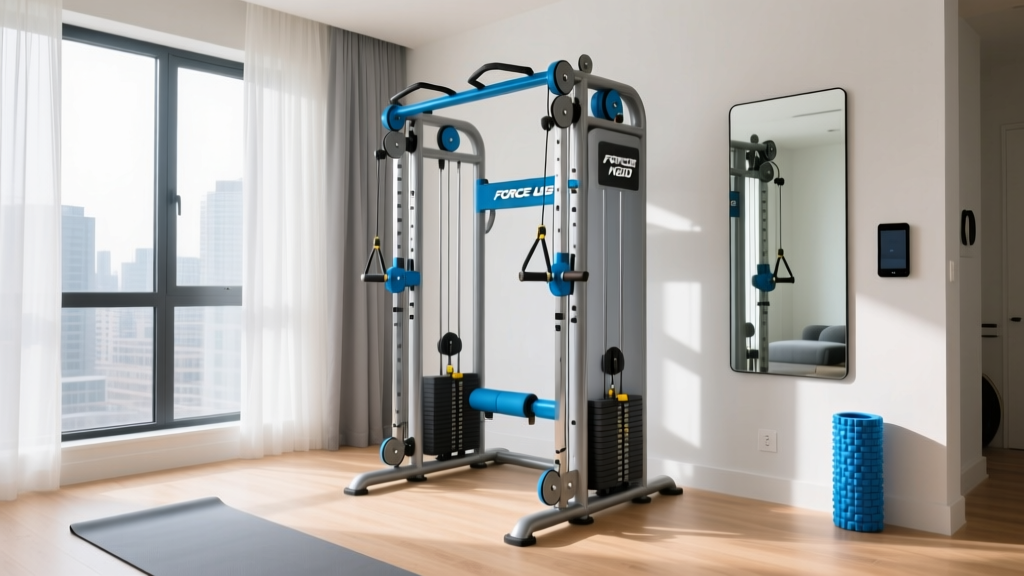
Force USA HG100 Home Gym Reviews: 2026 Apartment Setup Trends

Outdoor Home Gym Must Haves: A Weatherproof Setup Walkthrough

How Much Weight You Need: Space-Optimized Home Gym TV Layouts
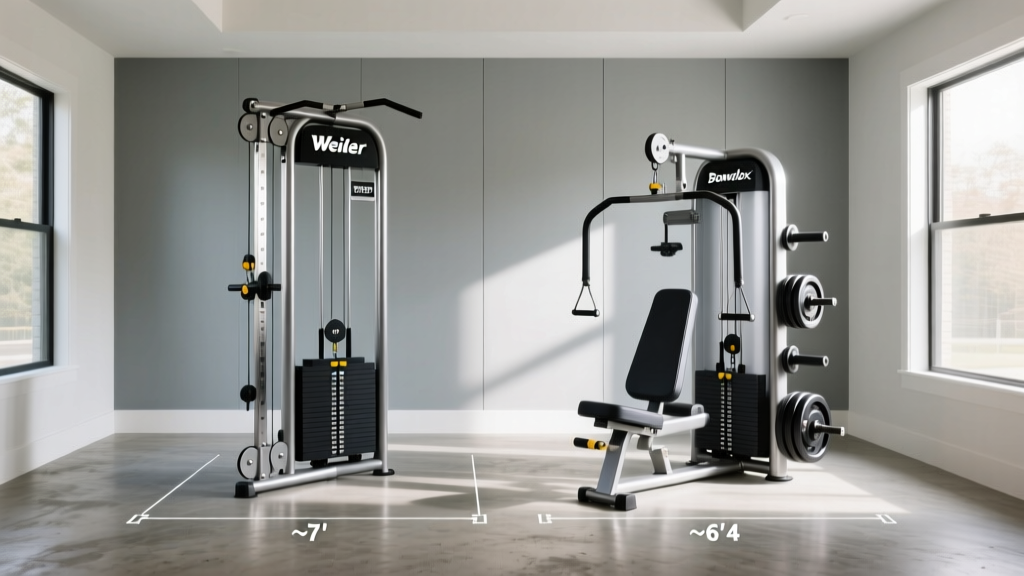
Weider 8530 Home Gym vs Bowflex PR1000: Remodel Guide

Marcy Multifunction Steel Home Gym 150lb Weight Stack Machine Setup
