
Do It Yourself Home Gym Maintenance for Small Apartments
Learn essential maintenance and longevity tips for your do it yourself home gym in small apartments. Protect gear, optimize space, and prevent wear.

The Unique Wear-and-Tear of Compact Fitness Spaces
Building a do it yourself home gym in a small apartment or spare bedroom requires clever spatial engineering, but the setup is only half the battle. Compact environments introduce a concentrated micro-climate of sweat, humidity, and dust that can rapidly degrade high-density fitness equipment. When your adjustable dumbbells sit three feet from your bed, or your foldable power rack shares a wall with your living room, standard commercial gym maintenance protocols simply do not apply.
In 2026, the market for space-saving fitness gear—from magnetic resistance smart gyms to collapsible squat racks—is more advanced than ever. However, the mechanical complexity of these compact tools makes them highly susceptible to environmental damage. This comprehensive guide details the exact maintenance routines, environmental controls, and structural protections required to maximize the longevity of your small-space home gym.
💡 The 150-Square-Foot Rule: In a sealed 150 sq. ft. apartment room, a rigorous 45-minute HIIT session can spike ambient humidity from a baseline of 40% to over 75%. Without immediate intervention, this moisture settles into the internal gears of adjustable dumbbells and the electronic housings of smart mirrors.Mastering the Micro-Climate: Humidity and Dust Control
The Environmental Protection Agency (EPA) recommends keeping indoor relative humidity between 30% and 50% to prevent mold growth and protect structural materials. In a small apartment gym, sweat evaporation easily pushes humidity past 65%, creating a rust-accelerating environment for exposed steel and iron.
Strategic Dehumidification
Do not rely on your apartment's central HVAC system to manage localized gym humidity. You need a dedicated, compact compressor dehumidifier. For rooms under 300 square feet, a 20-to-35-pint unit (such as the MIDEA 35-Pint Cube) is ideal. Place it at least two feet away from your primary sweat zone to ensure the intake fan pulls in the ambient moisture rather than getting directly saturated by airborne droplets.
The Dust Ingress Problem
Small apartments often lack the dedicated ventilation of a garage gym. Dust, pet dander, and lint from nearby laundry or bedding accumulate rapidly. According to equipment testing experts at BarBend, dust ingress is the number one cause of failure in adjustable dumbbell selector mechanisms. When dust mixes with ambient humidity, it forms a gritty paste that strips internal plastic teeth and jams magnetic pins.
'Never use compressed air to blow out your adjustable dumbbells in a small room. You will simply force the micro-dust deeper into the weight plate cavities. Instead, use a soft-bristled brush and a vacuum with a HEPA filter attachment on the lowest suction setting.'
Preserving High-Density Adjustable and Foldable Gear
Space-saving equipment relies on moving parts—hinges, dials, and telescoping rods. These are your primary maintenance targets.
Adjustable Dumbbells: Nuobell vs. Bowflex
The Nuobell 80lb Adjustable Dumbbells (retailing around $349) utilize a twisting handle mechanism connected to a central steel rod. In humid apartments, sweat dripping onto the handle can travel down the shaft, causing the central rod to pit and rust. This leads to the weight plates failing to lock. Maintenance: Wipe the shaft with a microfiber cloth dampened with isopropyl alcohol after every use, and apply a single drop of 100% silicone oil to the top collar seal once a month.
The Bowflex SelectTech 552 ($399) uses a dual-dial system with internal plastic gears. Maintenance: Never store these directly on the floor where dust settles. Always use the included cradles or a raised shelf, and cover them with a neoprene dust sleeve when not in use.
Wall-Mounted and Foldable Racks
Foldable racks like the PRx Profile Squat Rack ($395) are apartment staples. The primary failure mode is the degradation of the hinge pins and the loosening of wall-mount lag bolts due to repetitive vibration against drywall or masonry.
- Hinge Pins: Do not use WD-40. It attracts dust and creates a grinding compound. Use a white lithium grease spray applied to a Q-tip to precisely coat the hinge pivots every 90 days.
- Lag Bolts: Use a torque wrench set to 40 ft-lbs to check the wall-mount bolts bi-annually. If mounted into drywall with toggle bolts, inspect the drywall for micro-fractures or 'halo' dust rings around the bolt head, which indicate the wall is giving way.
Compact Gear Maintenance Matrix
| Equipment Type | Primary Failure Mode | Maintenance Action | Frequency |
|---|---|---|---|
| Adjustable Dumbbells (Dial) | Dust paste jamming selector gears | HEPA vacuum cradle; wipe handles with alcohol | Post-workout |
| Foldable Power Rack | Hinge pin corrosion; bolt loosening | White lithium grease on pins; torque check bolts | Every 90 days |
| Smart Cable Gyms (e.g., Speediance) | Internal cable fraying at pulley edges | Inspect cables for 'fuzz'; wipe down guide rods | Monthly |
| Resistance Bands (TPE/Latex) | Oxidation and micro-tears from UV/ozone | Store in opaque, airtight bins away from sunlight | Daily storage |
Structural Protection: Floors, Walls, and Vibration
In an apartment, your gym's maintenance also extends to the room itself. Protecting your security deposit and preventing noise complaints from neighbors below is a critical component of small-space gym longevity.
High-Density Flooring Solutions
Thin EVA foam puzzle mats (often 1/2 inch thick) compress permanently under heavy compact gear like a loaded adjustable bench, rendering them useless for impact absorption. For a permanent small-space setup, invest in 3/8-inch thick vulcanized rubber mats (such as Rubber-Cal Elephant Bark, roughly $85 per 4x6 roll). Vulcanized rubber does not absorb sweat, preventing the sour 'gym smell' that plagues porous foam mats. Clean it weekly with a pH-neutral cleaner; avoid bleach or ammonia, which breaks down the rubber polymers.
Wall Sweat and Scuff Guards
When your bike or rowing machine is pushed against a wall, sweat splatter and shoe scuffs will quickly ruin standard flat-finish apartment paint. Flat paint is porous and absorbs moisture, leading to drywall bubbling. The Fix: Install a clear acrylic polycarbonate sheet (1/8 inch thick, cut to 4x2 feet) against the wall behind your cardio zone. It costs under $40 at hardware stores, can be mounted with removable damage-free hanging strips, and wipes completely clean with glass cleaner.
Smart Gym and Cable System Care
Compact smart gyms like the Tonal or Speediance rely on internal electromagnetic resistance and Kevlar-reinforced cables. While the resistance mechanism is sealed, the external cables and pulleys are exposed to the room's environment.
The Centers for Disease Control and Prevention (CDC) notes that high indoor moisture promotes mold, which can actually colonize the nylon or Kevlar sheathing of fitness cables if left damp. After heavy sweating, run a dry microfiber towel up and down the extended cables. Inspect the cables monthly for 'fuzzing' or broken outer filaments, which indicate the internal pulley wheels are misaligned or accumulating gritty debris.
The 10-Minute Post-Workout Apartment Protocol
To ensure your do it yourself home gym survives years of use in a compact space, implement this strict post-workout routine. It takes less than 10 minutes and prevents 90% of environmental equipment failures.
- Minute 1-3 (Airflow): Turn on a dedicated oscillating fan aimed at the equipment (not your body) to accelerate sweat evaporation off metal surfaces. Open the window or turn on the HVAC exhaust fan.
- Minute 3-5 (Wipe Down): Spray a microfiber cloth with a 50/50 mix of distilled water and white vinegar. Wipe down all knurled handles, dumbbell shafts, and bench upholstery. (Never spray directly onto electronics or adjustable dials).
- Minute 5-7 (Floor Care): Use a dedicated rubber-floor mop or damp towel to pick up chalk dust, dead skin, and sweat droplets from the vulcanized rubber mats.
- Minute 7-9 (Gear Stowage): Return adjustable dumbbells to their elevated cradles. Cover smart mirrors or screens with their designated microfiber dust covers. Place resistance bands into an opaque, zippered storage bin.
- Minute 9-10 (Climate Reset): Empty the dehumidifier reservoir if it has reached the fill line, and reset the room thermostat to its baseline temperature.
Final Thoughts on Small-Space Longevity
A small apartment gym is an incredible investment in your health and convenience, but it demands a higher standard of environmental awareness than a sprawling garage setup. By controlling the micro-climate, meticulously caring for the moving parts of space-saving gear, and protecting your physical surroundings, your compact do it yourself home gym will remain safe, functional, and aesthetically pleasing for years to come.
More gear to consider
All reviews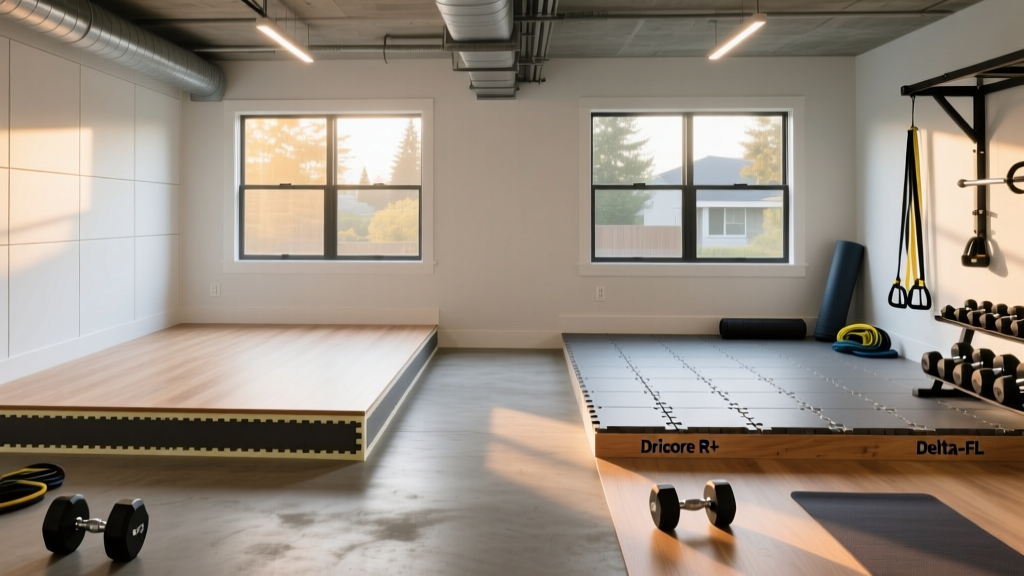
Custom Home Gym Design Portland OR: Dricore vs. Delta-FL Subfloors

Weatherproofing Your Outdoor Home Gym Layout for Longevity

The Ultimate Force Home Gym Floor Plan & Setup Guide

Home Gym for Beginners: How Much Weight Do You Really Need?

Inspire M2 Home Gym Layout & Setup: 2026 Expert Review
