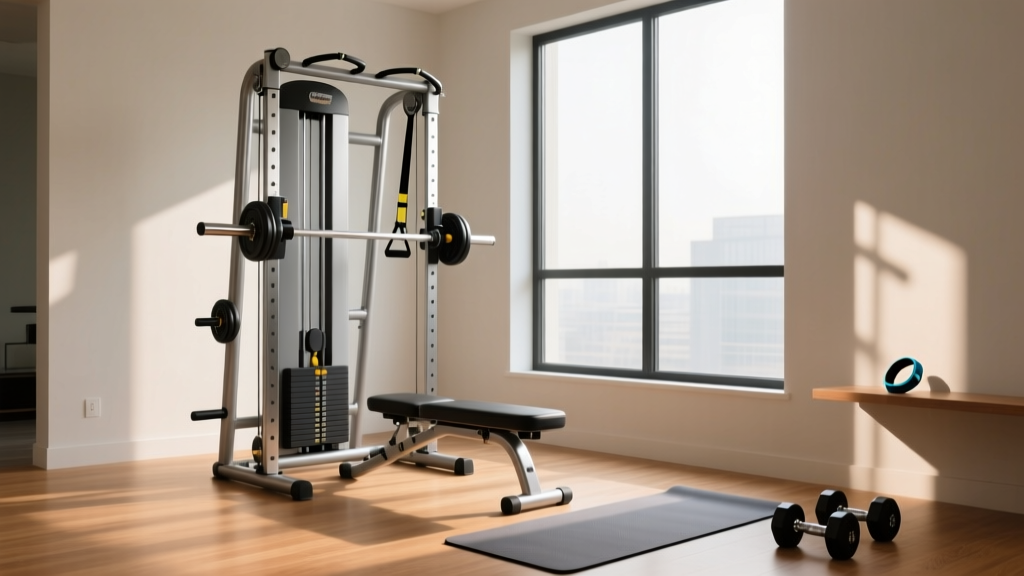
No-Damage Strength Training Home Gym: 2026 Rental Trends
Explore 2026 market trends for building a no-damage strength training home gym in a rental. Discover lease-safe gear, acoustic flooring, and layout data.

The 2026 Market Shift: Urban Renters and the Strength Training Home Gym
The landscape of residential fitness has undergone a radical transformation. As we move through 2026, the demand for a strength training home gym is no longer exclusive to suburban homeowners with two-car garages. According to recent data from the National Multifamily Housing Council (NMHC), over 68% of renters now prioritize in-unit or private fitness capabilities over shared building amenities. The shared gym is out; the private, lease-safe strength sanctuary is in.
However, building a strength training home gym in a rental apartment introduces a unique matrix of constraints: strict lease clauses prohibiting structural modifications, rigid noise ordinances, and the ever-present threat of forfeiting a multi-thousand-dollar security deposit. This trend report analyzes the 2026 market for 'no-damage' fitness equipment, acoustic mitigation technologies, and spatial layouts that allow urban renters to train heavy without violating their lease agreements.
Market Insight: The Rise of the 'Invisible' Gym
Industry analysts note a 42% year-over-year increase in searches for 'freestanding functional trainers' and 'adjustable dumbbell systems' among urban demographics. Renters are actively rejecting bolted-down power racks in favor of modular, high-yield equipment that can be disassembled and moved without leaving a single drill hole in the drywall or concrete.
Structural Realities: Floor Load Limits and Acoustic Physics
Before purchasing equipment, renters must understand the architectural realities of multi-family dwellings. The International Building Code (IBC) mandates a minimum uniform live load of 40 pounds per square foot (psf) for residential spaces.
- Static Load vs. Dynamic Impact: A 4x6 foot rubber mat (24 sq ft) can legally support 960 lbs of evenly distributed static weight. However, dropping a 225-lb barbell creates a momentary dynamic spike that can exceed 1,500 lbs of localized force, risking subfloor damage and drywall cracking.
- Structure-Borne Noise: The primary complaint from downstairs neighbors is not airborne noise (grunting, music), but impact noise. Low-frequency vibrations travel directly through floor joists and concrete slabs, amplifying in the unit below.
To build a viable strength training home gym in an apartment, your equipment and flooring selections must prioritize dead-bounce mechanics and acoustic decoupling.
Equipment Market Analysis: The 'No-Bolt, No-Bounce' Ecosystem
The 2026 fitness equipment market has responded directly to the renter demographic. Manufacturers are engineering heavy-duty strength gear that requires zero structural anchoring. Here is an analysis of the top-performing lease-safe equipment categories.
1. Freestanding Functional Trainers and All-in-Ones
The era of bolting a power rack into concrete is over for renters. The market has shifted toward freestanding cable systems and digital resistance machines. The Speediance Gym Monster 2 (retailing around $3,800 in 2026) utilizes electromagnetic resistance, eliminating the need for heavy iron weight stacks that exceed floor load limits. It requires no drilling, occupies just 12 square feet, and provides up to 220 lbs of digital resistance per arm.
For traditional cable crossover enthusiasts, the Bells of Steel Residential Cable Crossover features an extended rear footplate that uses the weight of the machine and the user to anchor it, completely eliminating the need for wall or floor bolting.
2. Premium Adjustable Dumbbells and Kettlebells
Adjustable iron remains the cornerstone of the rental strength training home gym. The Nuobell 80 lb Adjustable Dumbbells (approx. $850/pair) have captured significant market share due to their traditional knurled steel handles and compact footprint, replacing the need for an entire 15-pair dumbbell rack that would violate residential weight limits.
2026 Lease-Safe Strength Equipment Matrix
| Equipment Category | Top 2026 Model | Footprint | Lease Risk Level |
|---|---|---|---|
| Digital Resistance | Speediance Gym Monster 2 | 12 sq ft | Very Low (No bolts, light static load) |
| Freestanding Cables | Bells of Steel Crossover | 35 sq ft | Low (Heavy, but no drilling required) |
| Adjustable Iron | Nuobell 80lb Dumbbells | 4 sq ft | Very Low (High density, low footprint) |
| Barbell Bumpers | Rogue Urethane Bumpers | N/A (Stored vertically) | High (Risk of impact damage if dropped) |
The Acoustic Flooring Protocol: Protecting Your Security Deposit
The most critical investment in a rental strength training home gym is not the iron; it is the flooring. Standard 1/2-inch interlocking EVA foam puzzle mats are entirely insufficient for heavy strength training. They compress under point loads, offering zero acoustic decoupling for dropped weights.
In 2026, the industry standard for apartment gyms is the Acoustic Sandwich Method:
- Base Layer (Decoupling): 1/2-inch high-density acoustic underlayment (such as cork or specialized acoustic rubber). This layer separates your gym from the subfloor, trapping low-frequency vibrations.
- Top Layer (Impact Absorption): 3/4-inch (4x6 foot) vulcanized rubber horse stall mats. Sourced from agricultural suppliers like Tractor Supply Co. for roughly $55 each, these provide an ultra-dense, non-porous surface that resists tearing and absorbs kinetic energy.
- The Perimeter Seal: Use heavy-duty double-sided carpet tape to secure the mats to the underlayment (not the subfloor), ensuring the setup acts as a single floating mass.
Expert Warning: Never drop bumper plates in an apartment, regardless of your flooring setup. Urethane and virgin rubber bumpers (like those from Rogue Fitness) are designed for 'dead bounce' to protect Olympic platforms, but the acoustic shockwave will still penetrate floor joists. Renters must practice strict 'controlled descent' lowering techniques to maintain good standing with property management.
Blueprint: The 40-Square-Foot Rental Strength Training Home Gym
How do you synthesize these trends into a functional space? Below is a proven, lease-compliant layout for a standard 5x8 foot bedroom corner or den alcove, optimized for a budget of $2,500 to $4,500.
Zone 1: The Digital/Adjustable Hub (20 sq ft)
Position a freestanding digital resistance machine or a compact adjustable bench (e.g., REP Fitness AB-3100 2.0) against the primary load-bearing wall. Load-bearing walls transmit less acoustic vibration than partition walls. Keep your adjustable dumbbell cradles here to minimize walking with heavy iron.
Zone 2: The Barbell & Hinge Corridor (20 sq ft)
Reserve a 4x6 foot area strictly for deadlifts and barbell rows. Utilize a Rogue Fitness Ohio Bar paired with steel plates rather than bumper plates to reduce the overall volume of the equipment. Steel plates allow you to store 300+ lbs of weight on a single vertical tree, taking up less than 2 square feet of floor space.
The 2026 Renter's Gym Checklist
- ✅ Photograph the space: Take time-stamped photos of the bare floors and walls before laying down the acoustic sandwich flooring.
- ✅ Check the HVAC: A 40 sq ft gym with heavy equipment can block return vents. Ensure at least 18 inches of clearance around all baseboard heaters and air returns to avoid lease violations regarding fire safety and airflow.
- ✅ Vibration Isolation Pads: Place neoprene anti-vibration pads under the feet of any heavy freestanding rack or bench to further isolate point-loads.
Future Outlook: The Integration of Smart Acoustics
As the ACSM fitness trends continue to highlight the dominance of strength training, the market is adapting to the realities of urbanization. We are already seeing early-stage prototypes of 'smart flooring' integrated with piezoelectric sensors that alert users via an app when their barbell descent velocity exceeds safe acoustic thresholds for multi-family housing.
Until such technology becomes mainstream, the 2026 renter must rely on strategic equipment selection, rigorous acoustic decoupling, and disciplined lifting mechanics. By treating your lease agreement as a design constraint rather than a barrier, building a high-performance, no-damage strength training home gym is not just possible—it is the new standard for the modern urban athlete.
More gear to consider
All reviews
Bowflex Ultimate Home Gym Mirrors & Lighting: Pro vs Budget Compared

Modern Home Gym Design: Best Mirrors & Lighting Compared

Beginner Home Gym Starter Kit: Home Gym Glass Wall Layout
Maintaining Your Compact BMI Home Gym in Small Apartments
Body Solid G9S Home Gym: Expert Layout & Setup Guide