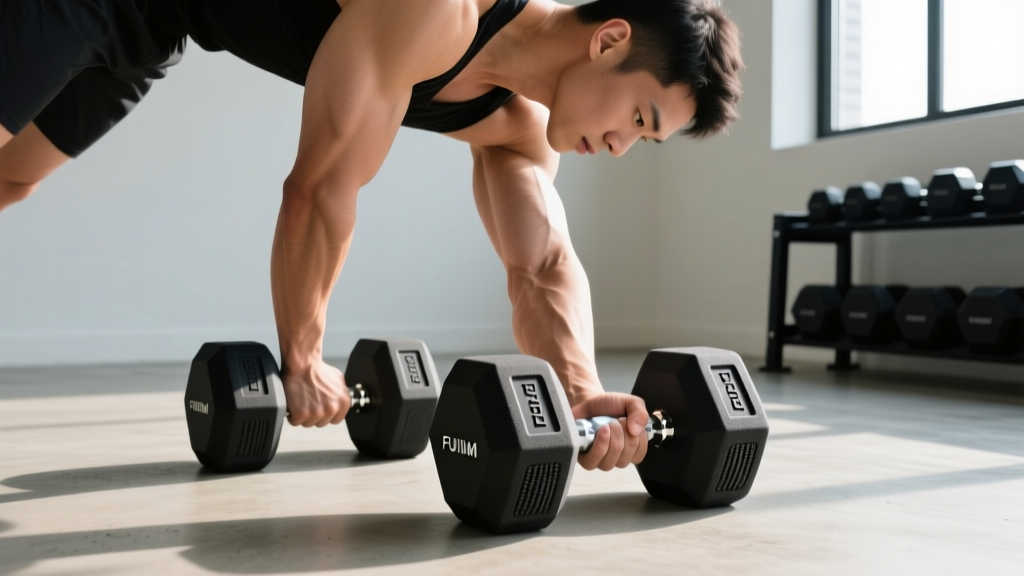
Waist Workout with Dumbbells: Neoprene Grip & Form Fixes
Fix common form and equipment errors in your waist workout with dumbbells. Learn how to maintain neoprene grips and protect your lower back at home.

The rise of home fitness has made neoprene-coated dumbbells the default choice for millions of garage and bedroom gyms. Brands like CAP Barbell, Yes4All, and J/fit dominate this space, offering colorful, cast-iron-core weights encased in synthetic rubber. While they are excellent for general conditioning, executing a safe and effective waist workout with dumbbells using this specific equipment presents unique biomechanical and material challenges. Many home gym owners unknowingly compromise their spinal health or stall their progress due to equipment degradation and form breakdowns.
This troubleshooting guide dissects the most frequent mistakes made during weighted core training at home. We will explore how neoprene material properties affect your grip, why standard weight increments sabotage oblique development, and how to correct the dangerous form errors that lead to lumbar shear injuries.
Biomechanical Warning: Spinal Loading
The lumbar spine is engineered for stability, not repetitive loaded rotation or extreme lateral flexion. According to spinal biomechanics research popularized by Dr. Stuart McGill, combining heavy axial loads with twisting motions creates severe shear forces on the intervertebral discs. A waist workout with dumbbells must prioritize muscular tension over sheer weight to avoid long-term structural damage.
Equipment Troubleshooting: The Neoprene Factor
Neoprene (polychloroprene) is a porous synthetic rubber. While it protects your floors from impact damage, its material properties introduce specific troubleshooting scenarios that do not exist with bare steel or urethane-coated iron.
Grip Degradation and Sweat Slippage
The most common equipment failure during a weighted Russian twist or dumbbell woodchopper is grip slippage. Over a 6-to-8-month period, neoprene handles absorb microscopic layers of sweat, dead skin, and natural body oils. This creates a slick, polished surface that compromises your grip exactly when your core is under maximum rotational torque.
- The Mistake: Applying liquid chalk or lifting grip sprays directly to neoprene. The alcohol and magnesium carbonate compounds break down the polymer chains, causing the coating to become gummy and eventually peel away from the iron core.
- The Fix: Use a dry, fine-milled magnesium carbonate block sparingly, or better yet, wear minimalist lifting gloves with silicone palm grips. To restore a degraded neoprene handle, scrub it with a 10% white vinegar and water solution to strip the oil buildup without damaging the rubber.
The Weight Increment Trap
Standard neoprene dumbbell sets typically scale in 5-pound increments (e.g., 10 lbs, 15 lbs, 20 lbs). For large muscle groups like the chest or legs, a 5-pound jump is negligible. However, the obliques and transverse abdominis are relatively small stabilizer muscles.
Jumping from a 10-pound to a 15-pound dumbbell for a side bend represents a massive 50% increase in load. This forces the lifter to recruit the quadratus lumborum (a deep lower back muscle) and use momentum to move the weight, completely bypassing the targeted waist musculature. Troubleshooting: Instead of increasing the weight, manipulate the tempo. Use a 3-1-3 tempo (3 seconds eccentric, 1 second pause, 3 seconds concentric) with your current 10-pound dumbbells to increase time-under-tension and metabolic stress without overloading the spinal joints.
Form Mistakes in Weighted Waist Exercises
Even with perfect equipment, poor kinematics will render your waist workout with dumbbells ineffective or dangerous. Below is a troubleshooting matrix for the most common home-gym core exercises.
| Exercise | Common Mistake | Troubleshooting Fix | Spinal Risk |
|---|---|---|---|
| Dumbbell Side Bends | Leaning forward or backward, turning the movement into a partial squat or rotational twist. | Imagine your back is pressed against a wall. Hold a single dumbbell and slide it down the seam of your pants to ensure strict frontal-plane lateral flexion. | High (Disc compression) |
| Seated Russian Twists | Using the hip flexors and shoulders to swing the weight, keeping the torso completely rigid. | Initiate the movement from the ribcage. Your shoulders and hips should remain relatively square while the thoracic spine drives the rotation. | Moderate (Rotational shear) |
| Standing Woodchoppers | Pivoting only the ankles and pulling with the arms, ignoring the transverse plane rotation of the hips. | Allow your back heel to lift and pivot. Power must originate from the ground up, transferring through the hips before the arms follow through. | Low (If hips pivot) |
For a comprehensive breakdown of proper muscle targeting and joint mechanics, refer to the ExRx Dumbbell Side Bend directory, which provides detailed kinesiological analyses of oblique isolation movements.
Step-by-Step Neoprene Maintenance Protocol
To ensure your home gym equipment survives the rigors of daily waist workouts, implement this monthly maintenance routine. Neglecting this will result in the neoprene splitting at the seams, exposing the rust-prone cast iron core beneath.
- Inspection: Run your thumb along the seam where the handle meets the hex head. If you feel a gap or a 'squishy' separation, the adhesive has failed due to temperature fluctuations (common in uninsulated garage gyms).
- Cleaning: Mix warm water with a few drops of pH-neutral dish soap (like Dawn). Avoid bleach or ammonia-based cleaners, which cause polychloroprene to dry out and crack.
- Drying: Wipe down with a microfiber cloth and let them air dry in a climate-controlled room. Never leave neoprene dumbbells in direct UV sunlight, as UV radiation accelerates polymer degradation.
Expert Sourcing: When to Upgrade Your Gear
While neoprene is an excellent entry-level material (typically costing between $1.50 and $2.50 per pound), serious lifters eventually outgrow it. If your waist workout with dumbbells requires heavy loads (25+ lbs per hand) for advanced anti-rotation holds or heavy farmer's carries, it is time to upgrade.
The ACE Fitness Exercise Library emphasizes the importance of equipment stability during dynamic core movements. Upgrading to urethane-coated dumbbells (such as those from REP Fitness or Rogue) provides a denser, non-porous surface that will never degrade, absorb odors, or slip from sweaty hands. Urethane costs roughly $3.50 to $4.50 per pound, but the longevity and ergonomic handle knurling make it the superior choice for long-term core training.
'The best core training equipment is the one that allows you to maintain strict bracing without grip fatigue compromising your posture. If your dumbbell coating is slick, your central nervous system will prioritize holding onto the weight over stabilizing your spine.'
Material Comparison Matrix
| Material | Cost per lb | Grip Longevity | Best For |
|---|---|---|---|
| Neoprene | $1.50 - $2.50 | 6-12 Months | Beginners, light rehab, floor-friendly drops |
| Cast Iron | $1.20 - $2.00 | Lifetime | Heavy lifting, chalk users, budget buyers |
| Virgin Rubber | $2.00 - $3.00 | 2-4 Years | Commercial gyms, heavy drops (can smell initially) |
| Urethane | $3.50 - $5.00+ | Lifetime | Advanced home gyms, high-sweat environments, precision grip |
By addressing these equipment limitations and correcting your biomechanical form, you can transform a risky, inefficient routine into a highly targeted waist workout with dumbbells that builds functional core strength while preserving your spinal health for years to come.
More gear to consider
All reviews
Olympic vs Standard Plates: Sizing Your Dumbbell Preacher Curl Bench
Olympic Barbell Guide for a Chest Workout Without Dumbbells

Lying Down Dumbbell Exercises: Adjustable Dumbbell Guide

Power Rack vs Squat Rack vs Squat Stand: Incline Dumbbell Curl Setup

Is Cable Lateral Raise Better Than Dumbbell? Loadable Dumbbell Guide
