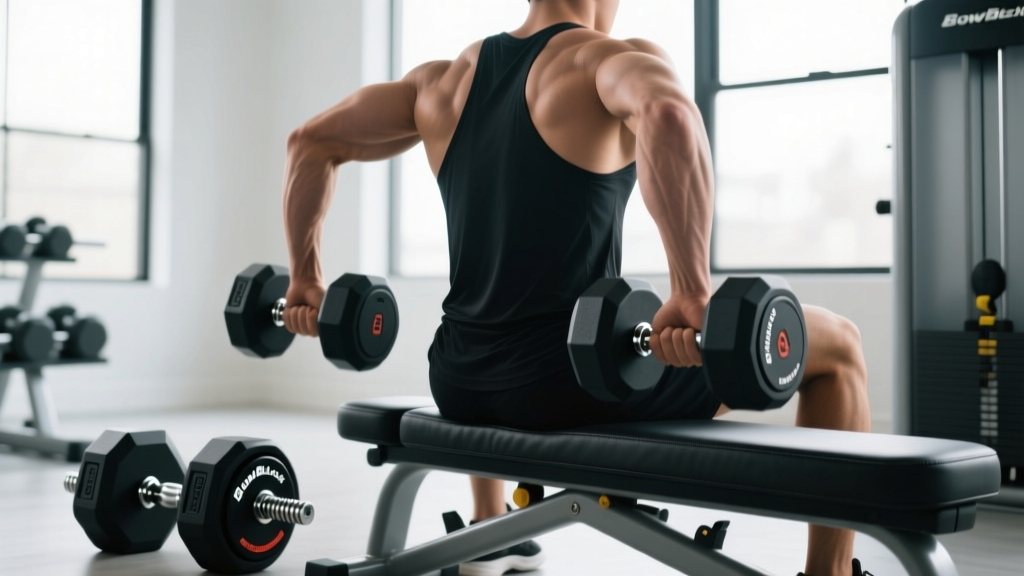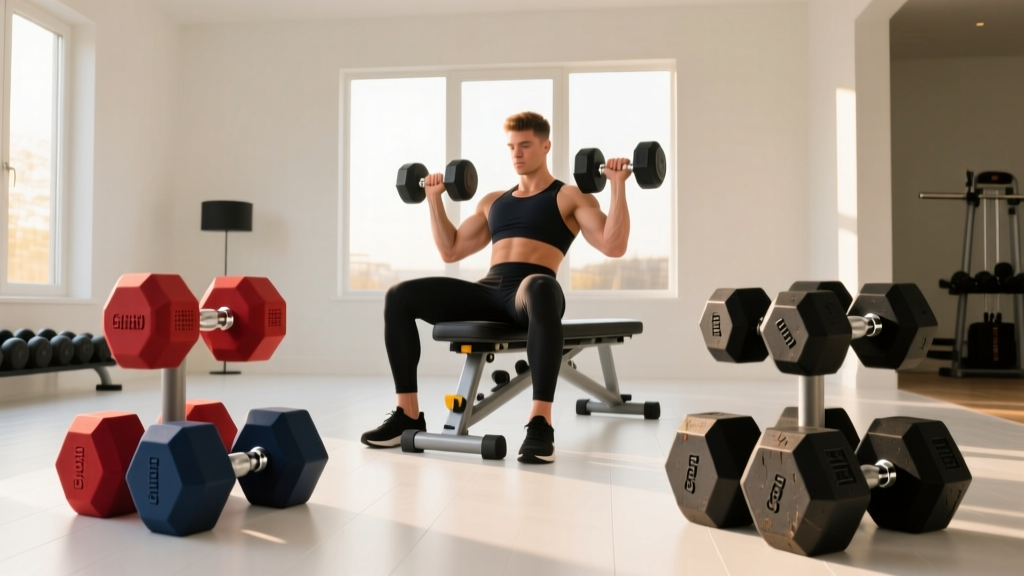
Seated Dumbbell Shoulder Press: Rubber Hex vs Urethane Space Guide
Optimize your home gym layout for the seated dumbbell shoulder press. We compare rubber hex vs urethane dumbbells for space, durability, and cost.

Designing a high-functioning home gym in a limited footprint requires ruthless prioritization of every square inch. When your training regimen centers around heavy overhead movements like the seated dumbbell shoulder press, the spatial dynamics of your equipment become just as critical as the biomechanics of the lift itself. Overhead pressing demands significant vertical and lateral clearance, and the storage solutions for your dumbbells can either liberate your floor plan or choke it.
In 2026, the debate between rubber hex dumbbells and premium urethane dumbbells is no longer just about durability or aesthetics; it is fundamentally a question of spatial efficiency and environmental impact in enclosed rooms. This guide breaks down exactly how material and shape dictate your gym layout, helping you optimize your space for the seated dumbbell shoulder press without compromising on performance.
The Spatial Demands of the Seated Dumbbell Shoulder Press
Before evaluating the dumbbells, we must define the spatial envelope required for the movement. According to biomechanical tracking data from ExRx.net, the seated dumbbell shoulder press requires a vertical bar path that extends roughly 12 to 18 inches above the lifter's head, combined with significant lateral elbow flare at the bottom of the movement.
- Vertical Clearance: A lifter who is 5'10" sitting on a standard 17-inch bench requires a minimum ceiling height of 84 inches to press a pair of 50-pound dumbbells without striking the drywall. If you are taller than 6 feet, 96-inch ceilings are mandatory.
- Lateral Envelope: The elbows must track slightly in front of the frontal plane to protect the rotator cuff. This means you need at least 24 inches of clear space on either side of the bench's centerline.
- The Deployment Zone: You need a 'pickup zone' beside the bench. Unlike barbell overhead presses where the weight is already at shoulder height, heavy seated dumbbell presses require you to clean the weights from the floor or a low rack to your knees before kicking them back.
This deployment zone is where your dumbbell storage strategy directly impacts your workout flow. If your rack is too bulky or poorly positioned, you waste energy and floor space maneuvering heavy weights into the starting position.
Storage Footprint: Hex Flat-Shelving vs. Urethane Saddle Racks
The physical shape of the dumbbell head dictates the type of rack you must use, which in turn dictates your gym's floor plan. This is the crux of the space optimization argument.
The Rubber Hex Advantage: Wall-Mounted Flat Shelving
Rubber hex dumbbells (such as the popular lines from REP Fitness or Fringe Sport) feature flat edges that prevent rolling. Because they are geometrically stable, they can be stored on flat, horizontal shelves. This unlocks the ultimate space-saving storage method: wall-mounted flat shelving.
By mounting heavy-duty steel shelves directly to your wall studs, you reduce the storage footprint to zero square feet of floor space. A 48-inch wide, 3-tier wall shelf can hold up to 10 pairs of hex dumbbells, leaving the floor entirely clear for your adjustable bench and lateral pressing movements.
The Urethane Constraint: Saddle Racks and A-Frames
Urethane dumbbells (like those from Rogue Fitness or Eleiko) are predominantly round. To prevent them from rolling off and damaging your floors—or your shins—they require specialized 'saddle' racks or tiered A-frame cradles.
A standard 10-pair urethane A-frame rack typically measures 48 inches long by 24 inches deep. That is 8 square feet of dedicated, immovable floor space. In a 10x10 spare bedroom gym, sacrificing 8% of your total floor area to a single storage unit severely limits where you can position your bench for the seated dumbbell shoulder press.
Space Optimization Callout: If you are dead-set on urethane but lack floor space, look for 'vertical tier' wall-mounted saddle racks. However, be warned: loading 70lb+ urethane dumbbells onto high wall saddles requires significant shoulder mobility and poses a safety risk in tight spaces where you cannot properly hinge at the hips to lift the weight.Material Properties in Enclosed Spaces: The VOC Factor
Space optimization isn't just about physical dimensions; it's about air volume. Many home gyms are located in spare bedrooms, basements, or enclosed garages with limited HVAC circulation.
Cheaper recycled rubber hex dumbbells are notorious for off-gassing Volatile Organic Compounds (VOCs). The Environmental Protection Agency (EPA) notes that elevated VOC levels in poorly ventilated indoor spaces can cause respiratory irritation, headaches, and fatigue. Performing a high-exertion, oxygen-demanding movement like the seated dumbbell shoulder press in a room filled with rubber off-gassing is counterproductive and unpleasant.
Urethane, by contrast, is a thermoplastic elastomer that is virtually odorless and non-porous. If your space-optimized gym is in a small, unventilated room (under 150 square feet), urethane is vastly superior for indoor air quality, despite its larger storage footprint.
2026 Comparison Matrix: Hex vs. Urethane for Compact Gyms
| Feature | Rubber Hex Dumbbells | Premium Urethane Dumbbells |
|---|---|---|
| Shape & Storage | Hexagonal; flat wall shelves (0 sq ft floor space) | Round; A-frame/saddle racks (8+ sq ft floor space) |
| 2026 Avg. Cost | $1.50 - $1.90 per lb | $2.60 - $3.50 per lb |
| Odor / Off-Gassing | High (requires weeks of airing out) | None (ideal for small, enclosed rooms) |
| Durability in Tight Spaces | Moderate (rubber can peel at handle junction) | Exceptional (resists chipping and tearing) |
| Roll Risk | Zero (safe for floor placement mid-set) | High (requires careful floor placement) |
Real-World Failure Modes in Tight Layouts
When executing the seated dumbbell shoulder press to failure in a tight space, you cannot always control the descent of the weight. You may need to dump the dumbbells to the floor to save your rotator cuffs. This is where material failure modes come into play.
The Hex Edge Vulnerability
Rubber hex dumbbells have a distinct weakness: the bond between the rubber head and the steel handle. If you drop a 70lb hex dumbbell directly on its pointed corner in a cramped space where you lack the leverage to guide it down, the sheer force can cause the rubber to split or peel away from the steel core. Over time, this creates a jagged edge that will tear up your flooring.
Urethane Scuffing and Floor Protection
Urethane is incredibly dense and absorbs impact beautifully, protecting the internal steel core. However, its hard outer shell can act like a scuff mark generator on painted walls or baseboards if you are maneuvering them in a narrow deployment zone. In a space-optimized layout where your bench is close to a wall, pressing heavy urethane dumbbells risks scraping the walls during the eccentric lowering phase if your lateral clearance is under 18 inches.
Cost-to-Space Ratio: Budgeting Your Layout
Optimizing space often requires a financial trade-off. Let's look at the real-world costs of outfitting a compact pressing station in 2026.
- The Hex + Wall Shelf Route: A 10-pair set of premium rubber hex dumbbells (5lb to 50lb in 5lb increments) totals 550 lbs. At $1.70/lb, the weights cost $935. A heavy-duty, wall-mounted 3-tier steel shelf system costs roughly $250. Total investment: $1,185. Floor space consumed: 0 sq ft.
- The Urethane + A-Frame Route: The same 550lb weight range in premium urethane costs roughly $2.90/lb, totaling $1,595. A commercial-grade 3-tier saddle rack costs around $450. Total investment: $2,045. Floor space consumed: 8 sq ft.
For the space-constrained lifter, the hex configuration saves nearly $860 and 8 square feet of vital floor space, allowing you to invest the savings into a highly adjustable FID (Flat/Incline/Decline) bench with an integrated vertical upright for self-spotting.
Final Verdict: Designing Your Pressing Zone
If your primary goal is absolute space optimization and you have access to a well-ventilated room or garage, rubber hex dumbbells paired with wall-mounted flat shelving is the undisputed champion. It removes the storage footprint entirely, giving you the maximum possible lateral clearance for the seated dumbbell shoulder press.
However, if your home gym is located in a small, enclosed spare bedroom with standard 8-foot ceilings and poor airflow, the spatial savings of hex dumbbells are negated by the toxic off-gassing. In this scenario, you must bite the bullet, sacrifice the floor space to an A-frame rack, and invest in urethane dumbbells to protect your indoor air quality and respiratory health during heavy overhead pressing sets.
Pro-Tip for Compact Gyms: Regardless of the material you choose, always position your adjustable bench at a 45-degree angle to the corner of the room rather than parallel to a flat wall. This naturally creates a deeper diagonal pocket for your dumbbell deployment zone, granting your elbows the extra 4-6 inches of lateral clearance needed for a safe, unobstructed seated shoulder press.
More gear to consider
All reviews
Dumbbell Sumo Squat Muscles Worked & Best Loadable Handles 2026
Compact Kettlebells & Dumbbells for Seniors: Cast vs Competition

Loadable Plates vs Dial: Bowflex Dumbbell Exercises Cost Analysis

Best 50 lb Adjustable Dumbbell Sets: 2026 Beginner Guide

Best Hammer Curl Dumbbells: Rubber Hex vs Urethane